

Scottish Greens Unveil Sweeping Manifesto with Bold Social and Economic Pledges
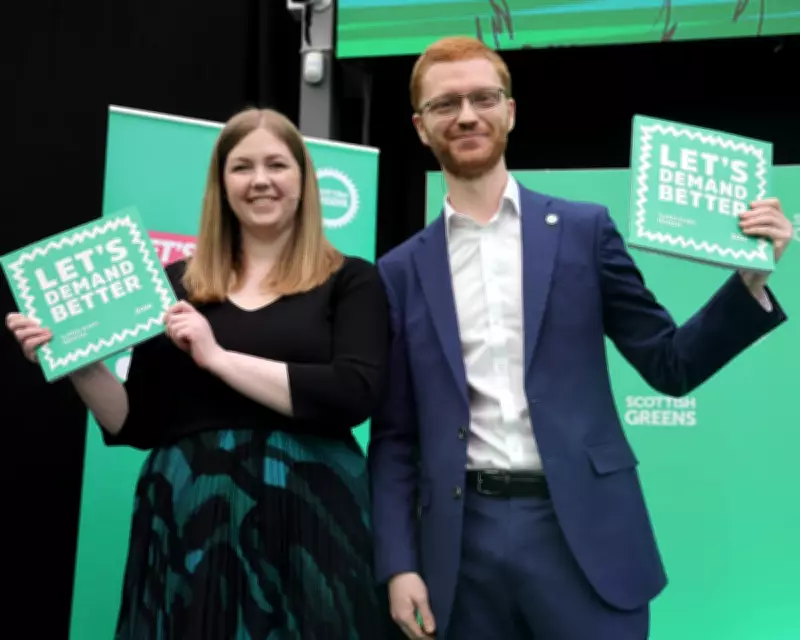
The Scottish Green party has launched a comprehensive and ambitious election manifesto, promising transformative policies including free bus travel, a universal basic income, and significant increases in public sector staffing. Co-leaders Gillian Mackay and Ross Greer unveiled the 168-page document at Barras Art and Design in Glasgow, positioning their party as the vehicle for "radical change" in Scottish politics.
Core Policy Proposals for a More Equal Scotland
The manifesto outlines hundreds of policy commitments designed to address inequality and reshape public services. Key proposals include taking all bus services into public ownership to provide free travel, reducing primary school class sizes to 20 pupils, ensuring a family doctor for every 1,000 residents, and building nearly 80,000 new social homes by 2031. Additionally, the Greens pledge to introduce 570 hours of free childcare annually for children aged six months to two years and to develop several new railway lines across Scotland.
Gillian Mackay emphasized that the Greens represent voters disillusioned with traditional parties, stating, "We're the party that can mobilize that anger toward constructive change. Our vision leverages the full powers of devolution to build the more equal future that so many are crying out for."

Funding Through Progressive Taxation
Ross Greer, who played a key role in the Greens' previous power-sharing agreement with former First Minister Nicola Sturgeon, explained that these expansive policies would be financed through new taxes targeting wealthier individuals and corporations. Proposed revenue measures include higher taxes on rich property owners and landlords, a surcharge on large corporate headquarters and Amazon-style warehouses, increased aviation taxes, a new carbon-based land tax for rural areas, health taxes on supermarkets selling tobacco, and additional levies on casinos and bookmakers.
However, Greer acknowledged that the manifesto does not provide detailed costings, arguing that the concept of a fully costed manifesto is "frankly misleading" to the public. He contended that government budgets are far more complex than household budgets, rejecting what he called a "fallacy" in UK politics.
Electoral Momentum and Strategic Positioning
The Scottish Greens are experiencing a notable surge in opinion polls, with some surveys placing them ahead of Labour in Scotland. This boost is partly attributed to the rising popularity of the Green party of England and Wales under leader Zack Polanski, whose media presence has drawn attention away from rivals like Reform UK. Lorna Slater, the Greens' former co-leader and candidate for Edinburgh Central, described Polanski's influence as "transformative" for the Scottish party's fortunes.
Political analysts suggest the Scottish Greens are poised to make significant gains in the upcoming 7 May national election, potentially winning their first constituency seats at Holyrood. They could unseat SNP cabinet minister Angus Robertson in Edinburgh Central and secure up to 12 MSPs through regional lists, thereby influencing the balance of power. The SNP is projected to win comfortably but fall short of an overall majority, making Green support crucial.
Slater highlighted the strategic importance of Green votes in countering Reform UK, citing the Gorton and Denton by-election in Manchester as evidence that Greens can effectively block Reform from securing list seats. "That, to me, is a very powerful message," she asserted, underscoring the party's growing relevance in shaping Scotland's political landscape.






