

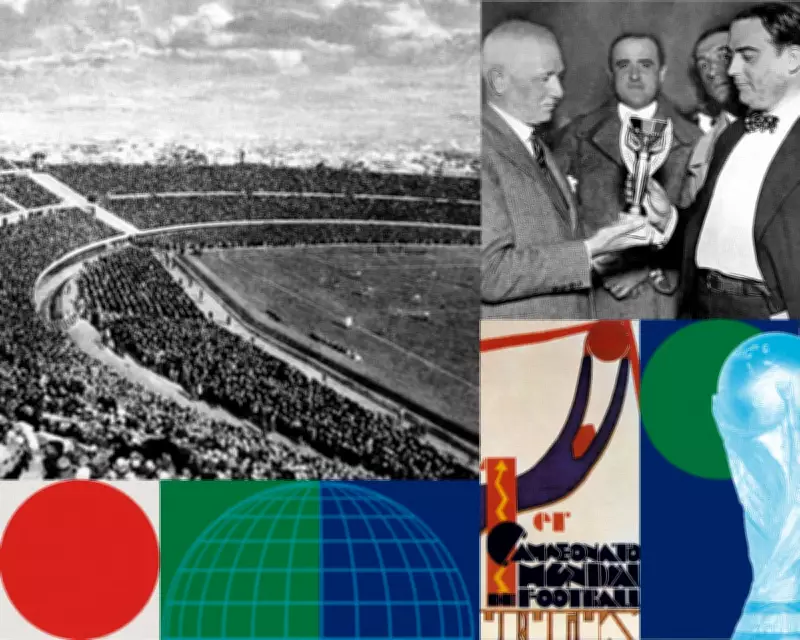
The 1930 World Cup remains a cornerstone of Uruguay's national identity, but its origins are deeply intertwined with diplomacy and national ambition. In the 1920s, Uruguay's foreign minister, leading one of the country's two rival football associations, collaborated with a diplomat in Switzerland to secure legitimacy by joining FIFA. The diplomat also unexpectedly entered Uruguay into the 1924 Olympic football tournament in Paris, then the premier global football stage. This move caused panic back home, as no one had anticipated the expense; a federation official had to use his own house as collateral for a loan to fund the team's transatlantic journey.
Once in Europe, Uruguay quickly won acclaim. They played nine friendlies in Spain, then dominated the Olympics, becoming the tournament's biggest attraction. The novelist Colette even visited their villa to write for Le Matin. Their brilliant passing football earned them the gold medal. The pro-government newspaper El Día noted that the team's performance did more for Uruguay's fame than thousands of dollars in propaganda. A national holiday was declared for their return, with subsidized travel so all could celebrate. Mundo Uruguayo claimed the team proved Uruguay was a "civilised nation" capable of exporting culture, not just meat. The success also reinforced the ideology of batllismo, promoting modernity, liberalism, and Uruguayan exceptionalism.
This achievement was rooted in state education programs that included physical training, a lesson amplified when Uruguay won Olympic gold again in 1928. When FIFA sought a separate global competition for professionals, Uruguay eagerly campaigned to host. President Juan Campisteguy hosted FIFA president Jules Rimet for an asado at the presidential palace, highlighting the political nature of the World Cup from its inception. The tournament coincided with the centenary of Uruguay's constitution, prompting construction of the impressive Centenario stadium, inaugurated with a 1-0 win over Peru. Twelve days later, Uruguay beat Argentina 4-2 in the final, a moment of national celebration after decades of civil war. However, the following year, the Wall Street Crash led to a coup that toppled Campisteguy.

The 1934 World Cup: Fascist Italy's Propaganda Machine
The template for using the World Cup as a national showcase was solidified in 1934. Benito Mussolini's regime leveraged the tournament for overt political projection, seeking validation through both victory and hosting. Italy's controversial win was hailed by the Florentine weekly Il Bargello as "the affirmation of an entire people, an indication of its virile and moral strength."
Hosting was equally important. Mussolini's government initiated stadium construction, subsidized fan travel, produced World Cup merchandise with fascist logos, and arranged live radio broadcasts to every competing European nation plus Egypt. Foreign visitors were impressed, with Gazzetta dello Sport claiming their praise demonstrated that "Mussolini's Italy – that was once little Italy of all improvisations and apologies – has organised the festival of football with style, flexibility, precision, even the courtesy and the meticulousness that indicate an absolute maturity and preparedness."
Patterns of Nation-Building
From Uruguay's innocent pride to Italy's malign propaganda, every World Cup has been a projection of the host and its government. It can bind a country together or offer evidence of national pre-eminence. This pattern continued with Russia in 2018 and Qatar in 2022, and will be tested again in 2026 when the US, Canada, and Mexico co-host. The tournament remains a powerful tool for nation-building and global image-making.






