

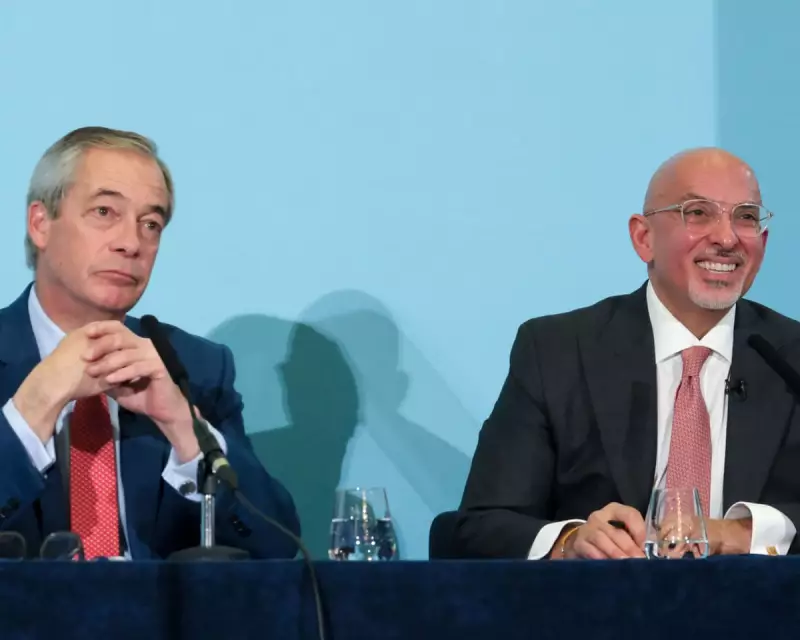
The defection of former Conservative chancellor Nadhim Zahawi to Reform UK marks a significant coup for Nigel Farage, but it also exposes a deep strategic quandary for the insurgent party. The move, announced on Monday, brings crucial ministerial experience to Reform's ranks while simultaneously risking the creation of a "Conservative party 2.0" just as voters rejected the original.
A Calculated Move or a Desperate Gamble?
Zahawi becomes the 20th and most senior ex-Tory MP to defect to Reform UK. His ministerial background, including overseeing the successful Covid vaccine rollout as health minister, directly addresses one of Reform's most glaring weaknesses: a lack of governing credibility. Farage has openly acknowledged this experience gap as a major hurdle in being seen as a credible party of government.
However, Zahawi's political flexibility is well-documented. During the summer of 2022, he was appointed chancellor by a beleaguered Boris Johnson, only to call for the prime minister's resignation little over a day later as ministerial resignations soared past fifty. He notably did not resign himself, staying at the Treasury for a further two months—a move that led colleagues to privately brand him an opportunist. Even Farage remarked at the time that it showed "all he's interested in is climbing that greasy pole."

The Conservative response to his defection was swift and brutal, briefing that he had "begged" for a peerage just weeks ago and was turned down. This references his sacking as Tory party chair in 2023 after an investigation found he failed to be sufficiently transparent about a £5m tax settlement with HMRC.
The Inherent Tensions in a Purple-and-Blue Alliance
Zahawi's arrival presents Reform with an identity crisis. While former Tory ministers bring experience, packing the party with them threatens to dilute its anti-establishment, insurgent brand. As one analysis put it, "insurgents don't tend to have been in power for 14 years." Reform's Zia Yusuf has already warned that "washed up" former Tory MPs will not be prioritised for parliamentary candidate selection.
Furthermore, the personal history between Zahawi and Farage is littered with public spats. In a 2015 social media post on X (only deleted on Monday), Zahawi labelled comments by Farage about Polish workers as "offensive and racist" and said he would be "frightened" to live in a country run by him. Policy flashpoints also loom, notably on vaccines: Zahawi was the health minister for the rollout, while Reform has platformed controversial figures who have made unfounded claims about vaccine safety.
Farage's career is defined by dramatic fallouts, and his relationship with Zahawi, a fellow high-profile figure with his own ambitions, will be closely watched by opponents for signs of strain.
Broader Implications for a Shifting Political Landscape
Zahawi's switch is a symbolic blow to the Conservatives, following the earlier defections of Lee Anderson and Danny Kruger. Six months ago, Tory MPs feared a wave of such departures. That fear has somewhat dissipated for two key reasons:
- Reform's poll momentum, while still showing a lead, appears to be stalling, suggesting a potential ceiling to its support.
- YouGov polling indicates Farage loses in head-to-head matches with Keir Starmer, Kemi Badenoch, and Ed Davey, hinting at potential tactical voting to keep him from power.
For the Tories, the immediate threat of mass defections has eased, but Zahawi's move is a stark reminder of the party's vulnerability. He declared at his defection press conference that the Conservative Party was now a "defunct brand" incapable of forming the next government. The big prize for Reform would be to lure sitting MPs, a move that could truly herald the end of the current Conservative parliamentary party.
For now, ambition has won out. Nadhim Zahawi, who once swore he would "die a Conservative," has calculated that his future lies with Nigel Farage's project. He is unlikely to be the last former minister to make that same calculation, as the battle to reshape the British right enters a new, unpredictable phase.






