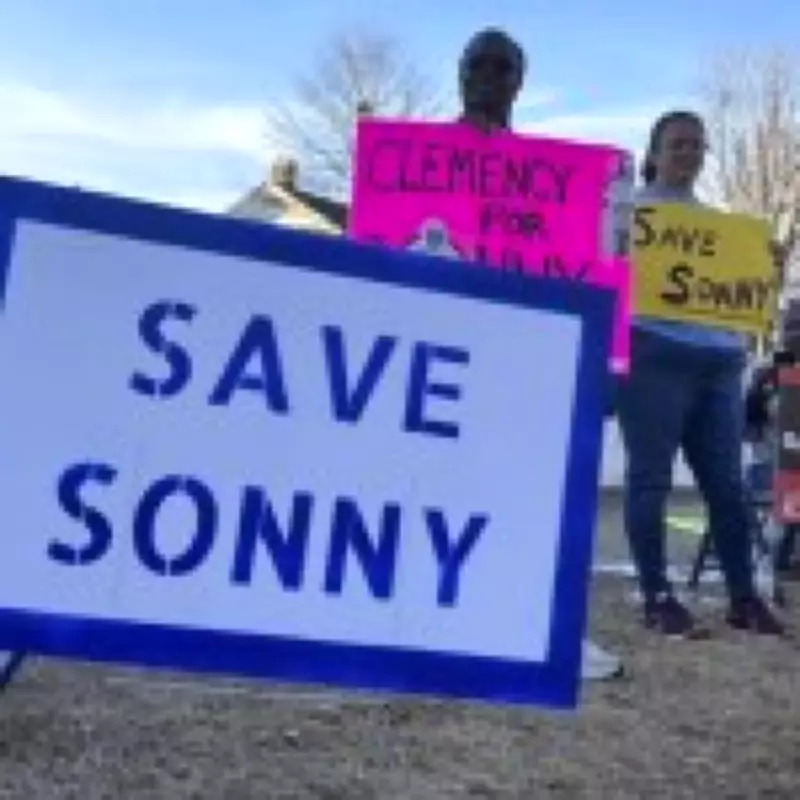
Alabama Governor Intervenes to Spare Elderly Death Row Inmate
In a dramatic last-minute intervention, Alabama Governor Kay Ivey has commuted the death sentence of 75-year-old inmate Charles 'Sonny' Burton, sparing him from execution just days before he was scheduled to die by nitrogen gas at Holman Correctional Facility in Atmore. The wheelchair-bound inmate had already selected his final meal and begun drafting his last will when the governor's decision was announced.
Controversial Case Raises Fundamental Questions About Justice
The case centers on Burton's role in a 1991 armed robbery that resulted in the death of Douglas Battle. While Burton organized the robbery, he was not present inside the building when Derrick DeBruce fired the fatal shot. Both men were originally convicted of capital murder under Alabama's accomplice liability law, which allows the death penalty for participants in serious crimes that result in homicide.
However, a critical disparity emerged when DeBruce successfully appealed his death sentence and was resentenced to life in prison without parole before dying while incarcerated. This discrepancy became central to clemency arguments, with Governor Ivey stating: "I believe it would be unjust for one participant in this crime to be executed while the participant who pulled the trigger was not."

Emotional Reactions and Broader Implications
Burton's daughter, Lois Harris, broke down in tears upon hearing the news, telling the Associated Press: "I'm just so happy, so happy. It's just tears of joy." Burton himself expressed gratitude through his legal team, saying: "Just saying thank you doesn't seem like much. But it's what I can give her."
The decision received support from unexpected quarters, including members of the victim's family. Battle's daughter, Tori, had written to Governor Ivey questioning the logic of executing Burton when the actual shooter had received a life sentence. Several original trial jurors also joined the clemency campaign.
Legal and Political Perspectives
Matt Schulz, Burton's assistant federal defender, praised the governor's decision, noting: "The biggest reason is the fact that this dichotomy of executing a non-shooter who did not even see the shooting take place after the state itself had resentenced the shooter to life without parole."
Conservative campaigner Demetrius Minor applauded the move, stating: "Conservatives know that government power can be abused and should not be used to execute someone who was not in the building when the murder was committed."
However, Alabama Attorney General Steve Marshall criticized the commutation, asserting: "There has never been any doubt that Sonny Burton has Douglas Battle's blood on his hands." Prosecutors maintained that Burton had held a gun to a store manager's head during the robbery.
Broader Death Penalty Debate
Laura Porter from the US Campaign to End the Death Penalty welcomed the decision, saying: "The death penalty process is deeply flawed when someone who was not present for the killing faces execution, while the person who committed the murder does not."
Alice Marie Johnson, who received clemency from former President Donald Trump and later served as a pardon advisor, praised Governor Ivey on social media: "She showed what courageous and common sense leadership looks like... she ensured that justice — not technicalities — guides the most serious decision a state can make."
Burton will now spend the remainder of his life in prison without possibility of parole, receiving the same punishment as the triggerman in the case that has sparked renewed debate about fairness in capital punishment application.