Ancient Indigenous Community Confronts Modern Threats to Survival
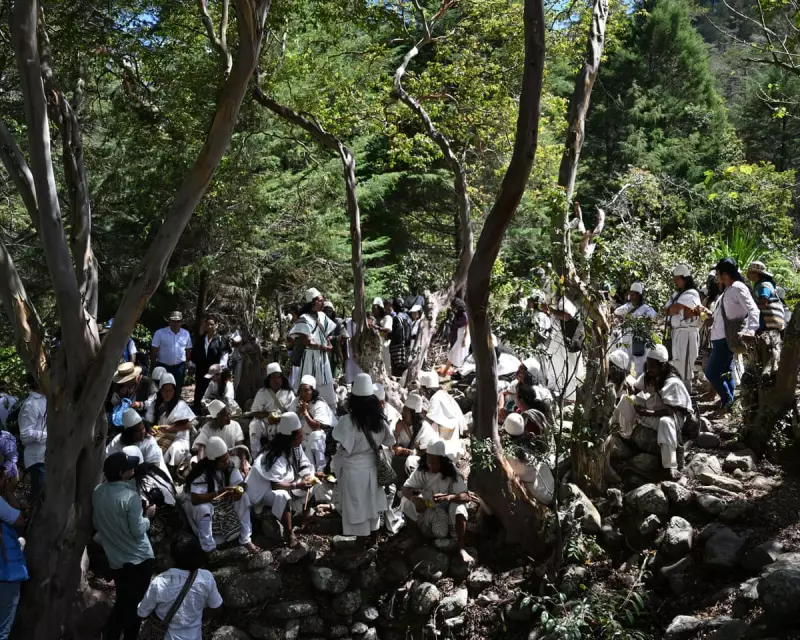
In the remote high valleys of Colombia's Sierra Nevada de Santa Marta, the Arhuaco people have maintained their spiritual traditions for thousands of years, surviving Spanish conquest and colonial oppression. Today, however, they confront what many describe as their greatest existential threat yet – the encroachment of violent armed groups, drug traffickers, and extractive industries onto their sacred lands.
Spiritual Guardians Under Siege
The Arhuaco descend from the ancient Tayrona civilisation, which was brutally subjugated by Spanish conquistadors during the sixteenth century. Those who survived retreated to the upper reaches of the Sierra Nevada, the world's highest coastal mountain range, where they developed a profound spiritual belief system centred on worshipping and protecting the Earth. For centuries, they endured successive waves of intrusion, from settlers dividing their territories to Catholic missionaries attempting to suppress their cultural practices.
Now, according to Indigenous leader Ati Quigua, a new and more dangerous force has arrived. "All of the actors have arrived: the paramilitaries, the guerrillas, the drug traffickers," Quigua explains. "They are taking control of our areas and interfering in our local assemblies. They set curfews, telling us when we can and cannot walk in the territory. They want to use it as drug-trafficking corridors."

Strategic Prize for Criminal Networks
The Sierra Nevada's geographical position has transformed it into a strategic prize for traffickers seeking routes to the Caribbean Sea. Despite its designation as a UNESCO Biosphere Reserve of Man and Humanity and recognition in the journal Science as the most irreplaceable ecosystem on Earth, the mountain range suffers from limited state presence and porous borders that criminal organisations readily exploit.
This vulnerability coincides with a broader surge in violence across Colombia, where illegal groups battle for control of illicit economies including drug-trafficking routes, coca-growing regions, and mineral extraction. The 2016 peace deal with the Revolutionary Armed Forces of Colombia (FARC) has begun to unravel, allowing splinter factions to fill the resulting power vacuum.
Physical and Cultural Extinction Looms
United Nations reports now warn that the five Indigenous groups inhabiting the Sierra Nevada – the Kogui, Wiwa, Kankuamo, Arhuaco, and Ette Naka, with a combined population of approximately 54,700 people – face "physical and cultural extinction." Scott Campbell, Colombia's representative for the UN high commissioner for human rights, describes this risk as "an ongoing tragedy that we can and must prevent."
Campbell notes that violent actions by non-state armed groups prevent Indigenous peoples from travelling within their territory, hunting, or conducting ancestral practices in sacred places. Armed groups have reportedly installed anti-personnel mines and unconventional explosive devices, with members of the Wiwa community suffering injuries from these devices in recent months.
Systematic Violence and Displacement
The consequences for the Arhuaco have been immediate and devastating. Quigua reports that non-state armed groups have attacked their sacred capital and in other territories "burned all our traditional work, our sacred objects." She describes this as "a spiritual violence, a violence to gain a foothold in our territory."
Forced displacement has become increasingly common, with hundreds displaced over the past two years and hundreds more confined to their homes. Indigenous leaders report escalating assassination attempts, while research organisation Cinep/Programme for Peace documents victims being tortured, dismembered, and displayed in public spaces to instil collective terror.
Children Targeted for Recruitment
Perhaps most alarmingly, armed groups have turned to recruiting children to bolster their ranks. The Colombian ombudsman's office reported 43 alerts of recruitment in 2019, 184 cases of forced recruitment in 2023, and at least 409 cases in 2024 – figures experts believe vastly underestimate the true toll as many families remain silent for fear of reprisals.

Indigenous groups have been disproportionately affected, accounting for almost half of the UN's verified cases. "They have started taking our children, recruiting them," says Quigua. "Our people have seen some who left in the mountains in camouflage, with rifles. It's a cultural invasion."
Children are used as informants, tasked with surveillance, intimidation, and upholding group laws within communities, or as frontline soldiers protecting more experienced members. Sexual violence against recruited children remains widespread.
Environmental Destruction Compounds Crisis
The battle for survival extends beyond armed groups to include mining interests and other extractive industries. According to Quigua, "There are constantly new projects: copper mining, farming palm oil, building hydroelectric dams. They even want to mine gold on our sacred sites. The landscape deterioration has already begun – they have wounded our mountain."
Data from Colombia's National Mining Agency reveals 124 active mining titles and 88 overlapping mining applications within the Sierra Nevada's ancestral territory boundary, known as the Black Line. Indigenous leaders report facing death threats for speaking out against environmental destruction, with at least three surviving recent assassination attempts.
Colombia has recorded the highest number of murders of environmental defenders for three consecutive years, according to Global Witness. "People are afraid. We live in constant fear," Quigua acknowledges. "Colombia is a very dangerous place for those who defend it."
A Race Against Time
For 22-year-old spiritual leader Dwiarinmacku Alfaro Kwimi, the escalating violence represents a war against nature itself. "The territory gives us the nourishment we need to survive," he explains. "We are connected to every living being – plants, animals, the sun – in the land. We must defend it."
The communities of the Sierra Nevada de Santa Marta recognise that their very existence hangs in the balance. Quigua offers a stark warning: "We are convinced that, if not, within two generations, our future is over." As armed groups tighten their grip on these ancestral lands, the Arhuaco and their neighbouring Indigenous peoples continue their struggle to preserve not just their territory, but their cultural identity and spiritual connection to the Earth that has sustained them for millennia.