

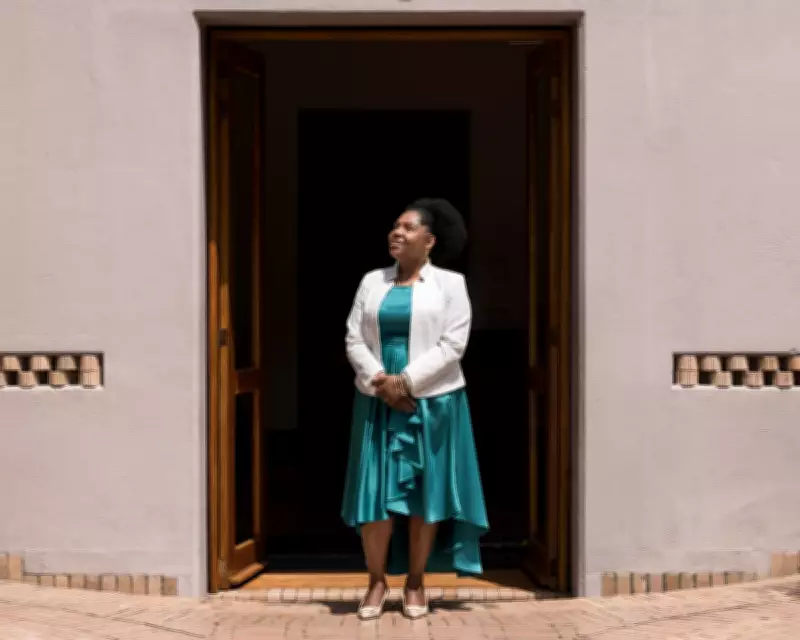
Colombia's Vice-President Francia Márquez Opens Up About Racism and Political Struggles
In a rare and candid interview at the vice-presidential residence in Bogotá, Francia Márquez, Colombia's first Black vice-president, has spoken out about the significant challenges she has faced during her four-year term. Márquez, who made history when elected in 2022 alongside leftwing President Gustavo Petro, attributes much of her frustration to systemic racism within and outside the government.
The Colombian state is a racist state, Márquez stated emphatically, highlighting the barriers she encountered as a Black woman in a conservative political landscape. Her comments come as her relationship with President Petro has grown strained, with the two barely speaking for over a year.
A Historic Milestone Marred by Obstacles
When Márquez and Petro leave office in August, her portrait will join a gallery of former vice-presidents at the official residence, marking the first time an Afro-Colombian face appears among the all-white lineup. This symbolic change reflects a broader shift, yet Márquez feels her leadership was consistently undermined.

She drew parallels with other Black women in high office, such as Kamala Harris in the United States and Epsy Campbell Barr in Costa Rica, noting that all three were blocked from taking on leading roles. This has been a strategy of racism, and it doesn't matter whether the government is right or left, Márquez explained, suggesting that Harris's exclusion by Joe Biden contributed to her electoral loss in 2024.
From Activism to Vice-Presidency
Born in Yolombó, Cauca, a region deeply affected by Colombia's armed conflict, Márquez began her activism at age 13. She gained prominence in 2014 by leading the March of the Turbans, a 350-mile walk by Black women to protest illegal mining. After winning the Goldman Environmental Prize in 2018, she entered politics, eventually joining Petro's ticket and playing a key role in their historic victory.
However, the past four years have been very challenging, according to Márquez. She faced racism from the press, including caricatures depicting her as King Kong, and scrutiny over travel expenses. Trips to Africa to boost exports were dismissed as a safari by critics, with one senator mocking the efforts.
Internal Racism and Government Strain
Márquez also pointed to racism within the government itself. Upon taking office, she diversified her staff, but faced backlash from officials who implied her appointees were unqualified. Online attacks further compounded the issue, with one aggressor acquitted after calling her a primate on social media.
The strain with President Petro peaked over the Ministry of Equality, a campaign promise that Márquez helped establish. After two years of building it from scratch, she was removed from the role in February 2025 following public criticism of funding and corruption allegations. I felt very sad, hurt, she recalled, noting that her ancestors' struggles made the setback particularly painful.
Legacy and Future Prospects
Despite the obstacles, Márquez takes pride in her achievements, such as increasing exports to African countries. She will not run for president, citing a promise to serve only one term, but believes her presence has paved the way for others. My invitation is for other women to dare to occupy these spaces, she said.
Political analyst Ana María Ospina Pedraza noted that while Márquez's election was a historic milestone, her leadership did not meet initial expectations due to a lack of tangible results. With upcoming elections featuring candidates like Iván Cepeda and rightwing figures, Márquez's political moment may have faded, but her impact on representation remains significant.
As Colombia prepares for a new chapter, Márquez's tenure highlights ongoing struggles against racism and the complexities of breaking barriers in high office.






