Epstein Document Release Leaves Millions Hidden From Public View
The United States Justice Department has finally released a substantial cache of documents related to the notorious financier and convicted sex offender Jeffrey Epstein, but the disclosure has been met with immediate criticism and scepticism. On Friday, federal authorities made public approximately 3.5 million files, a move described by Deputy Attorney General Todd Blanche as likely the final major declassification concerning the Epstein case. However, this release represents only a fraction of the material identified by prosecutors, who had previously flagged around 6 million documents as "potentially responsive" to legislative requirements.
Partial Compliance With Congressional Mandate
This document dump constitutes what many observers are calling a belated and incomplete effort to comply with legislation passed by Congress towards the end of last year. The bill explicitly mandated that all government records pertaining to Epstein and the various investigations into his systematic sexual abuse of underage girls must be made fully accessible to the public by the 19th of December 2025. The Justice Department's decision to release just over half of the identified files has therefore sparked accusations of obfuscation and a failure to uphold the spirit of the law.
Representatives from across the political spectrum have voiced their discontent. Republican Thomas Massie and Democrat Ro Khanna jointly condemned the selective disclosure, demanding immediate and unredacted access to the remaining millions of pages. "The DOJ said it identified over 6 million potentially responsive pages but is releasing only about 3.5 million after review and redactions. This raises serious questions as to why the rest are being withheld," Khanna stated. He emphasised that such actions "only shield the powerful individuals who were involved and severely damage the public's trust in our institutions."

Contradictions in Redaction and Protection Claims
Officials from the Justice Department have long argued that the enormous volume of Epstein-related material, coupled with the highly sensitive nature of much of its content, necessitated extensive time for careful redaction. They claimed this process was essential to protect the identities and wellbeing of victims. In a formal letter to Congress accompanying Friday's release, Deputy Attorney General Blanche asserted that tens of thousands of additional documents were being withheld specifically due to the presence of child sexual abuse material and information that could identify and endanger victims.
Yet, this justification has been thrown into doubt by the content of the files that were made public. Journalists and victims' advocates reviewing the documents have found that many contain unredacted names and other sensitive personal information about the women and girls abused by Epstein. This has led to accusations of a profound betrayal by the Department of Justice, with victims and observers alike questioning what precise protective work the department has been undertaking if such damaging details remain exposed.
Political Tensions and the Shadow of Powerful Connections
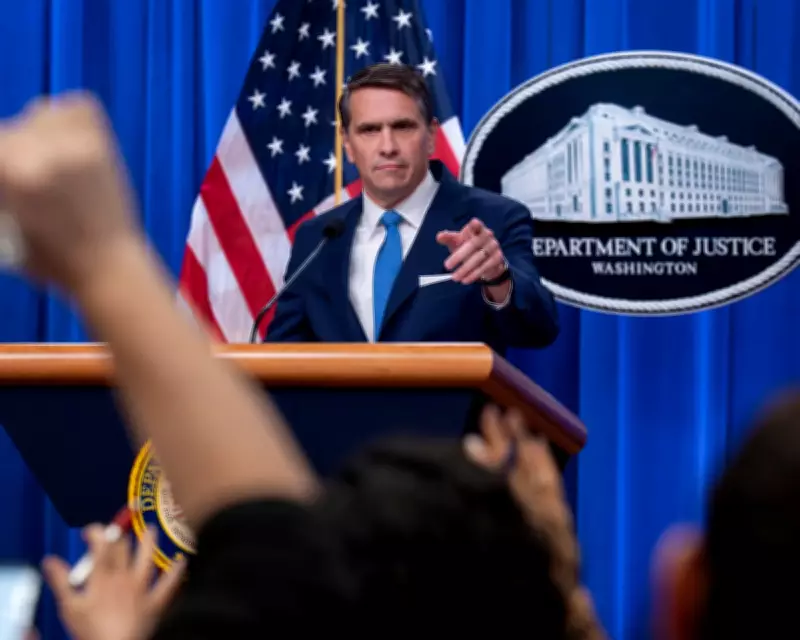
The decision to have Deputy Attorney General Todd Blanche, rather than Attorney General Pam Bondi, announce the release highlights growing internal tensions within the administration. The government continues to face mounting criticism over its perceived mishandling of the Epstein scandal, compounded by persistent questions regarding former President Donald Trump's longstanding and apparently close association with the disgraced financier.
Blanche, who previously served as Trump's personal criminal defence attorney, was keen to distance the White House from the review process. "The White House had no oversight and did not tell this department how to do our review, and what to look for, and what to redact or not redact," he insisted, adding that the Justice Department "did not protect Trump" in its decisions. However, he concurrently acknowledged that Trump had expressed a preference for "maximum transparency," despite the former president having initially opposed the files' release until a congressional vote forced his hand late last year.

Content of the Released Cache
The newly public trove is vast and disorganised, comprising:
- Approximately 2,000 video files.
- Around 180,000 images.
- A significant quantity of commercial pornography found within Epstein's estate.
- Homemade abuse material depicting his underage victims.
- A large number of uncorroborated tips from the public, some of which contain allegations against other powerful figures, including Donald Trump.
The files are being uploaded to the Department of Justice website in batches of tens of thousands, with no comprehensive index or clear documentation of their provenance, making systematic analysis a slow and challenging task for journalists and researchers.
Revelations of Elite Social Integration
Even this partial release further illuminates the disturbing extent to which Epstein remained embedded within the highest echelons of global power and society, even after his 2008 conviction for soliciting prostitution from a minor. The documents reveal, for instance, that in 2012, businessperson Howard Lutnik—now serving as Trump's Commerce Secretary—appears to have visited Epstein's private Caribbean island with his family. This contradicts Lutnik's previous assertions that he severed ties with Epstein around 2005.
Email correspondence also paints a picture of familiar, even jovial, relationships with other billionaires. In a 2013 exchange, Richard Branson wrote to Epstein, "Anytime you're in the area would love to see you. As long as you bring your harem!" Similarly, emails from 2012 show Elon Musk expressing enthusiastic interest in visiting Epstein's island, asking, "What day/night will be the wildest party on your island?"—a stark contrast to Musk's later public claims that he refused Epstein's invitations. Both men have denied any wrongdoing and sought to minimise their connections to the financier.
A Scandal That Reveals a Broader Corruption
The Trump administration expended considerable effort throughout 2025 to prevent the release of these files. When public pressure made congressional action inevitable, the strategy shifted to minimising the perceived impact of the disclosures, particularly concerning the president and his allies. However, the fundamental nature of the Epstein scandal makes it difficult to contain. It acts as a powerful lens focusing on the untrustworthiness, mendacity, and corruption prevalent among ruling elites—a group that Trump and his movement now prominently represent.
Deputy Attorney General Blanche faced an unenviable task on Friday: attempting to convince the nation that the administration has nothing to hide, that those in power are acting in good faith, and that the public is being told the complete story. Yet, given what the world has already learned about these powerful individuals from the Epstein saga itself, the question remains: will anyone believe him? The release of 3.5 million files, while significant, has only deepened the mystery surrounding the millions still withheld, ensuring public scepticism and demand for full transparency will continue unabated.