Former Phone Hacker Paid Sources in Daily Mail Investigation, Court Hears
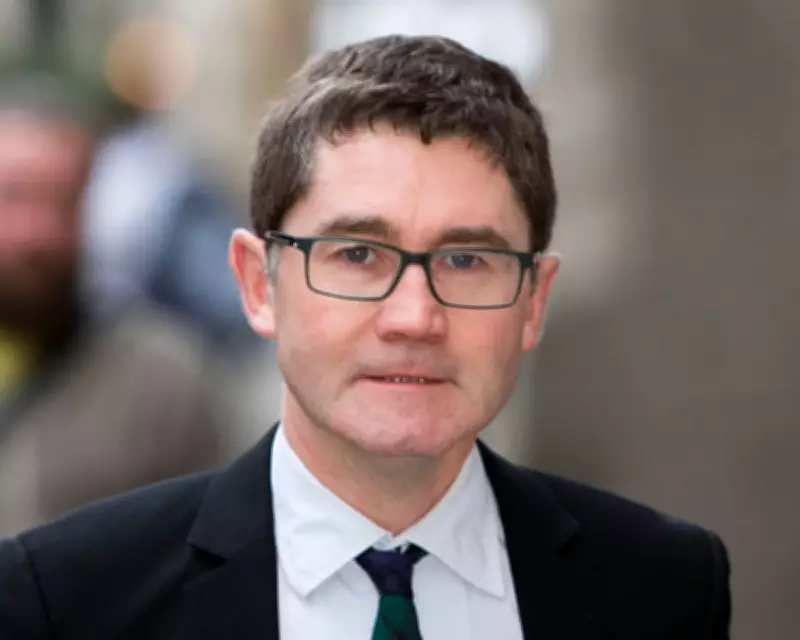
Graham Johnson, a former phone hacker who later turned to researching unlawful activity in the press, has confirmed to the High Court that he made payments exceeding £100,000 to individuals whose claims are central to allegations against the publisher of the Daily Mail. The court heard that Johnson, now a researcher assisting claimants including Prince Harry, paid six people as part of his efforts to draw attention to alleged media lawbreaking.
Payments to Key Figures in the Case
Johnson testified that he never paid for witness testimony, but rather compensated his contacts, authors, and contributors for their work. The funding for these payments primarily came from the late multimillionaire privacy campaigner Max Mosley or a company linked to Mosley's estate, with additional support from a loan by former Liberal Democrat MP Evan Harris, a prominent member of the Hacked Off campaign group.
The payments included substantial sums to several individuals:

- Gavin Burrows, a private detective who has made serious claims about phone hacking, landline tapping, and bugging, received £75,000. Burrows now alleges that the signature on his witness statement regarding unlawful activities he carried out for Associated Newspapers Ltd (ANL) is forged.
- Glenn Mulcaire and Greg Miskiw, both convicted phone hackers, were paid £22,000 and £12,000 respectively between 2015 and 2016. Johnson was shown an email in court where he stated he was trying to persuade Mulcaire to "raise his game."
- Steve Whittamore, convicted of breaching information laws in 2005, received £5,000 of a £15,000 contract in 2021.
- Daniel Portley-Hanks, a US-based private investigator, was paid £6,000 for work on a book, plus a few hundred dollars for his archive.
- Christine Hart, another private investigator turned journalist, received £5,000 from Johnson.
Legal Arguments and Denials
Antony White, the lead barrister for ANL, suggested to Johnson that there was a "pattern of payments, or promises of payments, to people to provide evidence that can be used against Associated or newspapers more generally." White argued this was part of Johnson's modus operandi in investigating evidence of unlawful information gathering.
Johnson repeatedly denied these allegations, insisting the money was paid for "journalistic reasons." He stated, "I never paid for witness evidence which was used in legal proceedings. I had taken legal advice multiple times, including written advice, and I stuck with that advice and complied with it."
Johnson explained that he wrote numerous articles about the group and arranged interviews for some on outlets like the BBC's Panorama. "I took this story, a dead story, and got it part of popular culture again, which it is," he told the court.
Background of the Case
The claimants' legal team accuses ANL of using Burrows to carry out a series of unlawful activities. They allege Hart engaged in "blagging" information for the publisher, while Portley-Hanks and Whittamore obtained private personal details, and Mulcaire and Miskiw dealt in information from phone hacking.
ANL has denied all claims of unlawful information gathering made by the group of claimants, which includes Prince Harry, Doreen Lawrence, Sir Elton John and his husband David Furnish, and actors Elizabeth Hurley and Sadie Frost. The publisher has described the accusations as "preposterous" and maintains that all articles were sourced "by entirely legitimate reporting."
In written submissions, White contended that the accusations against ANL result from an attempt by the claimants' researchers and legal team to present a case "based entirely on spurious and/or discredited information, none of which is before the court in the form of proper admissible evidence."
The case continues in the High Court, with further proceedings expected to examine the validity of the evidence and the nature of the payments made during the investigation into alleged media misconduct.