

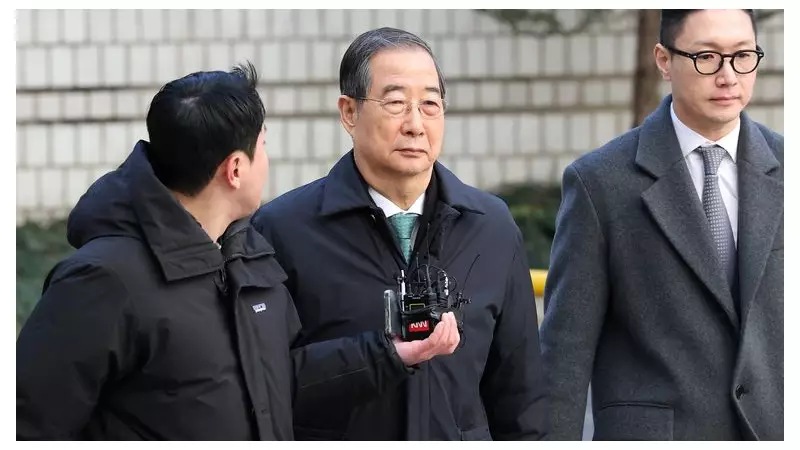
In a landmark ruling that has sent shockwaves through South Korea's political establishment, former Prime Minister Han Duck-soo has been sentenced to 23 years in prison for his pivotal role in the failed martial law declaration of December 2024. The verdict, delivered by the Seoul Central District Court on Wednesday 21 January 2026, marks a significant moment in the nation's ongoing reckoning with the constitutional crisis that unfolded under the administration of former President Yoon Suk Yeol.
A Conviction for Insurrection and Related Offences
The court found Han Duck-soo, aged 76, guilty on multiple serious charges, including insurrection, perjury, and forging an official document. Prosecutors argued that he was instrumental in executing Yoon Suk Yeol's orders during the brief but tumultuous period of martial law, which saw the military deployed on the streets of South Korea for approximately six hours.
In a damning assessment, the presiding judge described the events as a "top-down insurrection" and criticised Han for betraying his democratic responsibilities. "The defendant was a prime minister who had been indirectly given democratic legitimacy and responsibility," the judge stated. "Nevertheless, the defendant chose to turn a blind eye... and participate in the order. As a result, South Korea was in danger of returning to the dark past when the basic rights and liberal democratic order of the people were violated, potentially preventing them from escaping... dictatorship for a long time."

The Context of the Martial Law Declaration
The crisis began on 3 December 2024, when President Yoon Suk Yeol declared martial law, placing the military in temporary charge. This move sparked immediate chaos, with protesters clashing violently with military and police forces, and politicians forcing their way into the National Assembly. Within hours, parliament voted to block the order, and Yoon was compelled to overturn it, but the damage to South Korea's democratic institutions had already been done.
Han Duck-soo's conviction is particularly notable as he is the first former cabinet minister to be ruled on criminal charges directly tied to the martial law declaration. The court highlighted that he helped orchestrate the appearance of a cabinet meeting that facilitated the declaration, a key action in the insurrection plot.
Legal Proceedings and Immediate Aftermath
Following the ruling, Han Duck-soo, dressed in a suit and green tie, expressed that he would "humbly follow the judge's decision." He was detained immediately after the sentencing, and his lawyer has announced plans to appeal to the country's supreme court. Throughout the trial, Han had denied any wrongdoing on all charges except perjury, claiming in November that while he regretted not stopping Yoon, he "never agreed to it or tried to help."
This case is part of a broader legal fallout from the martial law incident. Just a day before Han's sentencing, former President Yoon Suk Yeol was jailed for five years for mobilising the presidential security service to obstruct authorities from executing an arrest warrant related to the martial law imposition. Yoon has appealed that ruling and faces another trial on 19 February for the more severe charge of "masterminding an insurrection," where prosecutors are seeking the death penalty—a punishment not carried out in South Korea since 1997. Yoon also confronts seven separate trials, underscoring the extensive legal consequences of the crisis.
Political Repercussions and the Path Forward
The martial law declaration triggered a series of political upheavals. After Yoon was impeached by parliament, Han Duck-soo served as acting president before he too was impeached. Although the constitutional court later overturned his impeachment, Han resigned as president and called a snap election in June, which was won by Liberal opposition candidate Lee Jae-myung. This transition highlights the profound impact of the incident on South Korea's governance and public trust.

As South Korea continues to grapple with the legacy of this dark chapter, the sentencing of Han Duck-soo serves as a stark reminder of the importance of upholding democratic principles and the rule of law. The ongoing trials and appeals will likely keep this issue at the forefront of national discourse for months to come.





