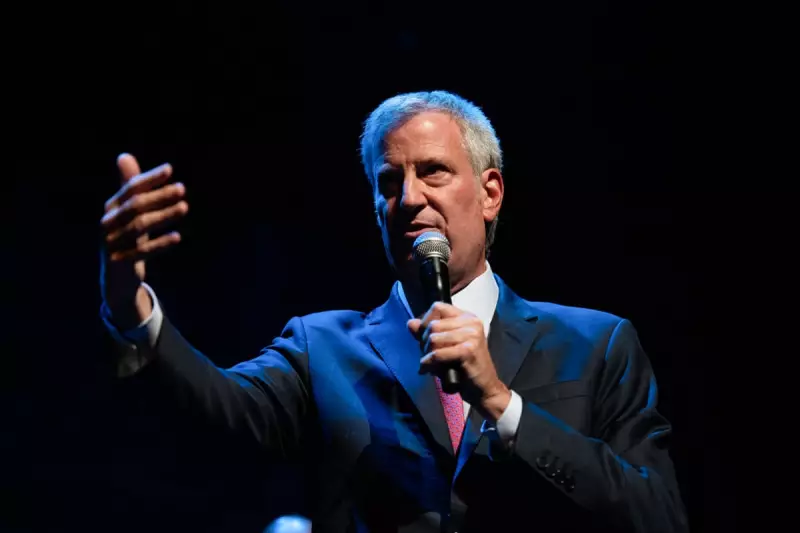
In a startling revelation that has sent shockwaves through political circles, a completely fabricated interview with former New York City mayor Bill de Blasio was published and subsequently retracted by The New York Times, exposing what appears to be an elaborate hoax.
The Phantom Conversation
The incident centres around an interview supposedly conducted by Mahmood Mamdani, a professor at Columbia University, in which de Blasio was quoted making controversial statements about his time as mayor and current political figures. The problem? The entire conversation never actually took place.
According to statements from both parties, de Blasio and Mamdani never spoke, leaving journalists and readers alike questioning how such a significant fabrication could pass through the editorial processes of one of the world's most respected news organisations.

Digital Deception or Human Error?
While the exact mechanism behind the fake interview remains under investigation, the incident raises alarming questions about the vulnerability of modern journalism to sophisticated deception. The timing is particularly sensitive, occurring during a heated election season when political misinformation can have significant consequences.
The New York Times moved quickly to retract the piece, issuing a formal statement acknowledging the serious breach of editorial standards. "We have retracted this story because it did not meet our standards for publication," the newspaper stated, adding that they're "investigating how this occurred."
Broader Implications for Media Trust
This incident comes at a time when public trust in media institutions is already fragile. The sophistication of the deception – whether enabled by artificial intelligence or other means – highlights new challenges facing news organisations in verifying digital content.
Political commentators have expressed concern about the potential for similar fabrications to influence public opinion, particularly as advanced AI tools become more accessible to bad actors seeking to manipulate political discourse.
As the investigation continues, the journalism community is left grappling with fundamental questions about verification processes in an era where seeing is no longer necessarily believing, and even respected institutions can fall victim to sophisticated deception.