

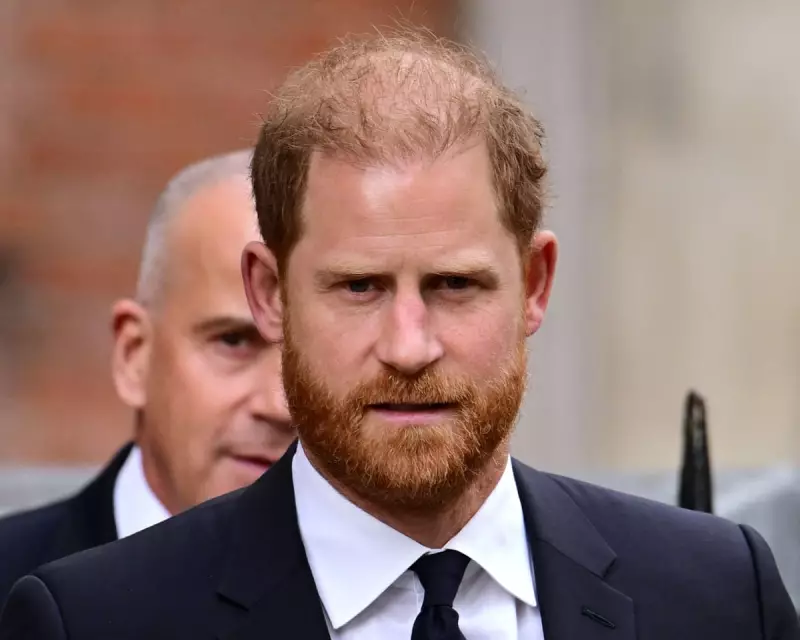
Prince Harry Believes He Has Been Targeted for Challenging Daily Mail Publisher
The Duke of Sussex has expressed in court that he feels subjected to a "sustained campaign of attacks" for having "the temerity to stand up" to the publisher of the Daily Mail. This revelation emerged during a high-profile legal hearing at the High Court in London, where Prince Harry and six other claimants are pursuing a case against Associated Newspapers Ltd.
Allegations of Unlawful Information-Gathering Detailed
David Sherborne, the barrister representing Prince Harry and the other claimants, presented 14 specific articles published between 2001 and 2013 that he alleges were secured through unlawful information-gathering practices. These articles, primarily written by royal correspondents Katie Nicholl and Rebecca English, form the core of the legal challenge against the newspaper group.
Sherborne told the court that the duke feels "targeted for standing up" to Associated Newspapers, describing how the alleged activities have caused significant distress and paranoia. The barrister highlighted that sensitive information, including flight details that could compromise Harry's security arrangements, had been obtained unlawfully according to their claims.

Specific Examples of Alleged Privacy Breaches
The court heard detailed examples of the articles in question:
- One story revealed that Harry had been chosen as godfather to the child of his former nanny, Tiggy Legge-Bourke - information that Sherborne stated had not been shared with wider family members, including King Charles
- Articles contained specific details about Harry's relationship with former girlfriend Chelsy Davy, including exact flight information that Sherborne claimed was obtained through a private investigator paid £200 in cash
- A 2010 article contained what Sherborne described as "specific and intimate details" of Harry's private life, including his preferences for where he liked to spend nights
Sherborne argued that such information could not "conceivably" have come from legitimate sources, pointing to what he called implausible explanations from the newspaper's journalists about their sources.
Associated Newspapers' Defence and Counter-Arguments
Antony White, leading the defence for Associated Newspapers, presented a robust counter-argument to the claims. He stated that the stories had been obtained "entirely legitimately" through various contacts including individuals in Harry's social circle, press officers, publicists, freelance journalists, and photographers.
White told the court that the duke's social circle "was and was known to be a good source of leaks or disclosure of information to the media about what he got up to in his private life." He characterised the claimants' case as "clutching at straws in the wind" and argued that they were attempting to equate payments to private investigators with proof of unlawful activity.
The defence also highlighted that Associated Newspapers has a substantial number of journalists prepared to give evidence addressing the allegations, including longtime Daily Mail editor Paul Dacre, which White said "speaks volumes about the culture" at the publisher.
Timing of Legal Action and Continuing Proceedings
Sherborne addressed claims from Associated Newspapers that the claimants had waited too long to bring their case, stating that each claimant discovered they had a serious case against the publisher after October 2016 - the cutoff date for legal action. He described allegations that the legal team had engineered "watershed moments" to ensure the action could proceed as "offensive as it is misconceived and untrue."
The defence countered that much of the claimants' evidence of unlawful activities was drawn from previous cases against other newspaper publishers and should not be admissible in this particular case against Associated Newspapers.

Prince Harry is expected to give evidence in court this week, potentially appearing as early as Wednesday - a day earlier than initially anticipated. The trial continues as both sides present their arguments in what represents a significant legal confrontation between prominent public figures and one of Britain's major newspaper publishers.





