

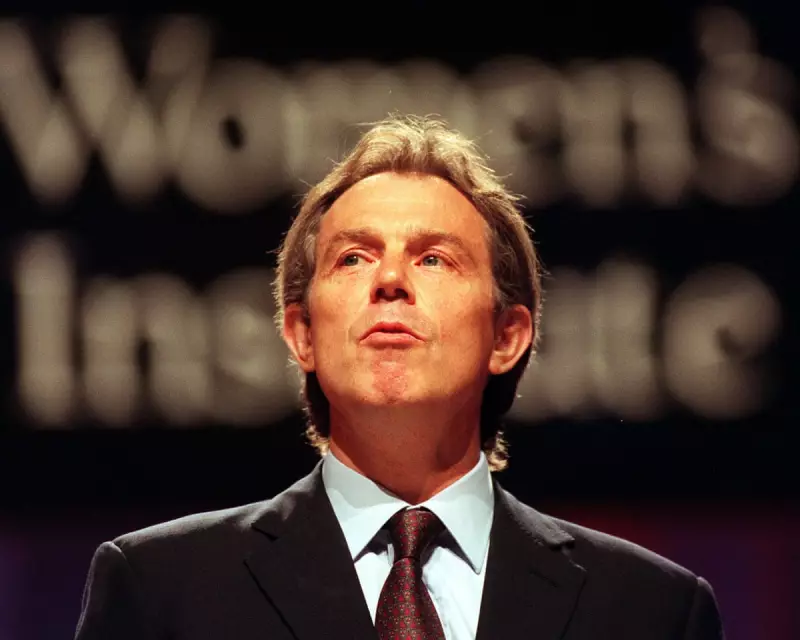
Newly released documents have shed fresh light on one of Tony Blair's most infamous political moments: his disastrous speech to the Women's Institute in 2000, which was met with heckles and slow hand-claps from a 10,000-strong audience.
Advisers Clash Over 'Patronising' Draft
The National Archives files reveal that Blair's inner circle was deeply divided over the content of the address. Fresh from paternity leave after the birth of his son Leo, the then Prime Minister believed the WI annual conference at Wembley Arena was a chance for a personal, reflective speech blending tradition and modernity to appeal to Middle England.
However, his initial draft was heavily criticised. Communications chief Alastair Campbell warned it lacked energy and risked seeming patronising. He singled out lines where Blair applauded the Tate Modern "even though I don't always understand it" and defended the "pomp and pageantry" of the Queen's speech. Campbell urged Blair to inject more policy on topics like drugs, Sure Start, and university access.

Fear of Appealing to 'Fuddy-Duddy Britain'
Other advisers expressed strong concerns. Strategy guru Philip Gould felt the draft was condescending and lacked dynamism. Special adviser Peter Hyman feared it handed the Tories a propaganda victory and could be seen as Blair shedding his cool image to appeal to 'fuddy-duddy Britain'.
Political adviser Sally Morgan was "deeply uncomfortable" with the concept of 'old-fashioned values', warning it would alienate younger voters. She also cautioned Blair against referencing "women tied to the kitchen", noting many in his audience were stay-at-home.
Despite the WI leadership explicitly warning Number 10 they were "wary of anything that smacked of capital P politics", Blair's team pushed for a more politicised rewrite, deeming the original too complacent.
The Infamous 'Raspberry'
The final result, delivered after several rewrites, was a calamity. The audience of WI members responded with jeers and the rhythmic slow hand-clap, with many comparing it to a party political broadcast. The media universally panned it as 'an extraordinary error of political judgement'.
Reflecting on the event years later for a BBC documentary, Blair wryly noted: "I gave them a lecture, they gave me a raspberry." The released memos and correspondence now provide the definitive behind-the-scenes account of how his advisers' misjudgments contributed to a defining moment of political tone-deafness.






