

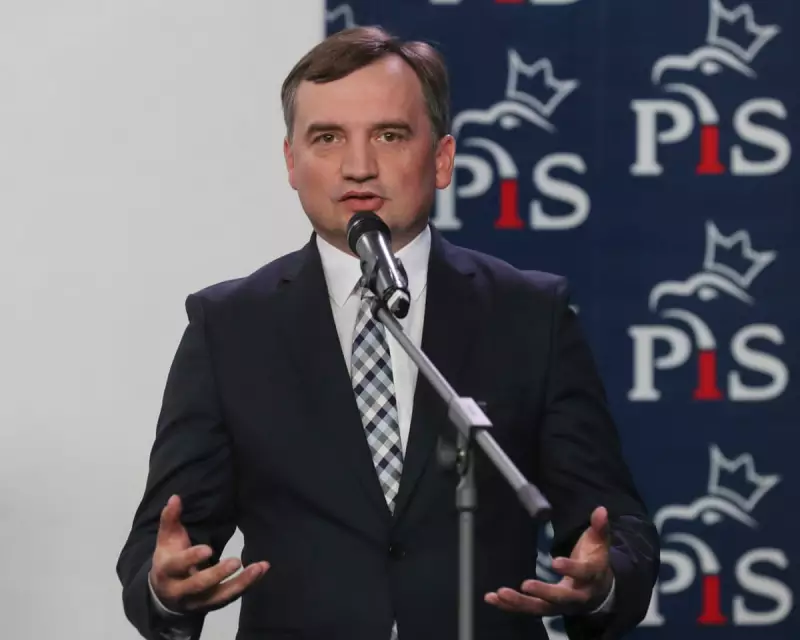
Hungary has taken the dramatic step of granting political asylum to Zbigniew Ziobro, Poland's former justice minister, effectively shielding him from a criminal investigation in his home country. The move, confirmed on Monday, 12 January 2026, represents a significant escalation in political tensions between the two central European nations and underscores Hungary's willingness to offer sanctuary to allied figures facing legal jeopardy.
A Shield from Prosecution
The decision provides Zbigniew Ziobro with protection from an ongoing abuse of power investigation being conducted by Polish prosecutors. Ziobro, a controversial and hardline figure, served as Poland's justice minister and prosecutor general from 2015 until 2023. He was a central architect of judicial reforms that drew intense criticism from the European Union, which argued they undermined the rule of law.
The investigation in Poland centres on allegations that Ziobro abused his power by instructing officials to slow down or block the extradition of a Russian businessman to Russia. This case has been a focal point for Poland's current government, which is seeking to hold figures from the previous Law and Justice (PiS) administration to account.

Hungary's Justification and Poland's Fury
Hungarian authorities have framed the asylum grant as a necessary measure to protect Ziobro from what they characterise as politically motivated persecution. A spokesperson for Hungary's immigration office stated the decision was made because Ziobro faced the threat of unfair treatment and a lack of impartiality in the Polish justice system.
The reaction from Warsaw was swift and severe. Polish officials have condemned the move as an unprecedented and hostile act that interferes with Poland's sovereign right to pursue legal processes. "This is scandalous," stated a senior Polish diplomat, who accused the Hungarian government of blatantly obstructing justice and violating the principles of trust and cooperation between EU member states.
Deepening Political Rift in Europe
This incident is not an isolated diplomatic spat but a symptom of a deeper ideological divide. For years, Hungary under Prime Minister Viktor Orbán and Poland under the former PiS government were close allies, frequently uniting to challenge EU policies on migration, judicial independence, and LGBTQ+ rights.
However, Poland's change of government in late 2023 created a schism. The new, more pro-EU coalition in Warsaw has moved to reverse many of the PiS-era policies, placing it on a collision course with Budapest. Granting asylum to a high-profile PiS figure like Ziobro is seen as a direct intervention by Hungary into Poland's domestic politics, a clear signal of support for the opposition and a rebuke to the current administration.
The fallout is likely to be substantial. Key areas of potential consequence include:
- Diplomatic Relations: A serious and likely prolonged chill between the two governments, complicating cooperation in the Visegrád Group and within the EU council.
- Legal Challenges: Poland may explore legal avenues to challenge the asylum decision, though Hungary's sovereignty in such matters is largely absolute.
- EU Dynamics: The episode weakens the former united front of illiberal voices within the bloc and may influence broader political alliances in the European Parliament.
As of now, Zbigniew Ziobro remains under the protection of the Hungarian state. His case has transformed from a domestic Polish legal matter into a potent symbol of the fracturing political landscape in Central Europe, where battles over the rule of law are increasingly fought across international borders.






