

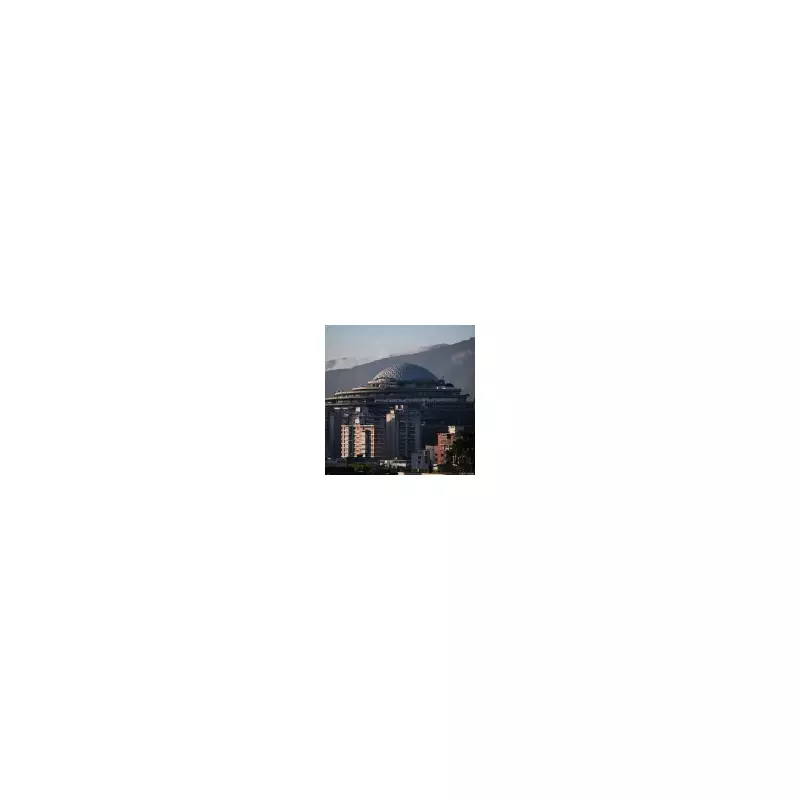
In the heart of Caracas, a monstrous concrete structure, once a symbol of modern commerce, has cast a long shadow over Venezuela for decades. This is El Helicoide, the feared headquarters of the nation's secret police, now infamous as a torture prison where inmates faced unimaginable cruelty.
Testimonies from a Living Hell
Since the capture of Venezuelan President Nicolas Maduro by the US weeks ago, a wave of political prisoners have been released from its walls. They are now sharing harrowing details of the conditions inside, describing it as a 'hellish' jail. Inmates reported being strung up, brutally beaten, and raped. One common humiliation involved having bags of human faeces placed on their heads for hours.
One particularly cruel method, known as 'the Russian', involved placing detainees in windowless cells painted a blinding white, under lights that never switched off, a tactic designed to induce madness. Former prisoners told The Telegraph the lights only flickered when someone was being electrocuted in another room.

Opposition politician Rosmit Mantilla stated that those inside were raped with rifles and electrocuted on their eyeballs. 'Almost all were hung up like dead fish whilst they tortured them,' he recalled. He described waking each morning to see prisoners lying on the floor, 'taken away at night and brought back tortured, some unconscious, covered in blood or half dead.' The conditions were so cramped he was forced to urinate in the same spot he kept his food.
A Symbol of Repression
An activist who spent over two years inside told the Financial Times a guard greeted him with, 'Welcome to hell.' Victor Navarro, imprisoned for six months in 2018, was held in a tiny 13x13 foot cell with 16 others, including minors, journalists, and students who had protested against Maduro.
The building's history is a stark contrast to its current use. Originally designed in the 1950s to house 300 shops, eight cinemas, a hotel, and a show palace, it became a squatter's complex before the government seized it in 1975. In 2010, it was converted into a prison for Venezuela's secret police, used to hunt down and torture opposition activists.
Under Maduro's reign, an estimated 18,000 people have been arrested for opposing his government, many sent to El Helicoide. A UN team representative, Francisco Cox, who visited, called the prison 'brutal,' citing unsanitary conditions, sexual violence against women, and systematic torture.
Fallout and Uncertain Future
Following Maduro's capture, US President Donald Trump declared he was closing a 'torture' chamber in Caracas. Shortly after, interim President Delcy Rodriguez, appointed by Trump, announced a large-scale release of prisoners from El Helicoide. While there have been years of calls to shut it down, action only came after Maduro was ousted.
For former prisoners like Victor Navarro, the releases are bittersweet. 'I believe every prisoner released deserves a celebration,' he said. 'But I cannot celebrate until everyone is free.' The future of the infamous building, and the thousands who suffered within it, remains uncertain as Venezuela enters a new, tumultuous chapter.






