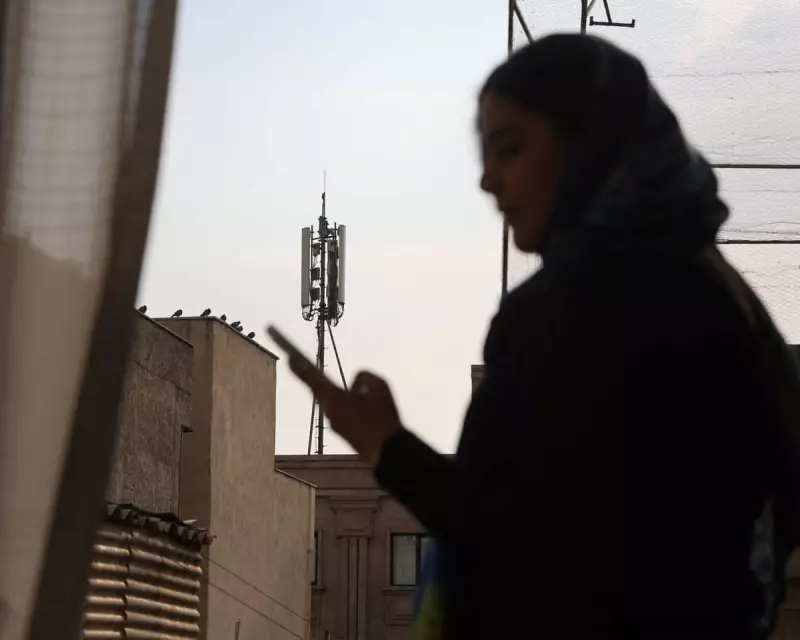
Iran appears to be easing its severe internet blackout as the financial burden of the shutdown mounts, with experts suggesting the regime is now throttling and filtering data rather than maintaining a complete outage. The restrictions, which began on 8 January, have helped obscure violence during anti-government protests while costing an estimated $36 million per day in lost economic output.
Patchwork Connectivity Emerges Amid Mounting Losses
Digital analysts report that Iran is experiencing uneven internet restoration, with connectivity reaching about 60% of pre-shutdown levels at certain points this week. Doug Madory, director of internet analysis at Kentik, described the situation as developing "by trial and error," with authorities creating a content blocking system on the fly.
"There seems to be a real patchwork of connectivity. I think if most people have access, it's some kind of degraded service," Madory explained. "The pattern of internet traffic doesn't follow a smooth curve but has jagged peaks, indicating authorities are likely continuing to throttle connections."

Selective Access and Government Monitoring
According to reports from Filterwatch, an organisation monitoring Iran's internet traffic, certain services including Google, Bing and ChatGPT have become available to some users on a province-by-province basis. However, many remain unstable and numerous social media and messaging platforms continue to be blocked.
The economic impact has forced unusual measures, with Iranian business leaders reportedly gathering in the Tehran Chamber of Commerce dining hall this week to access monitored internet connections. Demand was so high that each businessperson was restricted to just thirty minutes of access, creating an environment one participant described as reminiscent of "an internet cafe from the 1980s or a university campus."
Obscuring Violence During Bloody Protests
The internet shutdown began after nearly two weeks of escalating anti-government protests and has become a defining feature of what may be the bloodiest period in Iran's recent history. By restricting digital communication, authorities have made it difficult for information about violence against the population to reach the outside world.
Accounts of mass burials and truckloads of bodies have filtered out of the country only sporadically, often days after events occurred, through journalists, activists and a few Telegram channels that managed to maintain some connectivity.
Economic Consequences and Future Restrictions
Despite government efforts to whitelist certain websites and fine-tune their internet blockade, Iranian authorities have acknowledged the shutdown's substantial economic impact. A government minister recently estimated daily losses at $36 million, a figure consistent with previous research on global internet blackouts.
For comparison, the OECD calculated that Egypt's 2011 internet shutdown during the Tahrir Square protests cost approximately $90 million in total economic damage.
Two weeks ago, Iranian authorities appeared determined to continue restrictions indefinitely, with a government spokesperson suggesting the internet would remain restricted until at least Nowruz, the Persian new year on 20 March. However, the current easing suggests authorities are adjusting their approach in response to mounting costs.
"It's definitely not restored to pre-8 January levels," Madory noted. "Every day is different. Even within a day, it's not consistent. They appear to be developing this system as they go along."
The situation remains fluid, with Iranian authorities balancing their desire to control information during protests against the substantial economic consequences of maintaining a near-total internet blackout.