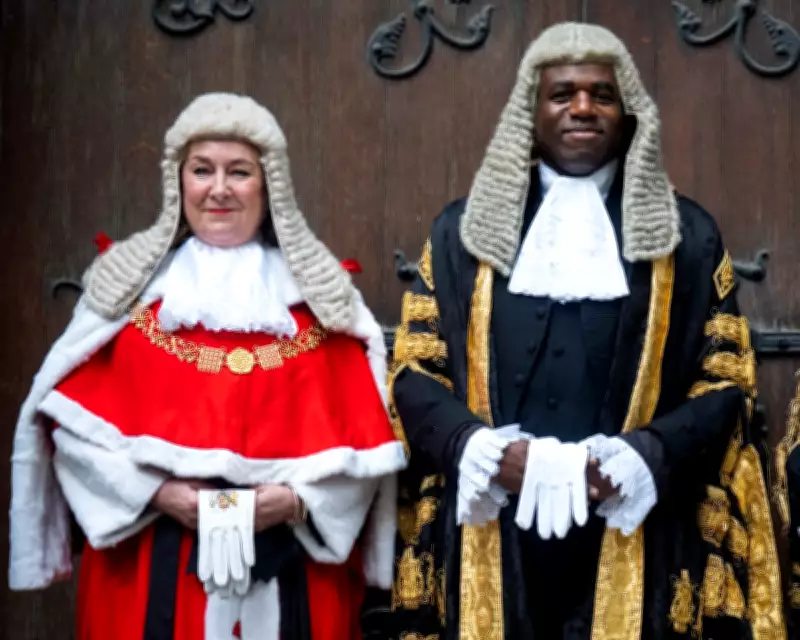
The lady chief justice, Sue Carr, and the justice secretary, David Lammy, have held the first meeting of a new board aimed at improving diversity among the judiciary. The board, co-chaired by Lammy—the first black lord chancellor—and Carr, the first woman to head the judiciary, seeks to remove barriers for minority ethnic and working-class solicitors seeking judicial appointments.
Plans to Fast-Track Diverse Candidates
The seven-member panel intends to fast-track solicitors from under-represented backgrounds and enhance mentoring schemes for new recruits. This initiative follows criticism that Lammy's proposal to reduce jury trials could exacerbate racial and class bias within a predominantly white, middle-class judiciary.
Current Diversity Statistics
Despite recent recruitment drives that increased the proportion of female judges to 44%, Ministry of Justice 2025 statistics show that representation of black judges remains at 1%. A Sutton Trust report from September revealed that three-quarters of senior judges attended Oxford or Cambridge, and nearly two-thirds were privately educated.

Reactions and Concerns
Cordella Bart-Stewart, chair of the UK Association of Black Judges, welcomed the initiative but criticised the lack of consultation. She stated that recruitment targets should be set for the Judicial Appointments Commission, which recommends individuals for judicial office. The association was invited only three days before the meeting and could not send a representative.
Keir Monteith KC, a prominent barrister, highlighted institutional racism in the justice system as a barrier to change. Fiona Rutherford, chief executive of legal reform charity Justice, noted that diverse candidates are applying in greater numbers but not being appointed, calling for bias-free processes and meaningful diversity targets.
Broader Context
In February, Lammy examined whether his plans to expand judge-led trials could lead to harsher sentences for minority ethnic defendants. A 2017 review by Lammy found that ethnic minorities were more likely to receive prison sentences for drug offences than white defendants, and that they had more confidence in juries than magistrates courts.
Additionally, ministers plan to allow live broadcasting of sentencing remarks by the chief magistrate for the first time. Lammy and Carr have agreed to establish a joint working group to explore further expansion of court broadcasting.