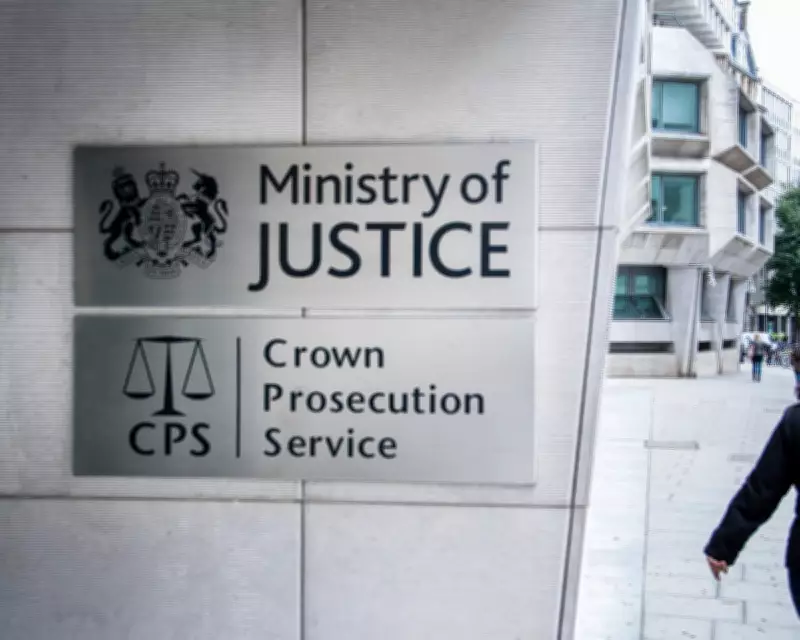
Rape Investigation Overhaul at Risk Due to Courtroom Ignorance, Expert Warns
The transformative Operation Soteria, which revolutionizes how police and the Crown Prosecution Service investigate and charge rape suspects, is under threat from a critical lack of awareness in courtrooms across England and Wales. Professor Katrin Hohl, the government's independent adviser on rape, has issued an exclusive warning that this overhaul could stall or reverse if judicial ignorance persists.
Progress Jeopardized by Outdated Court Practices
Hohl emphasized that legal experts are deeply concerned about the sustainability of Operation Soteria, launched in 2021 to address a collapse in rape trials. The initiative shifts focus from scrutinizing victims' backgrounds to analyzing suspects' behavior, significantly increasing rape charges. However, the conviction rate for adult rape has slightly dropped, partly due to the CPS taking on more complex cases. Hohl cautioned that if cases fail in court, police and prosecutors might revert to previous, less effective methods.
"The obvious, ultimate risk is if it comes to a point where it is felt that Soteria investigations have lower chances of convictions, that police and CPS could go back to as it was before," said Hohl. "I think if we can't change the courts, I would worry about the sustainability of the Soteria approach."

Barriers in the Courtroom
Police officers implementing Soteria face significant hurdles when presenting cases in court. Hohl reported anecdotal evidence that judges and barristers often have never heard of Operation Soteria, leading to misunderstandings that undermine prosecutions. For instance, in a recent trial observed by the Centre for Women's Justice, a defence barrister criticized a police officer for not requesting personal records about the victim, arguing the case was inadequately investigated—despite this aligning with Soteria's principles to avoid invasive requests.
Nogah Ofer of the Centre for Women's Justice highlighted this issue: "Police are following the law and new guidance, but because that has not filtered through to the courts we fear that it is being used to undermine the prosecution case. This is happening already, but we worry it will get worse as more Soteria cases get to trial."
Government Measures and Future Outlook
In response, Justice Secretary David Lammy has launched a review of court handling of rape cases and promised new support for victims. From later this year, rape victims will access independent legal advice through a £6 million service over two years. Lammy stated: "Operation Soteria has already changed how rape cases are investigated by putting the focus where it belongs – on the suspect. By introducing independent legal advisers and expanding the principles of Soteria into the courtroom, we are making sure victims have both the protection and support they deserve throughout the justice process."
Additional reforms include banning "bad character" evidence related to victims' pasts and restricting police access to counselling notes. A pilot program in London, set to report in autumn, will assess how Soteria principles are applied in court through case reviews and training for legal professionals. Hohl remains optimistic but cautious: "I don't think bringing the principles of Soteria into the courtroom is going to be straightforward but that's why this pilot is so important. But I don't think the police would ever fully go back, because I think once you've seen the impact of Soteria, you can't unlearn the lessons."
The success of Operation Soteria hinges on bridging the awareness gap in courtrooms to ensure justice for rape victims and sustain progress in investigations.