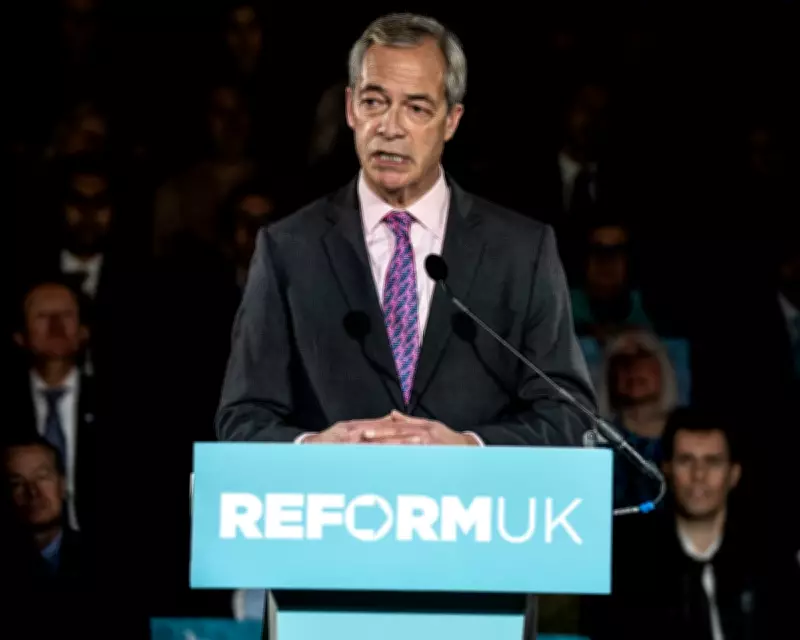
Reform UK's Energy Bill Competition Under Scrutiny for Potential Data Law Violations
Reform UK is facing serious allegations that its recent competition to win free energy bills for a year could breach data protection laws. The party, led by Nigel Farage, announced the lottery on Tuesday as part of a campaign to promote its policy of reducing energy costs. However, legal experts and data protection advocates have raised concerns about the transparency and legality of the data collection practices involved in the contest.
Data Collection Practices Raise Red Flags
To enter the competition, participants are required to provide not only basic personal details such as their name, email address, and telephone number but also sensitive information about their voting habits. Specifically, entrants must disclose how they voted in the last election and how they intend to vote in the upcoming one. This requirement has sparked warnings from data protection specialists who argue that it may constitute a violation of UK data protection regulations.
Mariano delli Santi, legal and policy officer at the Open Rights Group, emphasized the issue, stating, "Reform are asking the public to hand over sensitive data about their voting habits without being transparent about how it will be used." He further noted that political opinions are among the most protected categories of personal data under UK law, and voters should not feel pressured to trade their privacy for potential material benefits.

Legal Experts Voice Concerns
Eleonor Duhs, a privacy barrister, highlighted the principle of data minimization, which dictates that organizations should only collect data necessary for their stated purposes. "If you say your purpose is a raffle, why are they asking for people's voting intention? That seems to go beyond the purpose of the raffle," she remarked. Duhs agreed with the Open Rights Group's assessment, pointing out that the basis for processing such sensitive data is highly restrictive under UK GDPR.
An anonymous lawyer added to the criticism, noting that the competition form requests datasets that may not be deemed necessary for a prize draw, such as political party preferences. This raises questions about compliance with data protection principles, including transparency and purpose limitation.
Reform UK's Defense and Policy Context
In response to the allegations, a spokesperson for Reform UK asserted, "We are entirely confident that this competition is legal. Reform UK is the only party serious about cutting energy bills." The party also defended the raffle by stating it complies with electoral laws, which prohibit bribing voters to influence their electoral choices.
The competition was launched alongside Reform UK's announcement of its energy policy, which promises to cut bills by removing green levies and VAT if the party wins the next election. Robert Jenrick, the party's economic spokesperson, explained that the winner would have their energy bills, along with those of their entire street, paid for a year by Nigel Farage himself.
Regulatory Oversight and Public Concerns
A spokesperson for the Information Commissioner's Office (ICO) commented on the situation, stating, "All political parties collecting personal information, including information for political campaigning, need to comply with data protection law." The ICO encouraged individuals with concerns to raise them directly with the party and, if unresolved, to file a complaint with the regulatory body. The office maintains regular contact with political parties regarding data usage practices.
This incident underscores broader issues of data privacy in political campaigning, as parties increasingly leverage digital tools to engage with voters. The controversy surrounding Reform UK's competition highlights the need for stringent adherence to data protection laws to safeguard voter privacy and maintain public trust in the electoral process.