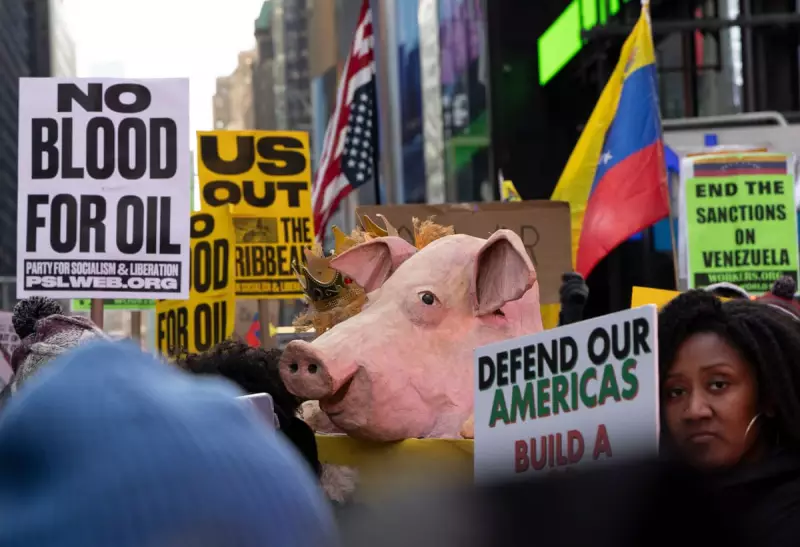
The Silent War: How Sanctions Devastate Civilian Populations
Across the globe, ordinary people share fundamental aspirations: the ability to earn a living, secure housing, feed their families, and watch their children grow with hope for the future. These are not radical demands, yet they are routinely sacrificed on the altar of geopolitical strategy when governments prioritise power and profit over the wellbeing of those they claim to protect.
The Reality of Economic Coercion
In 2026, warfare manifests not only through conventional military means but through its more insidious counterpart: economic sanctions. These encompass a comprehensive range of coercive measures including trade restrictions, investment barriers, financial controls, banking blacklists, asset freezes, and visa limitations. Presented under the language of diplomacy and democracy, they are systematically weaponised against states that deviate from Western governance and market capitalism orthodoxies.
Despite being marketed as "targeted" measures aimed at elites and corrupt officials, sanctions function as broad economic blocks that ripple destructively through entire populations. Empirical research demonstrates that sanctions in Latin America and the Caribbean significantly:

- Reduce economic growth
- Worsen income inequality
- Amplify poverty levels
Financial and trade restrictions prove particularly damaging, creating what amounts to economic warfare with civilians serving as collateral damage.
Four Decades of Economic Strangulation
For over forty years, governments from Washington to London and Brussels have deployed sanctions as instruments of pressure, framed as principled diplomacy. The lived reality across the Caribbean and Latin America presents a starkly different picture. From Cuba and Haiti to Nicaragua and Venezuela, sanctions have evolved into mechanisms of sustained economic strangulation that:
- Deepen existing poverty
- Stall developmental progress
- Entrench economic dependency
The pattern remains consistent whether justified by anticommunism, the "war on drugs", counter-terrorism efforts, human rights concerns, or contemporary geopolitical competition with Russia and China.
Case Studies in Economic Devastation
Nicaragua's Legacy of Isolation: The Reagan administration's 1985 embargo established a blueprint for economic coercion. By prohibiting trade and transport, it severed vital economic lifelines, triggering recession and widespread hardship. The measures proved so sweeping that the International Court of Justice ruled they breached bilateral treaty obligations. Today, Nicaragua's economy remains stagnant with remittances constituting a quarter of GDP, while political repression has only intensified under successive sanction regimes.
Cuba's Permanent Economic Siege: The United States has maintained its embargo since 1962, tightening restrictions through the 1992 Cuban Democracy Act and 1996 Helms-Burton legislation. The cumulative cost to Cuba reaches hundreds of billions of dollars, manifesting in chronic blackouts, severe shortages of food and medicine, and declining tourism revenue that cripples the island's economy.
Venezuela's Compounded Suffering: Once among Latin America's wealthiest oil exporters, Venezuela illustrates how sanctions amplify humanitarian crises. Billions in assets frozen in Western banks have curtailed the government's ability to pay for essential imports, fuel, and services. The economic siege escalated dramatically in January 2026 with the kidnapping of Venezuela's president and his wife, transforming economic coercion into extraterritorial force.
Haiti's Moral Incoherence: Crippled by centuries of debt and external interference, Haiti exposes the fundamental contradictions of sanctions policy. Framed as humanitarian or security measures, financial restrictions, banking de-risking, diplomatic isolation, and travel advisories have further severed Haiti from global trade networks. Rather than strengthening governance, sanctions have deepened poverty, decimated state capacity, and accelerated displacement, punishing a nation not for defiance but for weakness.

The Wider Pattern of Economic Attrition
Beyond the Caribbean, sanctions on Iran confirm a parallel reality. Sweeping restrictions on oil, banking, and trade have slashed export revenues, driven chronic inflation, and sharply reduced living standards while consistently failing to deliver promised political outcomes. As in Cuba, Venezuela, and Haiti, sanctions function less as precision tools against elites than as blunt instruments of economic attrition affecting entire populations.
The rationale for sanctions has evolved from Cold War counter-Soviet measures to contemporary efforts deterring Global South nations from forming ties with China and Russia. As Washington attempts to reassert hemispheric dominance through resurrected colonial doctrines, countries respond by diversifying foreign relations—a move that sanctions seek to punish through economic means.
Consequences Beyond Borders
Sanctions create chilling effects on investment, dissuading international banks from engaging with smaller economies for fear of secondary sanctions. This drives up costs and widens financial exclusion, particularly damaging in Caribbean nations where industries depend on foreign capital and global supply chains.
Rather than pressuring elites toward political reform, ordinary citizens pay the heaviest price through:
- Rising poverty levels
- Forced migration patterns
- Reduced tourism revenue
- Limited diaspora engagement
Economic sanctions have become key drivers of migratory flows from Cuba, Venezuela, and Nicaragua. When survival becomes untenable under economic throttling, people vote with their feet, creating regional displacement crises.
Questioning the Moral Framework
Sanctions are frequently defended as humane alternatives to conventional warfare—moral instruments for advancing democracy and human rights. Historical evidence suggests otherwise. From Grenada to Panama, US interventions have repeatedly cloaked coercion in liberation rhetoric while leaving long-term instability. Research indicates the United States carried out approximately 477 military and political interventions from the 19th century through 2022, with 114 occurring after 1989 alone.
Regime-change efforts follow a consistent pattern: short-term coercion, long-term sanctions and destabilisation, followed by decades of economic and institutional damage. This cumulative record raises fundamental questions about power dynamics in the modern international order.
If genuine human security were the objective, expanding humanitarian exemptions, ensuring financial access for food and medicine, and supporting multilateral global development would prove more effective than prolonged embargos. Instead, sanctions remain tools of geopolitical leverage wielded disproportionately by powerful states against weaker nations.
For millions across the Caribbean and Latin America, the real conflict is not against terrorism or competing ideologies, but against the slow attrition of economic opportunity and human dignity that accompanies sanctions regimes. If Western powers genuinely seek stable, democratic, and prosperous neighbours, they must pursue engagement grounded in shared prosperity rather than domination and economic coercion.