Surgeon's First-Hand Account: The Medical Horror of Iran's Protest Crackdown
An anonymous surgeon working in Tehran has provided a chilling eyewitness account of the medical catastrophe that unfolded during Iran's brutal crackdown on anti-regime protests. The testimony reveals a healthcare system pushed beyond breaking point as security forces reportedly used live ammunition against civilians.
The Night Everything Changed
By 8th January, what had begun as protests in late December had escalated dramatically across Iran, with initial reports suggesting at least 45 people had been killed by security forces. Over the following three days, the regime appears to have instigated a particularly brutal response that independent estimates suggest may have resulted in thousands of deaths.
The surgeon describes arriving at a Tehran hospital on Thursday night to find the city's atmosphere completely transformed. Just hours earlier, medical colleagues had been sharing images of pellet wounds - painful but survivable injuries that suggested some restraint in the violence. Then, at eight o'clock, communications went dark. Internet, mobile networks, messaging services and digital maps all disappeared simultaneously.

From Pellets to Live Ammunition
"Minutes later, the gunfire started," the surgeon recounts. "From about 8.10pm or 8.20pm, I could hear shots echoing through the streets, along with screaming and the sound of explosions."
The nature of injuries arriving at the hospital changed fundamentally. No longer were patients presenting with pellet wounds - they had been shot with live ammunition, described as "war bullets" designed to pass completely through the body. These were not warning shots fired into the air, but direct fire aimed at protesters.
As a surgeon specialising in torso injuries, the medical professional found operating rooms filling with critical wounds to the chest, abdomen and pelvis - injuries that determine whether someone lives or dies within minutes, leaving no margin for delay or error.
Hospital Overwhelmed by Casualties
The scale quickly overwhelmed medical resources. "We did not have enough of anything," the surgeon states. "Not enough surgeons, not enough nurses, not enough anaesthesiologists, not enough operating rooms, not enough blood products. Not enough time."
In a hospital that would normally perform two emergency surgeries in a night, approximately 18 operations were carried out between 9pm and 6am. When morning arrived, some patients from that night remained on operating tables. The surgeon, who has worked in disaster zones including earthquake responses, emphasises that even major accidents typically bring 20-30 injured patients over several hours. That night, and the following night, brought hundreds of gunshot wounds and severe trauma cases in relentless succession.
The Psychological Toll on Medical Staff
The exhaustion was both physical and psychological. "As surgeons, our job is to save lives," the account continues. "That night we were saving people who had been shot by their own government. That contradiction stays with you."
Medical staff worked continuously because stopping wasn't an option, but the emotional strain was immense. The surgeon reports hearing weapons inappropriate for urban environments, including Soviet-designed DShK machine guns, later seen mounted on pickup trucks moving through the city.
Atmosphere of Fear and Intimidation
As the crisis continued, many injured people became afraid to seek hospital treatment. They knew from experience that once situations are considered "under control," hospitals receive official letters from security institutions demanding patient information - names, details and injuries. Hospital administrators who refuse face serious consequences, a system that existed long before these protests.
Instead, many called the surgeon directly whenever brief mobile signals appeared, speaking in code while terrified their communications were being monitored. The calls revealed victims across all demographics - not just young adult protesters, but a 16-year-old child, a man in his seventies, and people who had simply been in the street at the wrong time.

Widespread Impact Across Iran
Traveling to a city in central Iran on Friday, the surgeon found similar devastation. Metro stations showed evidence of burning and shattering, with journeys that normally took ten minutes extending to nearly two hours. Colleagues in other cities reported catastrophic situations, with one hospital performing 13 abdominal and chest surgeries in a single night.
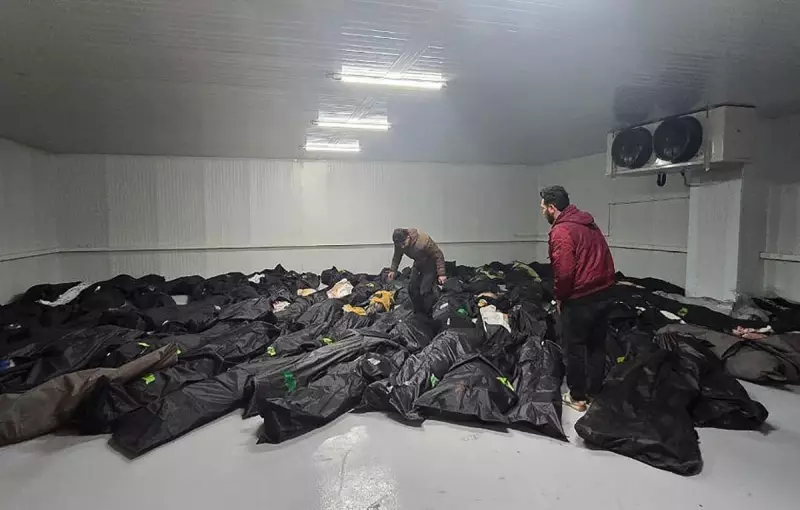
Even private hospitals, where gunshot victims are usually nonexistent, found themselves overwhelmed. The surgeon estimates that in a city of approximately two million people, more than 1,000 may have been killed in a single night, with nationwide estimates potentially exceeding 20,000 - figures based on hospital capacity and experience rather than official statistics.
Escalating Violence and Lasting Trauma
The violence appeared to escalate systematically. Thursday night brought mostly individual shots, while Friday night featured automatic fire. "The level of violence did not resemble policing," the surgeon observes. "It felt like wartime rules applied to civilians."
Physical evidence of the violence remained visible, with the surgeon describing nearly a litre of blood pooled in a gutter, creating a trail stretching several metres - a volume suggesting someone who wouldn't survive long enough to reach hospital care.
The testimony concludes by emphasising that the full scale of what occurred cannot be adequately conveyed: the destruction, the volume of injuries, the communication blackouts, the exhaustion of medical staff, and the sense that something fundamental had broken in Iranian society. Most significantly, the surgeon stresses that what actually happened far exceeds anything the public has been officially told, with much of the violence occurring under cover of darkness and information blackouts.
While no formal official death toll has been released, the US-based Human Rights Activists News Agency has estimated 5,002 killed during the protests, comprising 4,716 demonstrators, 203 government-affiliated individuals, 43 children and 40 civilians not participating in protests.