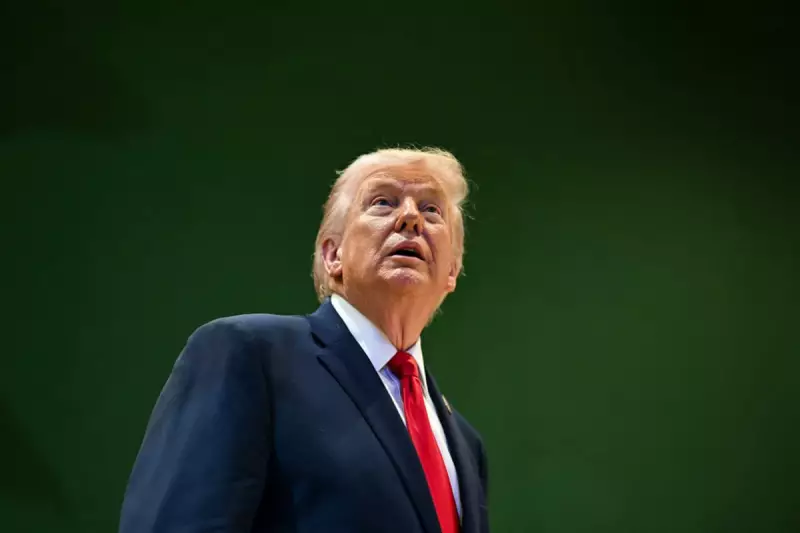
Trump's Pardon Strategy: A Focus on Fraud Offenders
Donald Trump's presence at the World Economic Forum in Davos this week has drawn attention, but back in the United States, his presidential pardons are sparking controversy. While mass pardons for January 6 insurrectionists made headlines last year, recent clemency grants reveal a distinct pattern: a concentration on individuals convicted of fraud-related crimes.
Details of Recent Fraud Pardons
Since assuming office, Trump has issued dozens of pardons for white-collar offenses, with many involving fraud. This month alone, he quietly granted clemency to 13 people, most convicted of fraud. Notable cases include:
- Wanda Vázquez Garced: The former governor of Puerto Rico pleaded guilty to campaign finance violations, taking hundreds of thousands from Venezuelan Julio Herrera Velutini and Mark Rossini in exchange for firing a federal investigator.
- Julio Herrera Velutini and Mark Rossini: Both were convicted of wire fraud and pardoned by Trump. Herrera Velutini's daughter donated millions to pro-Trump political action committees, though the White House denies any connection.
- Adriana Camberos: Previously pardoned by Trump in 2021 for a fake energy drink scheme, she was convicted again in 2024 for fraud involving discounted grocery sales.
According to NBC News, over half of Trump's 88 individual pardons—excluding the bulk January 6 proclamation—target white-collar crimes like money laundering, bank fraud, and wire fraud.

Financial Impact and Political Context
An analysis by Democrats on the House judiciary committee indicates that Trump's pardons have deprived victims and survivors of $1.3 billion in restitution and fines. Democrat Jamie Raskin criticized this as an "astonishing giveaway to lawbreakers."
This focus on fraud pardons coincides with Republican efforts to investigate fraud, particularly in Democratic-run states. Trump has accused states like California, Illinois, and New York of widespread fraud, cutting over $10 billion in social services payments based on unproven allegations, though federal judges have blocked these actions.
Contradictions and Criticisms
Despite the fraud crackdown rhetoric, Trump's actions show inconsistencies. In June, he commuted the sentence of Lawrence Duran, involved in a $200 million Medicare fraud scheme. The White House defends its pardon process, stating it involves a thorough review by qualified lawyers and aims to address over-prosecution by the Biden Department of Justice.
California Governor Gavin Newsom has launched a website to track Trump's pardons of fraudsters, calling him the "personification of fraud" and accusing him of hypocrisy for pardoning convicts while targeting political rivals with fraud allegations.
This situation highlights a complex interplay between presidential clemency, political strategy, and legal accountability in the current US political landscape.