

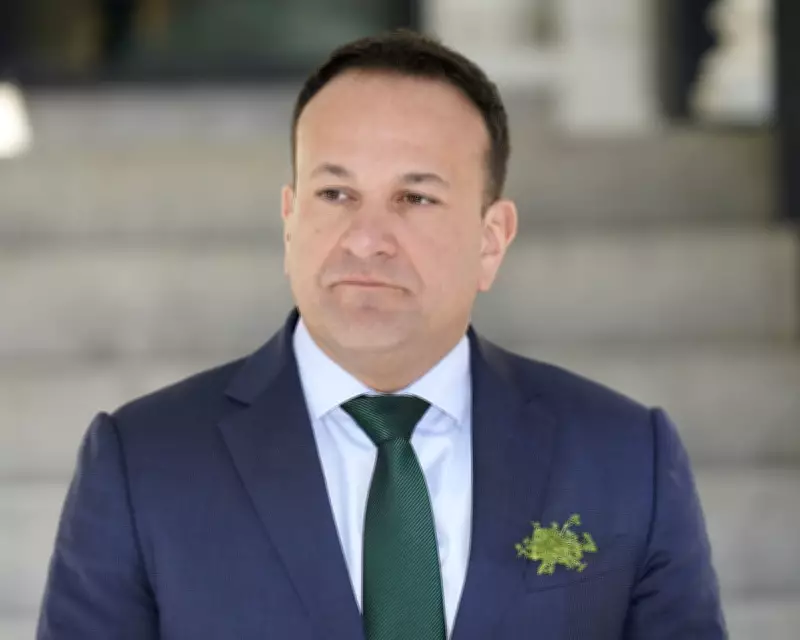
Varadkar Sounds Alarm on LGBTQ+ Rights in Europe
Leo Varadkar, Ireland's former taoiseach and its first openly gay prime minister, has issued a stark warning about the state of LGBTQ+ rights across Europe. He described the continent as caught in a "chill wind" blowing from both east and west, with Vladimir Putin's Russia exporting conservative agendas and the United States retreating from its traditional role as a defender of liberal values under Donald Trump.
A Flickering Light of Human Rights
"I'm afraid of where things are going," Varadkar stated in a recent interview. "Europe is still the light when it comes to human rights and democracy and freedom of expression, given what else is going on in the world – but it's a flickering light." His comments highlight growing concerns about the erosion of hard-won progress for LGBTQ+ communities.
Varadkar, who stepped down unexpectedly in 2024, now serves as a senior fellow at Harvard University's Carr-Ryan Center for Human Rights. This position has given him a frontline perspective on global efforts to reshape and often roll back LGBTQ+ rights. He emphasized that Russia has deliberately taken interest in this issue, with Putin embracing a particularly conservative form of Christianity and actively spreading that message throughout Europe.

The American Withdrawal and Its Consequences
Historically, Russia's conservative push in central and eastern Europe was countered by American influence, Varadkar noted. However, that dynamic has shifted dramatically. With anti-diversity rhetoric surging in the US and more than 600 bills targeting LGBTQ+ rights introduced, American corporations are pulling back from sponsoring events like Pride celebrations, and US diplomats are increasingly absent from events they once regularly attended.
"So in many ways they had a kind of liberal influence from America pushing one way and very conservative forces from Russia pushing the other way. And now the Americans are off the pitch," Varadkar explained. "There's a chill wind coming in from the west as well as from the east – and that's where Europe is now caught."
Progress Is Not Inevitable
Varadkar pointed to his own experience coming out on radio in 2015, just months before Ireland became the first country to legalize same-sex marriage by popular vote. He described that period as one of "enormous progress" that began at the turn of the century but has since veered sharply off course in recent years.
"I think maybe 10 years ago we were a little bit naive. We just thought that the tide of history was going one way, and every year we would see more countries liberalizing their laws or at least ending criminalization," he reflected. "But I think we were maybe a bit naive to think that progress was inevitable, because it isn't. And it can be reversible as well."
Examples of Backsliding Across Continents
While marriage equality has spread to more than 30 countries since the Netherlands first recognized it in 2001, Varadkar noted that progress has slowed significantly. In some cases, clear regression is occurring. He cited the US, where Florida pioneered "don't say gay" laws, and European nations like Bulgaria, Hungary, and Slovakia where rights are being rolled back.
Campaigners have echoed these concerns, warning that countries once at the forefront of advancing rights are now introducing legislation aimed at marginalizing LGBTQ+ communities. Varadkar's work at Harvard, while focused on LGBTQ+ rights, forms part of a broader picture he described as crucial to understanding contemporary human rights challenges.
The Broader Implications for All Rights
"Often when the rights of one group are targeted, the rights of others are targeted later," Varadkar warned. He pointed to the hundreds of thousands who protested in Budapest last year against the Hungarian government's efforts to ban Pride marches as a potent example of solidarity across different groups.
"There was a real understanding that if you ban marches and freedom of expression by gay people, it could be students next, it could be trade unionists after that," he explained. "So if one group is having their freedom attacked then it's in everyone's interest that they be defended."

A Personal Mission Beyond Politics
For Varadkar, his focus on these issues extends beyond professional interest to personal responsibility. "I was very lucky to be born in the country I was, at the time I was," he said. "Not just to be able to be myself but also to be a leader of my country. I feel that then generates a certain responsibility to other people around the world who maybe have had similar experiences but didn't with the birth lottery or the time lottery the way I did."
His message is clear: Europe must increase vigilance and actively defend its values. "In the same way we have to be in charge of our own defence, we have to defend what are our European values and our charter of fundamental freedoms," Varadkar concluded, urging the EU to step up as global forces threaten to chip away at recent progress in human rights across the continent.





