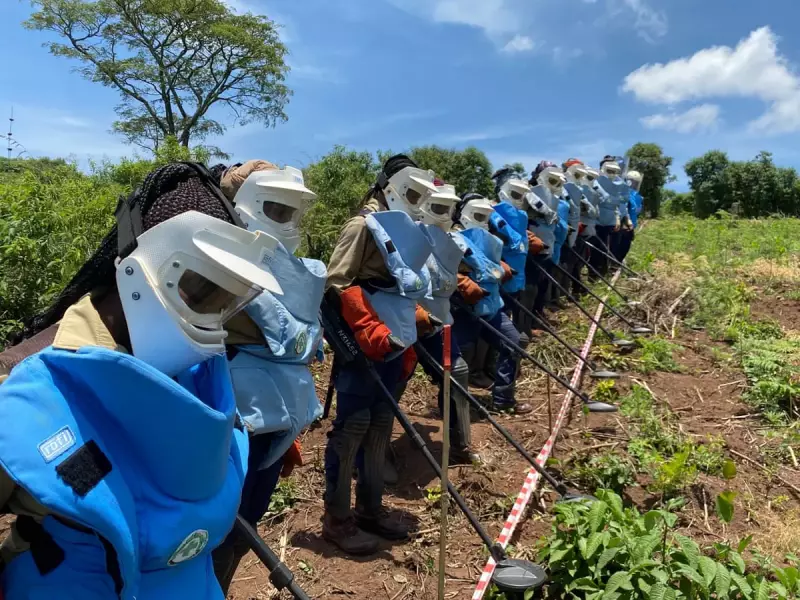
In the rugged borderlands of Chipinge, near Zimbabwe's frontier with Mozambique, a critical humanitarian effort has ground to a halt. Female deminers, once at the forefront of clearing deadly remnants from past conflicts, now find themselves out of work due to severe funding reductions. Thousands of landmines, laid by the Rhodesian army in the 1970s, remain buried, posing an ongoing threat to local communities.
Personal Struggles Amidst Global Cuts
Hellen Tibu, a 22-year-old landmine-disposal expert, exemplifies the human cost of these cuts. Before losing her job with Apopo, an international de-mining organisation, she earned a stable income that allowed her to support her family, pay rent, and fund her sister's education at an elite school in Mutare. However, after the Trump administration halted US funding in 2025, Tibu was laid off, forcing her to move to a crowded township and withdraw her sister from school.
"Life became tough," Tibu says. "I was the breadwinner in my family." Now surviving by selling secondhand clothes at night, she struggles to provide basic meals, with her four-year-old sibling often crying from hunger. Her story is not unique; many women deminers, who made up over 30% of Apopo's staff in Zimbabwe, face similar hardships.

The Legacy of Landmines
The Zimbabwe-Mozambique border is littered with millions of landmines, remnants of the liberation war from 1976 to 1979. In some areas, estimates suggest up to 5,500 mines per kilometre. Since Zimbabwe's independence in 1980, these devices have killed or maimed more than 1,500 people and caused the loss of approximately 120,000 animals, devastating agricultural communities.
For women like Tibu and Marlin Gombakomba, another former deminer, the work was personal. Women and girls are often most at risk as they till land and fetch firewood in mine-affected areas. Gombakomba, a 31-year-old single mother, used her $600 monthly salary to care for her children and parents. After losing her job, she too resorts to selling clothes, unable to afford rent or school fees. "I cried one day after I failed to pay fees for my eldest daughter to go on a school trip," she admits.
Organisational Impact and Response
Apopo, which relied on the US state department for 90% of its income, shut down operations in June 2025 after funding ceased. Robert Burny, a former country director, expressed deep sadness over the abrupt termination, noting that staff were compensated according to regulations, but the impact was profound. Similarly, the British charity Halo Trust had to reduce its workforce from 470 to 230 employees due to cuts from US and European donors.
Oliver Gerard-Pearse, Halo's programme manager, emphasised the difficulty of such decisions: "In an organisation that exists to save lives and restore livelihoods, people are our greatest asset. Every role lost affects not just an individual, but their family and the communities we serve." He called for closer collaboration with partners to prevent future job losses.
Broader Implications for Zimbabwe
The funding cuts extend beyond de-mining, affecting other sectors like HIV/AIDS care, and highlight vulnerabilities in international aid. With landmines still posing a lethal hazard, the slowdown in clearance efforts jeopardises safety and economic recovery in border regions. Tibu remains hopeful, stating she would seize any opportunity to work abroad in de-mining, but for now, the future looks uncertain.
As schools reopen and families like Tibu's grapple with financial strain, the unresolved threat of landmines serves as a stark reminder of the ongoing challenges in post-conflict zones. The need for sustained international support is more critical than ever to protect lives and livelihoods in Zimbabwe.