

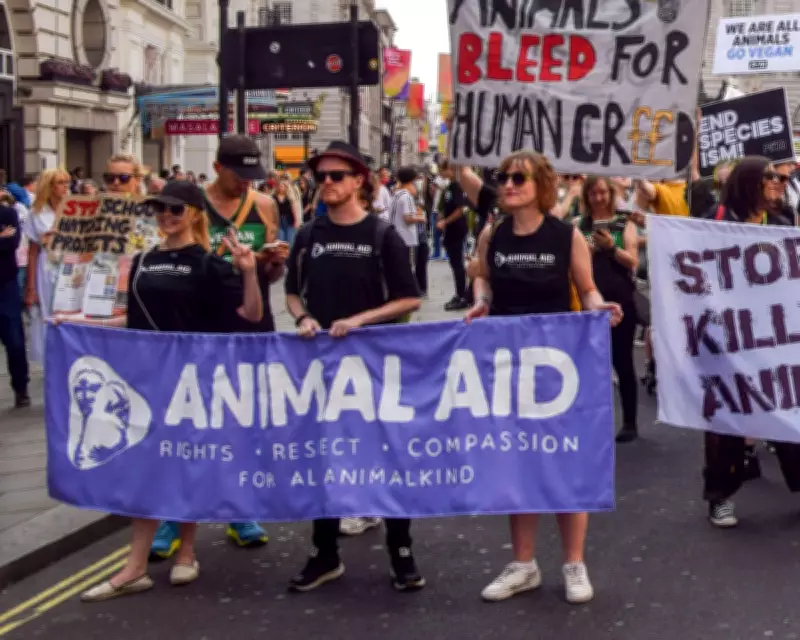
Animal Aid Launches Legal Battle Against 'Chilling' Protest Restrictions
Charity Animal Aid has filed a formal legal challenge against a recent amendment to the Public Order Act, which it describes as a "chilling" change in the law. This amendment restricts protest activities outside animal testing facilities in England and Wales by reclassifying these sites as "key national infrastructure." The charity argues that this reclassification could criminalize even the most peaceful and non-disruptive forms of advocacy, raising serious concerns about democratic freedoms.
Amendment Creates New 'Life Sciences Infrastructure' Category
The amendment, which took effect on February 12 via a statutory instrument, introduces a new category termed "life sciences infrastructure." However, Animal Aid's legal team contends that this classification does not align with the ordinary and natural meaning of infrastructure. They assert that the existing statutory context is limited to nationally significant systems such as transport, energy, and utilities, not animal research facilities.
Iain Green, the director of Animal Aid, emphasized the broader implications: "Designating animal research facilities as 'key national infrastructure' raises profound concerns about the future of peaceful advocacy in the UK. It risks legitimate scrutiny at a time when openness and scientific accountability are more important than ever."

Protest as a Catalyst for Change
Green highlighted the historical role of protest in advancing scientific progress: "Protest has been instrumental in driving the transition to human-relevant science. Indeed, the government's recently published replacing animals in science strategy would not exist without it. Decades of protest and the subsequent raised public awareness brought about the UK's ban on animal testing for cosmetics."
Animal Aid argues that the new definition encompasses a wide range of universities, laboratories, and licensed animal research facilities, including commercial premises, which are not of critical national importance. This, they claim, exceeds the authority granted by Parliament.
Concerns Over Unfair Consultation Process
The charity has also raised issues regarding the fairness of the consultation process. According to Animal Aid, informal engagement was conducted only with policing bodies and stakeholders from the life sciences sector, whose interests the amendment was designed to protect. In contrast, animal welfare and protest groups were entirely excluded from the consultation.
Edie Bowles, a solicitor at Advocates for Animals, which is representing Animal Aid, stated: "The regulations risk criminalizing peaceful protest without proper legal basis. The government has sought to expand serious public order offences through a broad amendment, following a consultation process that excluded the very groups most affected. Our client's position is simple: measures that restrict fundamental rights must be lawful, proportionate, and developed through a fair and transparent process."
Broad Police Powers and Political Opposition
The amendment grants police extensive powers against protesters who "deliberately or recklessly" disrupt life science sites, including through online campaigns. Penalties can include up to 12 months' imprisonment or a fine. The vote to amend the Public Order Act passed by 301 to 110, with opposition from 26 Labour MPs, marking another step in a series of measures criticized for restricting protest rights under the Labour government.
The grounds for judicial review state: "It will have a chilling effect on peaceful protesters and campaigners who are legitimately concerned by the ethical and scientific issues surrounding animal testing and experimentation." They argue that the classification covers every facility in the country involved in live animal testing, regardless of its public benefit.
Government Response and Future Implications
A Home Office spokesperson defended the change: "Peaceful protest is a fundamental part of our democratic society. People in this country will always be able to freely express their views. This change is about providing police with powers to respond proportionately to disruptive protest activity that undermines our nation's health."

As the legal challenge progresses, the outcome could significantly impact the balance between national security concerns and the right to peaceful protest in the UK, setting a precedent for future legislation affecting advocacy groups and civil liberties.





