

Protest Rights Under Scrutiny During Israeli President's Australian Visit
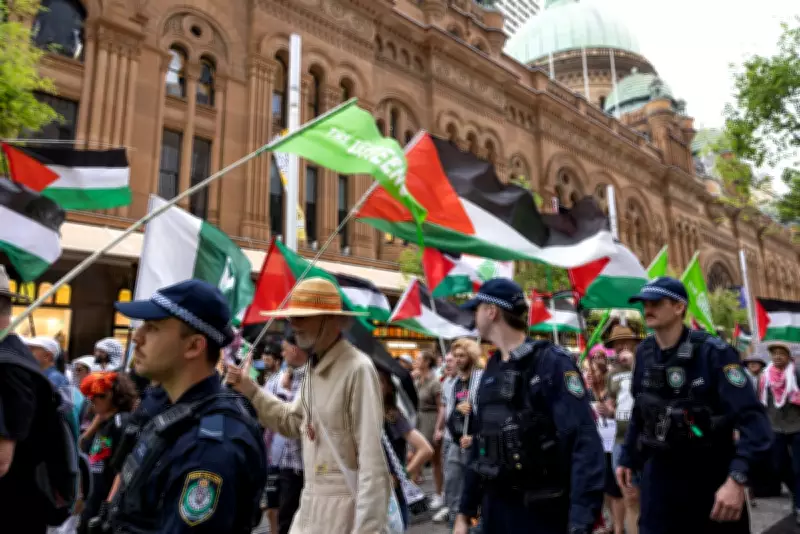
Thousands of Australians are expected to participate in nationwide demonstrations on Monday, protesting against the visit of Israeli President Isaac Herzog to Australia. The visit, arranged by Prime Minister Anthony Albanese following the Bondi terror attack, has reignited significant debate about the fundamental right to protest across the country.
The Constitutional Landscape of Protest Rights
Australia lacks an explicit, nationwide right to protest under commonwealth legislation, creating a patchwork of protections that vary significantly between states and territories. While Victoria, Queensland, and the Australian Capital Territory have legislated specific protections for protesters, other jurisdictions rely on common law and constitutional implications.
The High Court has recognised an implied right to freedom of political communication within the Australian Constitution, which governments cannot significantly impede through legislation. However, critics argue that numerous laws have gradually eroded this fundamental democratic right over recent years.

New South Wales: New Restrictions and Legal Challenges
New South Wales has become a focal point in the protest rights debate following the Minns government's introduction of new legislation. This law effectively prevents protesters from using the state's permit-style system in designated areas following a terror attack, allowing police to issue Public Assembly Restriction Declarations for up to ninety days.
Three activist groups – Blak Caucus, Palestine Action Group, and Jews Against Occupation – have launched a constitutional challenge against these restrictions, arguing they burden the implied right to freedom of political communication. The Court of Appeal will hear this significant case on February 26th.
The proposed route for Monday's Palestine Action Group march, from Town Hall to NSW Parliament, falls within one of these restricted areas. While protests can still occur in these zones, participants face increased risks as police regain their full suite of move-on powers if traffic or pedestrian obstruction occurs.
Permit Systems and Police Powers Across States
Australia's approach to protest organisation varies considerably between jurisdictions. New South Wales and Queensland operate permit-style systems where organisers can submit details of planned protests to police, though this process remains voluntary rather than mandatory.
When organisers follow this process and police accept their submission, participants gain protection from charges related to traffic or pedestrian obstruction. In Queensland, protests become authorised automatically if organisers provide five days' notice and no court order blocks the event.
Police move-on powers also differ significantly between states. In Victoria, officers can use these powers in declared designated areas, while in New South Wales and Queensland, police authority is limited during authorised protests. Queensland legislation specifically states that move-on directions cannot interfere with peaceful assembly rights unless absolutely necessary for public safety.
Political Responses and Future Developments
The protest issue has created political divisions, with three NSW Labor backbenchers announcing their intention to attend Monday's rally at Town Hall, including one scheduled to speak at the event. Their participation in the march itself remains uncertain at this stage.
Looking beyond the immediate protests, the Victorian government has indicated plans to introduce legislation similar to New South Wales' approach, granting police enhanced powers to shut down or move on protests following designated terror attacks. This suggests a potential trend toward stricter protest regulations across multiple Australian jurisdictions.
As Australia navigates the complex balance between security concerns and democratic rights, the outcome of both Monday's protests and the upcoming constitutional challenge in New South Wales will likely shape the future of protest rights across the nation for years to come.






