

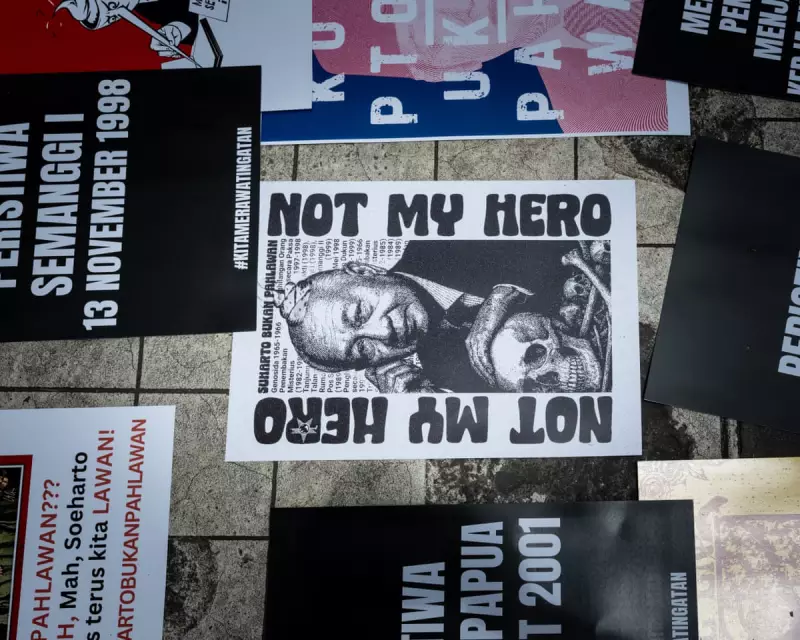
Indonesia's government has ignited a firestorm of controversy by posthumously bestowing the title of 'national hero' upon its late authoritarian ruler, Suharto. The decision, made official in a ceremony presided over by President Prabowo Subianto, has been met with fierce condemnation from pro-democracy activists and human rights groups who accuse the state of attempting to whitewash a dark chapter of history.
A Ceremony Steeped in Controversy
The title was conferred on Monday morning in a move that has sent shockwaves through the world's third-largest democracy. President Prabowo, who is Suharto's former son-in-law, personally handed the award to the late leader's daughter and son. During the ceremony, an announcer described Suharto as "a hero of the struggle for independence" from the colonial powers of the Netherlands and Japan, from whom Indonesia gained independence in 1945.
This narrative, however, stands in stark contrast to the historical record of Suharto's subsequent rule. He came to power and governed Indonesia with an iron fist for more than three decades, a period infamous for rampant corruption, systemic nepotism, strict censorship, and widespread allegations of mass human rights abuses. His rule ultimately collapsed in 1998 when he was forced from power amid mass protests and deadly riots during a severe economic crisis. Suharto died in 2006 at the age of 86.

Deep-Seated Anger and Accusations of Whitewashing
The decision has been defended by figures like Culture Minister Fadli Zon, who argued that Suharto deserved the honour due to his involvement in military operations against the Dutch in 1949. Zon also denied Suharto's involvement in the massacre of at least half a million suspected Communists between 1965 and 1966.
These defences have done little to quell the public outcry. In Jakarta, demonstrators have rallied near the presidential palace and the culture ministry, laying posters on the ground in protest. Their signs carried powerful messages such as "Stop the whitewashing of the general of butchery" and "Thousands died but the country chose to forget".
The reaction from human rights organisations has been one of sheer disbelief. Usman Hamid of Amnesty International Indonesia called the move "utterly absurd," stating, "How could the man most responsible for one of history’s greatest genocides, when he seized power, be made a national hero? It is a blatant whitewashing of historical crimes." He emphasised that the decision ignores the continued demands for justice from the victims of human rights violations.
The Prabowo Connection and Lasting Legacy
Adding a deeply personal and political dimension to the event is the role of President Prabowo. A former special forces commander, Prabowo was dismissed from the military in 1998 amid accusations of involvement in the abduction of pro-democracy activists, claims he has always denied. He has consistently praised his former father-in-law, and his administration has faced criticism for the increasing prominence of the military in civilian life since he took office last year.
For the families of those who suffered under Suharto's regime and for activists, the conferral of the hero title is not merely a symbolic gesture. It is seen as a deliberate act of historical revisionism that deepens old wounds and threatens to erase the memory of the atrocities committed. The government has not yet provided an official comment in response to these specific allegations, leaving a nation deeply divided over the legacy of its former leader.






