

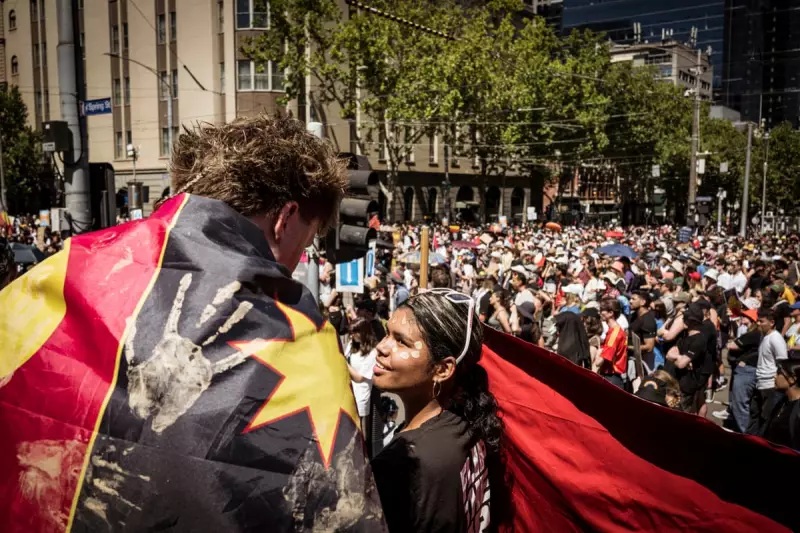
Invasion Day 2026: A Nationwide Display of People Power and Protest
Australia witnessed a powerful and widespread demonstration of activism and cultural reflection on 26 January 2026, as tens of thousands of people participated in Invasion Day rallies across the country. First Nations communities, their families, and allies gathered in major cities to demand justice, commemorate survival, and call for significant changes to how the nation marks this contentious date.
Major Cities Become Hubs of Activism and Ceremony
In Sydney, the day began with a poignant dawn reflection ceremony at the iconic Opera House, where the sails were illuminated by the artwork Dancing in the Moonlight created by Dharawal, Bidjigal and Dhungutti man Garry Purchase. This set a tone of cultural recognition that continued throughout the day. Thousands marched from Hyde Park to Victoria Park, where the Yabun cultural festival was held, with protesters chanting the powerful refrain "always was, always will be Aboriginal land". A particularly striking visual was the display of a giant Aboriginal flag held aloft by demonstrators, symbolising unity and resistance.
Melbourne saw equally significant gatherings, with crowds rallying outside Parliament House and marching through the city centre. Speakers at these events strongly criticised government policies, including calls for 26 January to be officially designated as a Day of Mourning by all levels of government. The protests also focused on specific injustices, with chants of "no pride in genocide" echoing through the streets and particular attention given to deaths in custody.

Police Intervention and Counter-Protests
The day was not without controversy and confrontation. In Perth, police cleared a protest site due to what they described as a security threat, highlighting the tensions surrounding these events. Meanwhile, in Melbourne, approximately 500 nationalists gathered for a separate March for Australia outside Flinders Street station, representing the ongoing national debate about Australia Day. A minor incident occurred in Sydney when a man draped in an Australian flag entered the march at Central Station and was subsequently escorted away by police, illustrating the charged atmosphere.
Moments of Reflection and Commemoration
Beyond the protests, the day featured numerous ceremonies of remembrance and cultural celebration. At Bondi Beach, a reflection and smoking ceremony acknowledged Australia's First Peoples, featuring performances by Dhinawan Yarn and Entertainment and didgeridoo player Josh Sly. In Canberra, the Invasion Day rally began with a traditional smoking ceremony, emphasising cultural continuity.
One of the most moving moments occurred during the Sydney rally, where participants observed a minute's silence for three Indigenous people shot dead at Lake Cargelligo the previous week, raising their fists in solidarity. This act of commemoration underscored the ongoing tragedies affecting First Nations communities and the urgent demands for justice that characterise these annual protests.
Political Criticism and Future Demands
Speakers at rallies did not shy away from direct political criticism. In Sydney, organisers called out One Nation leader Pauline Hanson, while another speaker criticised the Minns government for what they described as "silencing protests" following the Bondi Beach terror attack the previous month. The crowd also made a symbolic stop outside the Downing Centre courts in Sydney, highlighting concerns about the justice system.
These nationwide events demonstrate that Invasion Day remains a focal point for Australia's ongoing reckoning with its colonial history and contemporary inequalities. The substantial turnout across multiple cities suggests that the movement for change continues to gain momentum, with clear demands for official recognition of the day's significance and concrete actions to address injustices against First Nations peoples.






