

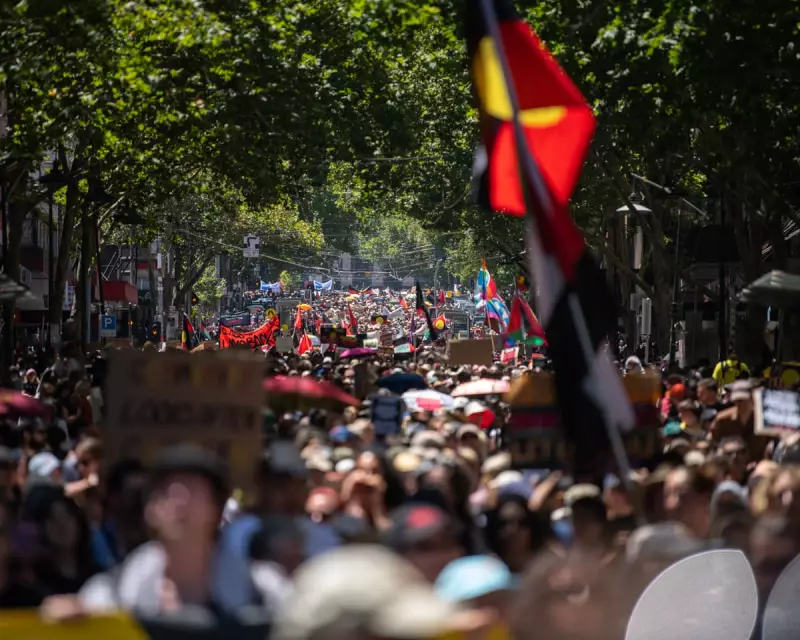
Minor confrontations broke out between Invasion Day demonstrators and anti-immigration protesters in Sydney and Melbourne, leading to police intervention to disperse the groups. The incidents occurred as part of widespread national protests marking Australia Day, with thousands participating across the country to voice demands for Indigenous justice and recognition.
Nationwide Demonstrations for Aboriginal Rights
In Canberra, several hundred protesters marched past Parliament House, chanting the powerful refrain, "Always was, always will be Aboriginal land." Speakers at the rally emphasised the long history of First Nations resistance against colonial violence, land dispossession, and systemic discrimination, tracing these struggles back to the inception of 26 January celebrations.
Voices from the Protests
Wendy Brookman, a Butchulla woman raised in Canberra, highlighted education as a crucial tool for acknowledging Australia's violent past. She stated, "Education is where this change belongs. You cannot heal a wound you refuse to look at." Brookman expressed her refusal to accept a nation that celebrates while Indigenous communities mourn, adding, "I don't accept being told to get over it while the consequences are still being lived."

Local Council Controversy Over Flags
In a related development, the Corowa council in New South Wales voted to remove Aboriginal and Torres Strait Islander flags from its chambers, opting to fly only the Australian flag on all shire flagpoles. Mayor Cheryl Cook defended the decision as an effort to unite the town under a single sovereign emblem. However, traditional owners argue this move erases their historical presence and cultural identity, sparking local debate about inclusivity and recognition.
Broader National Context
The protests unfold against a backdrop of severe heatwaves affecting South Australia and Victoria, with record-breaking temperatures anticipated. Additionally, New South Wales Premier Chris Minns has indicated plans for stricter protest regulations in central Sydney, reflecting ongoing tensions around public demonstrations and civic order.
Internationally, the Minnesota governor, Tim Walz, has appealed to former President Donald Trump to withdraw federal agents from the state, following a fatal shooting by US border patrol officers. This call underscores global concerns over law enforcement practices and immigration policies.
Cultural Reflections on Courage and Art
Amid these events, artist Ben Quilty has commented on Australia's need for greater courage in supporting the arts, particularly after the cancellation of Adelaide Writers' Week due to free speech controversies. Quilty's insights suggest a broader national conversation about artistic expression and societal values.
Meanwhile, the closure of Abdul's, a historic falafel shop in Sydney's Surry Hills, symbolises shifting urban demographics and economic challenges post-Covid, highlighting how local landmarks are affected by rising rents and changing community dynamics.






