

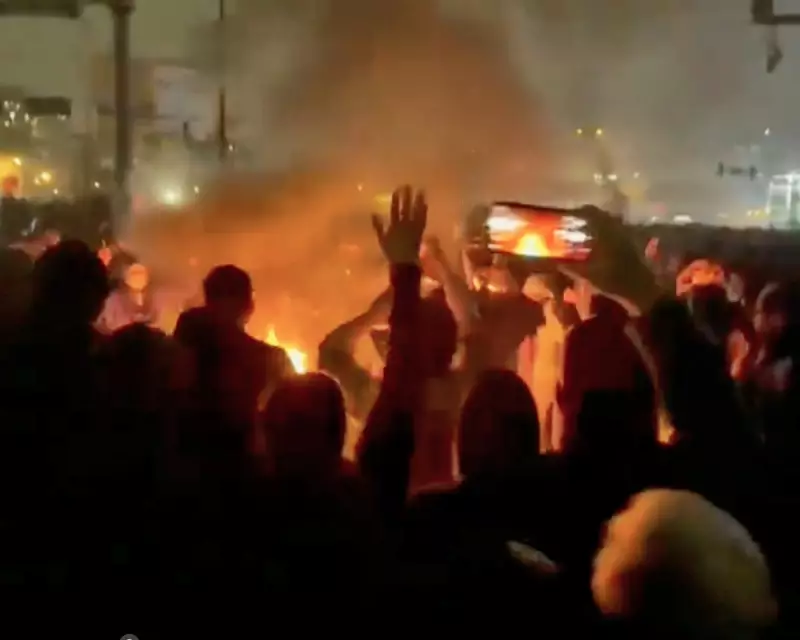
Iranian security forces have detained key figures within a protest movement that has shaken the country for over two weeks, as a war of words escalates between Washington and Tehran over the potential for American intervention.
Arrests and Deadly Crackdown
The national police chief, Ahmad-Reza Radan, announced on state television that "significant arrests were made of the main elements in the riots" on Saturday night. He stated those detained would face punishment after legal procedures, though he did not specify numbers.
The protests, now in their second week, represent the most significant domestic challenge to Iran's leadership in years. Initially sparked by a sudden currency devaluation, demonstrations have rapidly evolved to demand political reform and even the government's downfall.

The regime has responded with a severe crackdown. Authorities imposed a near-total internet blackout across the nation last Thursday, a move rights groups say has been used to obscure a violent suppression. At least 116 people have been killed, with many victims shot by live ammunition or pellet guns at close range, according to the US-based Human Rights Activists News Agency. The same source reports over 2,600 arrests.
Iran's attorney general has warned that those caught protesting, or aiding protesters, could face charges of being "an enemy of God," a crime punishable by death.
US Threats and Iranian Retaliation
The internal crisis has drawn sharp international focus, particularly from the United States. President Donald Trump has threatened to intervene if Iranian authorities kill protesters, a stance he reiterated on Saturday. "Iran is looking at FREEDOM, perhaps like never before. The USA stands ready to help!!!," he posted on his Truth Social platform.
Media reports suggest US officials have presented Trump with military options for a strike on Iran, though no decision has been made. US Senator Lindsey Graham echoed the sentiment, suggesting Iranians' "long nightmare is soon coming to a close."
Iranian officials have issued stark warnings in response. The speaker of parliament, Mohammad-Bagher Qalibaf, stated that if the US attacks Iran, both "the occupied territory" – a reference to Israel – and all American military assets in the region would become "legitimate targets."
Protests Persist Despite Blackout
Despite the intense pressure, protests continued overnight on Saturday. Videos smuggled out via satellite internet services like Starlink showed large crowds in northern Tehran and in Mashhad, the birthplace of Supreme Leader Ali Khamenei. Protesters were seen banging pots, chanting slogans, and facing off with police.
Disturbing accounts and footage continue to emerge from within the communication blackout. A verified video from the Hengaw rights group showed several bodies in a warehouse in Tehran's Kahrizak area, alleged to be protesters killed by authorities. The group stated the facility was being used as an overflow morgue.
Messages from activists describe cities under what resembles martial law. One protester in Sari reported security forces with military weapons at checkpoints, warning that "anyone who is outside will be shot." Another account from Tehran described security forces opening fire on men, women, and children at close distance during a protest in the Andarzgoo neighbourhood.
Iran's President, Masoud Pezeshkian, who initially offered dialogue, struck a harder tone on Sunday, distinguishing between the concerns of the people and the actions of "rioters" he accused of seeking to destroy society.
The unrest unfolds as Iran's government contends with a severe economic crisis and the lingering aftermath of its summer conflict with Israel, leaving analysts to note the regime is in a notably weakened position.






