

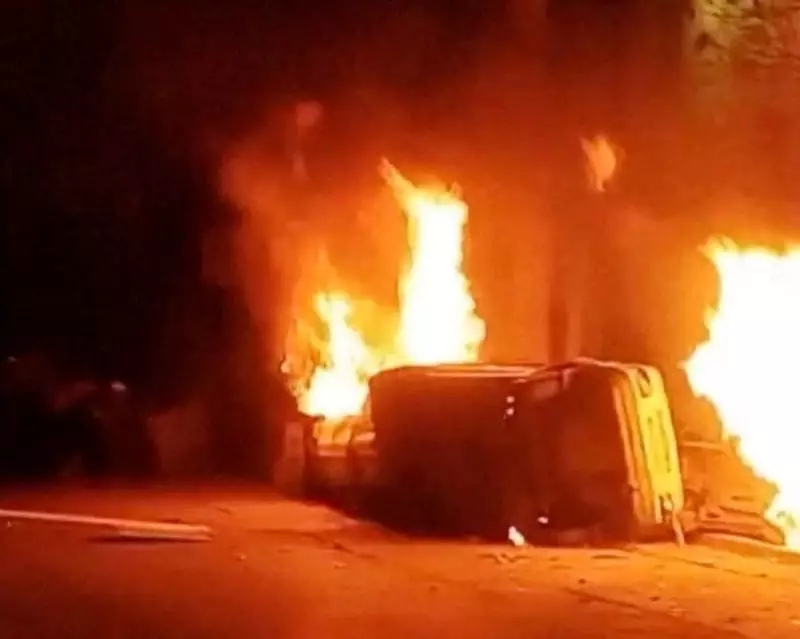
Iran is facing its most significant wave of civil unrest in years, with protests over a severe economic crisis spreading from the capital Tehran to approximately 32 cities nationwide. The demonstrations, which have turned deadly in some instances, mark a pivotal moment for a population expressing profound disillusionment with the ruling regime.
Economic Despair Ignites Nationwide Unrest
The immediate catalyst for the latest upheaval was a sudden and severe nosedive in the value of Iran's currency, the rial. This financial shock served as a final blow for citizens already struggling under the weight of an ailing economy, soaring inflation, and international sanctions. The rial has lost more than 50% of its value in the last six months alone, and over 200% in three years, devastating purchasing power.
What began as merchant strikes and shop closures in protest of deteriorating living standards quickly evolved. The cost of food has risen by an average of 50% since last year, and a planned new government tax has further inflamed public anger. The initially economic grievances soon broadened into explicit political dissent, with protesters chanting slogans against the government.

'Death to the Dictator': Echoes of Past Protests Return
Students and activists have taken up the mantle, reviving the powerful chant "woman, life, freedom" from the 2022 protests triggered by the death of Mahsa Amini. They are also directly targeting the country's leadership with cries of "death to the dictator", a reference to the 86-year-old Supreme Leader, Ayatollah Ali Khamenei.
For many young Iranians, this moment represents a long-awaited opportunity. Mehnaz, a 19-year-old computer science student in Tehran who spoke under a pseudonym, explained her decision to join the protests despite her mother's fears. "They execute, and arrest us anyway," she said. "So people now think, if they continue to kill us when we are not even on the streets in protest, why are we waiting for the right moment?"
The sentiment is shared by Reza, a 20-year-old university student who described security forces bursting into his dormitories on New Year's Eve. "Joining these protests is a matter of ruining our future, but we have realised there is no future for us under this regime," he stated.
A Regime Under Pressure at Home and Abroad
The protests arrive at a precarious time for the Iranian government. It is still reeling from a 12-day war with Israel in June, which saw over 1,000 Iranian casualties and damaged the regime's image of invulnerability. This external weakness has convinced some protesters that the time to act is now. "We know we must hit them when they are weakest, which is now," said Mehnaz.
The government's response has been mixed. The reformist President, Masoud Pezeshkian, initially called for dialogue and listening to "legitimate demands". Simultaneously, however, human rights groups report a harsh crackdown. The New York-based Center for Human Rights in Iran alleges that security forces have killed at least eight protesters, with dozens more injured. The Human Rights Activists News Agency reports over 119 arrests.
International tensions have also flared. Former US President Donald Trump has twice threatened intervention, warning the US was "locked and loaded" if Iran harmed protesters. Iranian officials, including Ali Larijani of the Supreme National Security Council, have seized on these comments to accuse the US and Israel of fomenting the unrest.
An Uncertain Future for a Diffuse Movement
Analysts note that while the economic fury is potent, the current protests lack a unifying figure like Mahsa Amini and their demands are more diffuse. It remains unclear whether the movement can withstand a violent crackdown similar to 2022.
Yet, the determination on the streets is palpable. Protesters like Moein, a 28-year-old from Lorestan province, say they have learned from past movements. "We learned that the only way to get freedom is to continue protesting consistently and strategically," he said. Their goal, shared by many, appears unequivocal: the end of the current regime.

As fires burn outside police stations and government buildings, the message from a new generation of Iranians is clear: driven by economic ruin and political repression, they believe it is now or never.





