

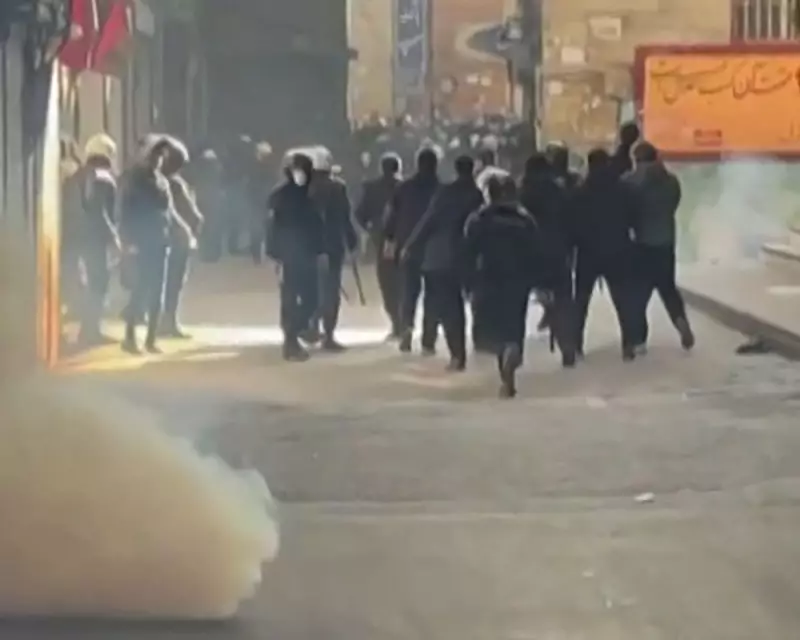
Iranian security forces have confronted demonstrators staging a sit-in at Tehran's historic Grand Bazaar, deploying tear gas to break up the gathering. This clash marks the tenth consecutive day of nationwide protests, which show no sign of abating.
Nationwide Unrest and Escalating Crackdown
The confrontation on Tuesday carries heavy symbolic weight, as the bazaar was a central hub for activists during Iran's 1979 revolution. According to data from the US-based Human Rights Activists News Agency (HRNA), protests have now been recorded in at least 257 locations across 88 cities.
Rights groups accuse authorities of intensifying their crackdown. HRNA reports that at least 35 people have been killed in clashes surrounding the protests, which initially erupted over economic conditions and rising prices. The agency states that more than 1,200 individuals have been arrested by security forces.

In a particularly alarming incident, video footage from Illam province, south-west of Tehran, showed security personnel in riot gear storming a hospital, apparently in search of protesters.
Economic Despair Fuels Protests
The protests were triggered by a severe decline in purchasing power, a situation that has only worsened. The Iranian rial has plummeted to a historic low, trading at 1.46 million to the US dollar. The currency has lost roughly two-thirds of its value over the past three years, with its decline accelerating sharply in recent months.
President Masoud Pezeshkian addressed the economic turmoil in a speech on Tuesday, arguing that much of the situation was beyond the government's control. He warned that intervention could worsen spiralling inflation and placed blame on international sanctions, stating, "oil is under embargo and sources of income are limited."
Further economic pain is anticipated. Iran's central bank has signalled it will curb a programme that gives businesses a preferential dollar exchange rate. This move is expected to cause further price hikes and consumer shortages. State media reported the average price of a bottle of cooking oil has recently doubled, with some goods becoming unavailable as traders hoard stock.
International Condemnation and Domestic Rhetoric
The hospital raid in Illam prompted international outcry. The US State Department's Farsi-language account on X declared that "beating medical staff and attacking the wounded with teargas and ammunition is a clear crime against humanity." Former US President Donald Trump has also threatened intervention if protesters are killed, drawing angry warnings from Iranian officials.
Domestically, the government appears to be balancing a harsh response with offers of dialogue. Supreme Leader Ayatollah Ali Khamenei stated on Saturday that protester demands were legitimate but insisted rioters must be "put in their place." President Pezeshkian said the government would investigate the allegations of violence in Illam province.
Meanwhile, state-aligned Fars news agency claimed that 250 police officers and 45 members of the Basij paramilitary force were injured during the demonstrations. As the economic crisis deepens and the state's response intensifies, the standoff on Iran's streets continues.






