

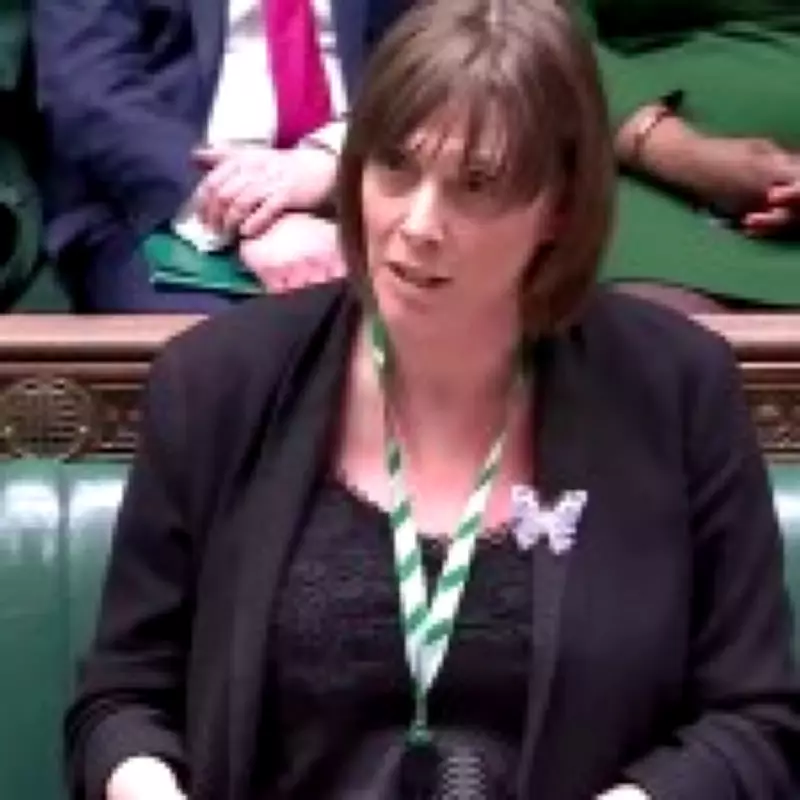
Jess Phillips Delivers Solemn Seven-Minute Tribute to Women Killed by Men
Home Office minister Jess Phillips performed a deeply moving and sobering ritual in Parliament today, spending seven minutes reading aloud the names of 108 women killed by men over the past year. The Birmingham Yardley MP conducted this annual commemoration to mark the period since International Women's Day 2025, addressing a silent and attentive House of Commons.
A Harrowing List That Shames Society
The list included women ranging in age from just 17 years old to 93, with some victims recorded only as 'unnamed.' Phillips told fellow MPs that it would be a 'miracle' if she could complete the recitation without crying, emphasizing the profound emotional weight of the moment. She described how women and girls across the United Kingdom continue to endure widespread suffering.
'They are being attacked, abused, harassed and stalked at home, in public places and online,' Phillips stated during her address. 'The scale of violence against women and girls shames our society.' This marked the eleventh consecutive year that Phillips has undertaken this solemn tradition as part of her collaboration with the Femicide Census project Counting Dead Women.

Disturbing Statistics and Systemic Failures
Among the 108 names read were 19 mothers whose sons are the primary suspects in their deaths, representing approximately one in five cases on the list. This troubling statistic marks the highest rate recorded since the Femicide Census began tracking data sixteen years ago. Following her speech, the Minister for Safeguarding and Violence Against Women and Girls called for these victims to 'get the justice that they deserve' and urged society to honor them by preventing further gender-based violence.
The Femicide Census responded to the parliamentary event by noting that every name Phillips recited represents a woman who would still be alive today but for men's violence and abuse. The organization cautioned that the list almost certainly represents an undercount, given the significant number of cases that go unreported or unprosecuted. 'Femicide is not a gateway crime,' they emphasized.
Remembering Individual Victims
The names included Courtney Angus, a 21-year-old remembered by friends as a 'beautiful soul' who was killed by Michael Doherty at his home in Batley, West Yorkshire. Another was Brenda Breed, 87, who died in July 2025, with her son currently on trial for her alleged murder. The list also featured Stephanie Blundell, 41, who was left to die by her partner Tony Davenport after sustaining more than 100 injuries; Davenport was sentenced to prison last month.
Campaigners Demand Systemic Change
For Killed Women, a network of charities and campaigners, Phillips' annual reading underscores the urgent and growing need for concrete action. Data reveals that at least 369 women were recorded as victims of domestic homicide in the UK between 2020 and 2024, with 24% being women of color. The network highlighted that prosecution and police systems are systematically 'failing' Black, brown, and other women from minority backgrounds, as well as migrant women.
These women have historically faced significant barriers in accessing support services, often encountering indifference and dismissal from authorities. Following their deaths, grieving families frequently confront stigma from investigators, prosecutors, and media outlets. 'Honouring women means more than reading their names,' Killed Women asserted. 'It means confronting the systemic failures behind them – and ensuring no woman remains invisible.'
A Persistent National Emergency
According to the Femicide Census, the number of women killed by men has shown no decline since 2009, typically fluctuating between 124 and 168 deaths annually. This alarming persistence underscores why Metro newspaper launched its 'This Is Not Right' campaign on November 25, 2024, in partnership with Women's Aid, to address what it describes as a relentless epidemic of violence against women.

The campaign aims to illuminate the sheer scale of this national emergency and advocate for meaningful change. As Phillips' seven-minute recitation demonstrates, each name represents a life tragically cut short and a system that must do better to protect women and girls across the United Kingdom.





