

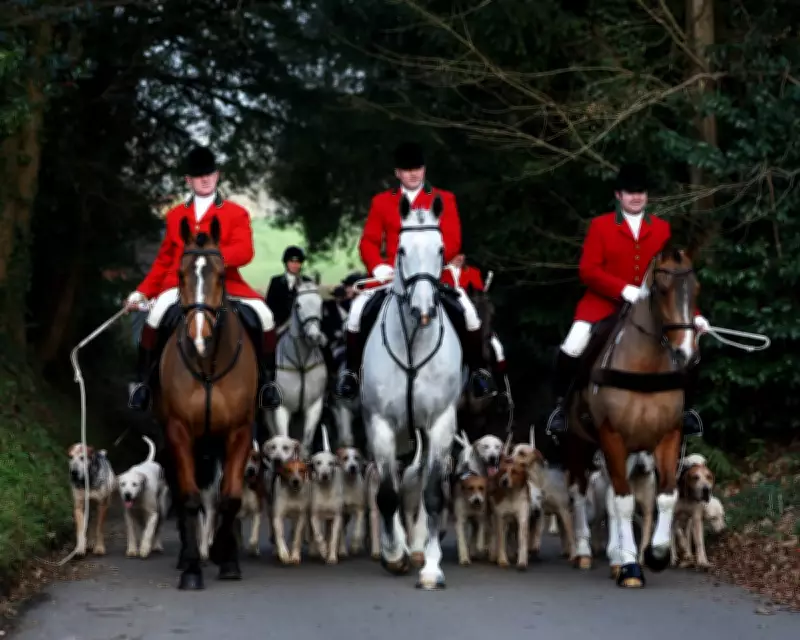
Labour Government Launches Public Consultation to Ban Trail Hunting in England and Wales
The Labour government has officially opened its long-awaited public consultation on how to implement a ban on trail hunting, a measure that will apply specifically to England and Wales. This move fulfills a key manifesto pledge aimed at addressing animal welfare concerns in rural sports.
Addressing Animal Welfare Concerns
Sue Hayman, the animal welfare minister, emphasized the government's commitment, stating, "We pledged to ban trail hunting in our manifesto and that is exactly what we intend to do." She highlighted that the nature of trail hunting poses significant risks to wild and domestic animals, making it unacceptable due to the potential for harm or death.
Trail hunting involves hounds following a pre-laid animal-based scent across the countryside and has been a lawful alternative since the 2005 ban on foxhunting. However, police and animal rights activists have long accused it of being used as a "smokescreen" for illegal foxhunting activities, where foxes are pursued and killed with packs of dogs.

Historical Context and Controversies
In 2005, the previous Labour government banned foxhunting, an elite equestrian pastime, leading hunters to vow defiance. Since then, trail hunting has emerged as a substitute, but its legitimacy has been repeatedly questioned. Four years ago, the hunting community faced a significant blow when a prominent hunter was exposed in court advising others on using trail hunting as a cover for illegal practices.
The League Against Cruel Sports, a leading campaign group, has reported alarming statistics. From August 2025 to March 25 of this year, during the fox and cub hunting seasons, they recorded:
- 488 reports of foxes being pursued.
- 1,220 reports of antisocial behavior inflicted on rural communities by fox hunts.
- Pre-laid trails were found at only 4% of hunt meets monitored.
These findings suggest that animals are being deliberately targeted, undermining the purported purpose of trail hunting.
Rural Opposition and Political Implications
The Countryside Alliance, which supports hunting traditions as part of Britain's rural heritage, has urged its supporters to delay responding to the public consultation until it provides coordinated guidance. Tim Bonner, the Alliance's chief executive, criticized the government, warning that the ban risks alienating rural communities.
"This is nothing more than the government attempting to distract from the real problems facing British people," Bonner said. "Voters care about the countryside, the food on their table, and cheaper energy bills; not toxic culture wars."
The public consultation will remain open until June 18, allowing for extensive input from various stakeholders, including animal rights groups, police, and rural advocates. This process is crucial for shaping the final implementation of the ban, which aims to enhance animal protection while navigating complex rural dynamics.






