

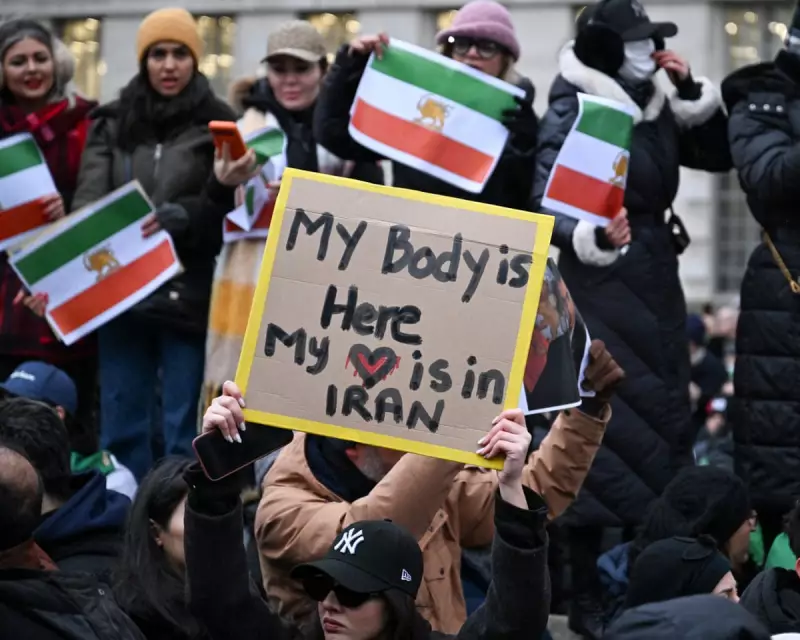
Iranian exiles and activists gathered in central London this weekend, expressing solidarity with ongoing mass protests in Iran and voicing renewed hope that the country's theocratic regime could be toppled.
Voices from the London protest
The demonstration took place outside Downing Street on Sunday, where a crowd heard calls for a secular, democratic, and non-nuclear Iranian republic. Among them was Laila Jazayeri, director of the Association of Anglo-Iranian Women in the UK, who stated the Iranian people are exhausted by decades of dictatorship.
"A pluralistic, a secular, a non-nuclear Iranian republic, it is achievable," Jazayeri declared, as chants for democracy and freedom echoed around her. She highlighted the prominent role of women in the resistance, both inside Iran and among the diaspora.

Hopes pinned on leadership and organisation
Jazayeri expressed hope that dissident politician Maryam Rajavi could become modern Iran's first female leader. She credited Rajavi's progressive 10-point plan for a free Iran and argued the current uprising is distinct due to its high level of organisation and the presence of a ready alternative leadership.
According to opposition campaigners, the unrest within Iran has now spread to 192 cities. They report that hundreds have been killed and thousands detained as authorities attempt to suppress the dissent.
Caution amid the optimism
While hope is high, it is tempered with anxiety. Diana Nammi, a 62-year-old writer and CEO of the women's rights organisation IKWRO, last spoke to relatives in Iranian Kurdistan three days ago before communications were severed by an internet shutdown.
"I am, of course, worried about everyone in Iran and in Kurdistan because they are living under a very, very dangerous regime," said Nammi, who has lived in the UK for nearly three decades but still feels threatened by the Islamic Republic's agents.
Nammi, a socialist who once fought against the Shah's regime, fears a return of monarchical rule under Reza Pahlavi, the son of the deposed Shah. She emphasised that the future must be decided by people inside Iran, not foreign powers.
The call for non-interference was echoed in response to comments from former US President Donald Trump. While some activists welcomed his firm stance, Nammi warned it could give the regime an excuse to increase oppression.
Personal loss and calls to action
The protest also featured deeply personal stories of loss. Laila Jazayeri's husband, opposition activist Hassan Jazayeri, was killed by the regime in 1988. She is now urging the UK government to proscribe Iran's Revolutionary Guards and seeks international recognition of the Iranian people's right to self-defence.
Joining the calls for support was Tehran-born actor Nazanin Boniadi. The 45-year-old star of Iron Man warned on Sky News that the international community must not embolden protesters with promises of support that then fail to materialise.
As the protests continue both in Iran and on the streets of London, the exiled community watches with a mixture of fervent hope and deep apprehension, daring to dream of a new era for their homeland.






