From Military Barracks to the Presidential Palace
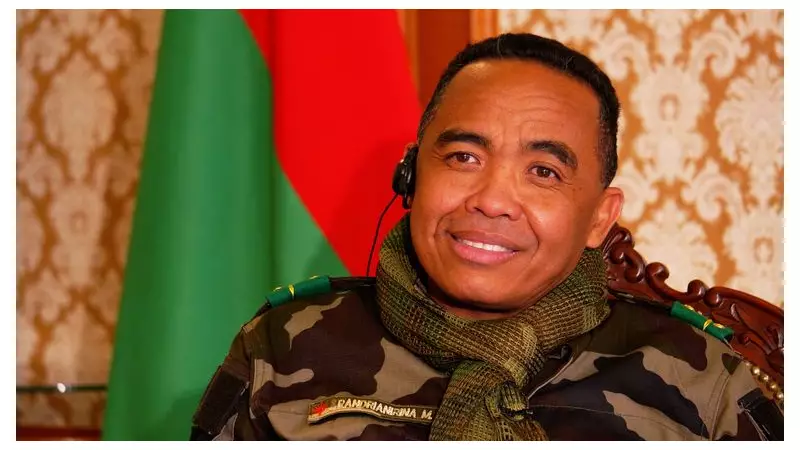
Colonel Michael Randrianirina now occupies the presidential palace in Antananarivo, having been sworn in as Madagascar's new leader last month following a dramatic Gen Z uprising that forced former president Andry Rajoelina not only from office but out of the country entirely. The colonel, who commands the elite non-combatant military unit CAPSAT, finds himself at the helm of one of Africa's poorest nations after his unit joined forces with young protesters.
In an exclusive interview with Sky News, the new president appeared humbled by his rapid ascent. Sitting in an ornate mahogany chair while wearing military fatigues, he struggled to articulate his feelings about occupying the palace. "How do I put it?" he said, sighing deeply. "I am happy and it is also a great honour to have come to this palace to be able to help and support the Malagasy people in deep poverty."
The Pivotal Moment That Changed Everything
The turning point came on 11 October, when Colonel Randrianirina shared a crucial video on social media instructing officers to disobey shoot-to-kill orders and support the growing protest movement. This decision came after at least 22 protesters had been killed and more than 100 injured during demonstrations denouncing chronic power cuts and water shortages that have become symbols of government corruption in the impoverished island nation.

When asked about his motivation for releasing the pivotal video, the colonel explained: "I am a military officer but I am also part of the people and I will return to the people. When you feel sorry for what the people are suffering from... they have been poor for so long and wealth has been looted - but you still shoot them and kill them. That was not why I entered the military of Madagascar, to kill people."
Following his speech, soldiers permitted young protesters rejecting President Rajoelina's leadership to occupy Place du 13 Mai Square on Independence Avenue in the heart of Madagascar's capital. Colonel Randrianirina then paraded through the crowd and addressed them from an armoured vehicle, delivering an ultimatum: "The president of the nation has to leave… If that does not happen, we will see."
International Reaction and Domestic Support
The situation escalated rapidly when Mr Rajoelina fled Madagascar on 13 October, prompting the National Assembly to impeach him for "desertion of duty". Three days later, Colonel Randrianirina stood in front of the palace in military fatigues, announcing their seizure of power and the dissolution of the constitution and all government institutions outside of the National Assembly.
The international response has been mixed. The African Union suspended Madagascar's membership following what it deemed a military takeover, while United Nations secretary-general Antonio Guterres condemned "the unconstitutional change of government in Madagascar" and called for "the return to constitutional order and the rule of law." However, on the day of Sky News' interview, the new president had just received congratulations from France's President Emmanuel Macron.
Despite international concerns, Colonel Randrianirina firmly denies leading a military coup. "It is support for the people and the country and for us to not be prone to civil war," he insists. "We were not conducting any coup at all, it was the president [Rajoelina] himself who decided to leave the country."
Looking Forward: Elections and Recovery
The new leader has promised elections within 18 to 24 months, following what he describes as a "refoundation and recovery" of the country - a process he acknowledges might take considerable time. While observers express concerns that elections could be postponed indefinitely, creating another strongman leader, Gen Z organisers remain optimistic.
University student Ratsirarisoa Nomena represents the voice of many young supporters: "The new president is not a dictator... he is listening to the people and he is validated by the people. We as students also validated him - he is not a dictator because the motivation of the army is from the people for the people."

Reflecting on the struggle that brought him to power, Colonel Randrianirina acknowledges that while Generation Z played a crucial role, his support extends beyond the youth movement. "Generation Z are part of the reason [I am here] but the full Malagasy people really wanted change," he told Sky News. "The Malagasy people have been suffering for so long and deprived of fundamental rights - no access to water supply and electricity, facing insecurity."
Across Africa, young people have been increasingly vocal in their disapproval of established leadership, with Gen Z protesters making their mark in Tanzania, Kenya, Cameroon, Morocco, Mozambique and Nigeria in 2025 alone. The events in Madagascar serve as a potent reminder to leaders across the continent of the growing power of youth movements demanding accountability and change.
When questioned about his commitment to democratic principles, President Randrianirina offered a straightforward promise: "If tomorrow the people of Madagascar hate me, then I will leave this palace." For now, the nation watches and waits to see whether this military leader turned president can deliver the change that so many have fought for.