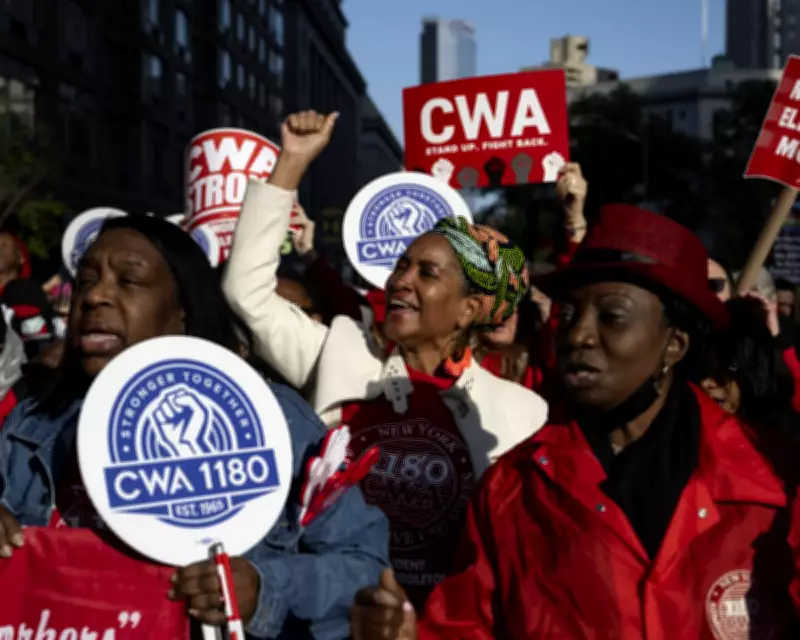
May Day protests erupted across the United States, drawing attention to the deepening rift between the Democratic Party and its traditional working-class base. Thousands of workers, union members, and activists took to the streets in cities like New York, Chicago, and Los Angeles, demanding higher wages, better working conditions, and a political shift toward economic populism.
A Growing Disconnect
The protests underscore a critical challenge for Democrats: the party's increasing alignment with corporate donors and suburban professionals has alienated many blue-collar voters. "We used to think Democrats had our backs, but now they're taking money from the same corporations that outsource our jobs," said Maria Gonzalez, a factory worker from Detroit. "May Day is a reminder that the fight for workers' rights isn't over."
Key Demands
- Living Wage: Protesters are calling for a federal minimum wage of $20 per hour, indexed to inflation.
- Union Rights: Strengthening the right to organize and collectively bargain.
- Healthcare for All: Expanding Medicare to cover all Americans, regardless of employment status.
While some Democratic leaders, such as Senator Bernie Sanders, have championed these causes, the party's mainstream has been slow to act. "The Democratic establishment is out of touch," said James Carter, a union organizer in Cleveland. "They talk about unity, but they don't show up for us when it matters."

Political Implications
The protests come at a precarious time for Democrats, who face midterm elections in November. Analysts warn that failing to address working-class concerns could cost them seats in key industrial states like Pennsylvania, Michigan, and Wisconsin. "If Democrats don't pivot back to economic populism, they risk losing the very voters who handed them the White House in 2020," said political scientist Dr. Emily Hartfield.
Meanwhile, Republicans have seized on the protests to paint Democrats as ineffective. "The May Day chaos shows that Democrats can't govern," said RNC spokesperson Sarah Jenkins. "Working families are tired of empty promises."
A Call for Change
Despite the challenges, many activists see May Day as an opportunity for renewal. "We're not just protesting; we're building a movement that holds both parties accountable," said Alicia Ramirez, a coordinator with the Working Families Party. "Real change comes from the streets, not the boardrooms."
As the sun set on the rallies, protesters pledged to continue their fight. "May Day is every day for us," said Gonzalez. "We won't stop until our voices are heard."