

Metropolitan Police Changes Protest Arrest Policy After High Court Decision
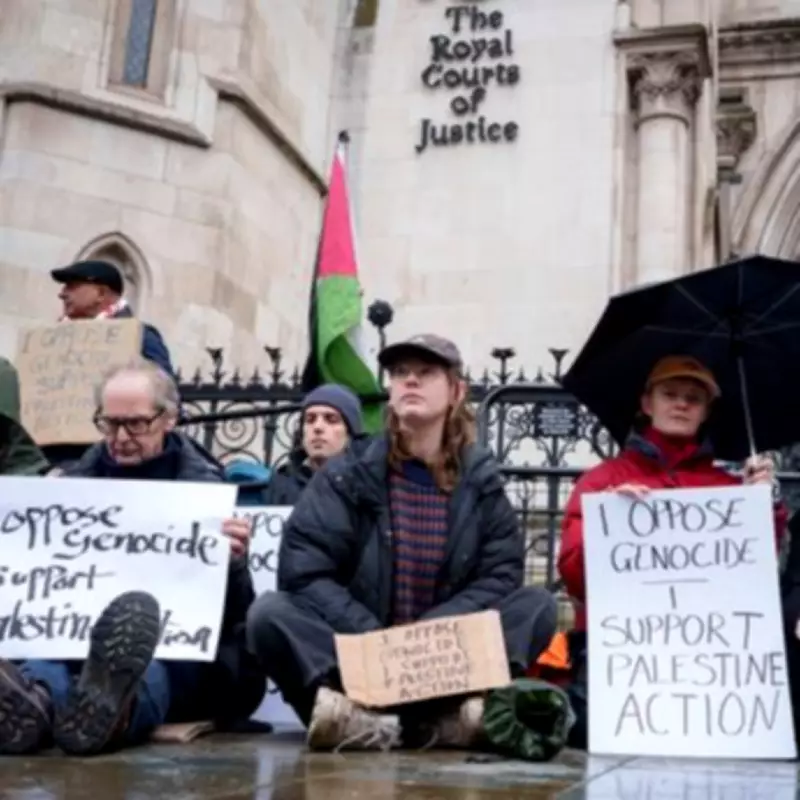
The Metropolitan Police has announced a significant shift in its approach to protesters displaying signs stating "I support Palestine Action" following a recent High Court ruling. The force confirmed that while it will continue to gather evidence of overt support for the organization, officers will no longer make immediate arrests for individuals holding such placards under what they describe as "unusual" circumstances.
Court Ruling Creates Legal Uncertainty
The High Court determined that the Government's decision to proscribe Palestine Action was unlawful, creating a complex legal situation. Despite this ruling, the proscription order remains in effect pending the outcome of a Government appeal, meaning that expressing support for the group technically remains a criminal offence under terrorism legislation.
According to protest monitoring group Defend Our Juries, more than 2,700 individuals have been arrested for showing support for Palestine Action through signs and placards since the Government implemented its ban. The arrests peaked last autumn during weekly silent protests where hundreds participated wearing T-shirts, badges, and holding signs in solidarity with the organization.

Impact on Existing Cases and Court Proceedings
The legal uncertainty has cast a shadow over numerous ongoing cases. Court records reveal that Westminster Magistrates' Court has dedicated at least 87 hours of sitting time since October to preliminary hearings involving Palestine Action supporters. These hearings have been conducted in a courtroom typically reserved for serious crime extradition requests, presided over by senior magistrates and occasionally the Chief Magistrate himself.
Nearly 700 protesters have been charged with terrorism offences and faced preliminary court proceedings, though no convictions have yet been secured. Defendants in magistrates' court cases involving placards and signs have been released on bail, with hundreds of days of court time already scheduled for their trials later this year.
Police Statement on Proportional Response
In an official statement, the Metropolitan Police explained their new approach: "The High Court has found that the decision to proscribe Palestine Action was unlawful. However, the group remains proscribed pending the outcome of any Government appeal, which means expressing support is still a criminal offence. We recognise these are unusual circumstances and there will likely be some confusion among the public as to what happens next."
The statement continued: "From a Metropolitan Police perspective, officers will continue to identify offences where support for Palestine Action is being expressed, but they will focus on gathering evidence of those offences and the people involved to provide opportunities for enforcement at a later date, rather than making arrests at the time. This is the most proportionate approach we can take, acknowledging the decision reached by the court whilst recognising that proceedings are not yet fully concluded."
Continued Enforcement for Other Offences
The police emphasized that this change in approach applies specifically to the expression of support for Palestine Action through signs and placards. They clarified: "We will continue to intervene and make arrests where we see people crossing the line from lawful protest to intimidate, to damage property, to use violence, to stir up racial hatred or to commit other offences."
The statement added: "We are mindful that this decision comes at a time when the impact of a prolonged period of significant protest continues to be felt by communities across London, in particular Jewish communities. We will continue to take an assertive and determined approach to dealing with antisemitism and other hate crime, acting decisively against anyone who tries to use the cover of protest to cause fear and distress to Londoners."
Political Reaction and Future Court Cases
Max Wilkinson, the Liberal Democrat home affairs spokesman, criticized the Government's approach, calling it a "grave misuse of terrorism laws." He stated: "Placing Palestine Action in the same legal category as Isis was disproportionate and risked undermining public trust and civil liberties."

Wilkinson added: "This ruling does not place anyone above the law. Any individual members of Palestine Action who are accused of serious offences such as vandalism and violent disorder should be investigated, prosecuted and, if convicted, sentenced accordingly. But these are potential criminal acts and not comparable to the horrors of terrorism."
The legal uncertainty has immediate consequences for upcoming cases. Next Monday, thirty-two activists are scheduled to make their first appearance at Westminster Magistrates' Court, charged with terror-related offences for holding placards supporting Palestine Action at a demonstration last August.
Additionally, on Friday, an Old Bailey judge postponed the plea hearing of four alleged pro-Palestine protesters accused of causing more than £1 million of damage after breaking into a defence manufacturer's factory. The defendants, currently in custody, requested the delay, which was granted by Mrs Justice Cheema-Grubb, with a trial currently scheduled for June 8.
On-the-Ground Confusion
Outside the High Court following the ruling, activists bearing signs stating "I oppose genocide, I support Palestine Action" gathered to celebrate the decision. Two Metropolitan Police liaison officers approached Grace Lally, a member of the group, advising her against carrying the sign since Palestine Action remains technically proscribed under the Terrorism Act.
One officer warned: "Potentially we're looking at evidence of offences or anything like that, prosecution at any given point really – I can't advise as to whether you will be arrested today, that's not my decision." Another officer questioned: "Are you waiting to get arrested, is that your intention?"
Lally responded: "I don't want to be arrested. I want to know if it's illegal to hold this sign." The officers answered: "We can ask," highlighting the confusion surrounding the practical implications of the court ruling.
While the Crown Prosecution Service has not announced plans to drop existing cases, courts are likely to face legal applications to have charges dismissed in light of the High Court's decision. The situation creates a complex legal landscape where the expression of support remains technically illegal but immediate enforcement has been suspended pending further legal developments.





