

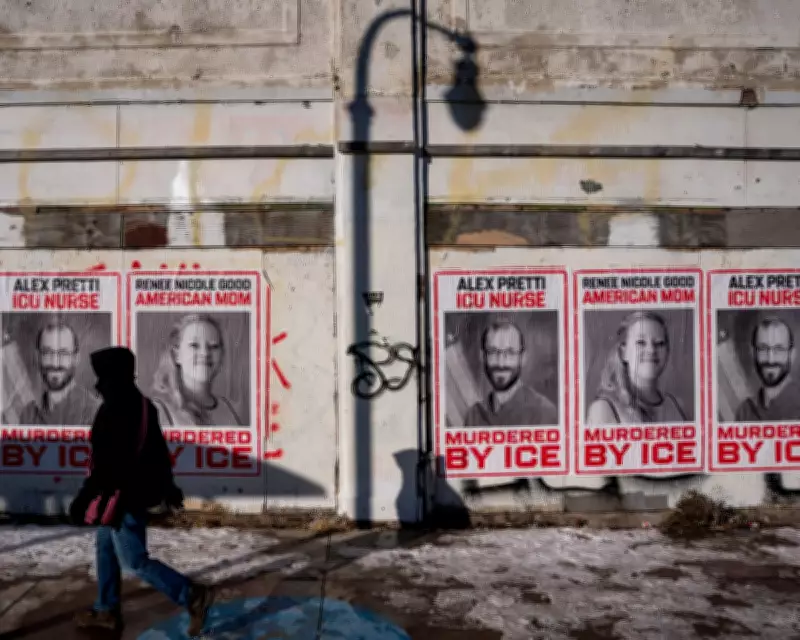
Community Solidarity Emerges as Powerful Force Against ICE in Minneapolis
While national attention remains fixed on the tragic killings of US citizens Renee Good and Alex Pretti during Immigration and Customs Enforcement operations in Minneapolis, a remarkable story of community resistance and mutual aid is unfolding across the Twin Cities metropolitan area. Public outrage has reached unprecedented levels following these incidents, yet the federal response shows little meaningful change in enforcement tactics despite rhetorical softening from the White House.
Grassroots Networks Mobilise Against Federal Crackdown
The escalation of ICE activity that began in December has been met with immediate and creative community defence mechanisms that continue to strengthen. Labour journalist Sarah Jaffe, who has reported from Minneapolis for over a decade, observes that this represents a powerful rejection of individualistic narratives about society. "People are demonstrating that their neighbours matter as much as family, taking significant risks to protect complete strangers," Jaffe explains.
This resistance has manifested through diverse approaches. Small businesses have transformed their operations, with Modern Times restaurant declaring itself "Post Modern Times" and offering free food through donations until the occupation ends. The Smitten Kitten sex shop has become a mutual aid hub, while romance bookstores are stocking accessible literature about labour and social movement history upon community request.

Schools Become Frontlines of Community Protection
Perhaps the most visible organising has occurred around educational institutions, where parent groups patrol school grounds after discovering ICE agents were targeting bus stops during drop-off and pick-up times. Jaffe has documented instances of teargas being deployed outside school buildings, with teachers attempting to shield their students from harm. The hospitality industry has also taken a stand, with restaurant kitchens displaying signs declaring areas private and requiring warrants for entry, recognising that many kitchen staff have precarious immigration status.
Mutual aid networks originally established during the pandemic have been reactivated to deliver essentials to families sheltering at home. Volunteers conducting grocery runs follow strict security protocols, avoiding digital records and using disposable paper notes to protect vulnerable community members. Coordination occurs through the Minnesota Democracy Defense Table, a coalition of approximately eighty organisations managing rapid-response teams and recruitment efforts.
Historical Foundations of Contemporary Resistance
This level of community mobilisation represents not spontaneous anger but the culmination of more than a decade of organised resistance. Jaffe traces current movements back to the Occupy Homes initiative of 2012, when activists focused on preventing evictions rather than occupying public spaces during harsh Minnesota winters. Subsequent police killings, including those of Philando Castile and George Floyd, further radicalised teachers' unions and community organisations, creating interconnected networks of experienced organisers.
These overlapping crises in policing, education, housing, and immigration reflect what Jaffe describes as people's lived reality: "Individuals don't experience single-issue lives." From this ecosystem emerged new leadership, including Marcia Howard, a teacher who coordinated the George Floyd Square occupation and now serves as vice-president of the Minneapolis Federation of Teachers.
Economic Pressure and Strategic Challenges
Union organising has been central to the resistance, culminating in a January general strike under the banner "no work, no school, no shopping" that saw hundreds of businesses close and thousands brave sub-zero temperatures. The Trump administration has targeted Minneapolis precisely because of its history as a centre of resistance, though Jaffe notes enforcement efforts have achieved limited success despite increased agent presence.

The targeting of Somali workers illustrates this dynamic particularly well. With strong community organising traditions that famously brought Amazon to the bargaining table, this community has long challenged governmental authority. Jaffe suggests this explains why Trump has focused on Minneapolis's Somali American community and its leftwing leaders, including Ilhan Omar and Omar Fateh.
Administrative Shifts and National Implications
Despite continued aggressive rhetoric, ground-level actions suggest reassessment following Minneapolis backlash. Federal authorities have reshuffled leadership, replacing controversial enforcement head Gregory Bovino with "border czar" Tom Homan, who reports directly to the president. Jaffe interprets this as an attempt to stabilise the narrative that the administration is losing control of the situation.
Nationally, pressure continues mounting, with Republican Senator Bill Cassidy warning about ICE credibility and recent polling showing growing support for abolishing the agency altogether. Jaffe anticipates authorities will quietly scale back Minneapolis operations while targeting less organised communities, though she notes potential target cities like New Orleans have already begun implementing similar defence networks.
Ultimately, these immigration raids represent what Jaffe describes as part of a broader effort to reshape America's demographic landscape, though she observes an unintended consequence: "They're turning more white people that they assume are their base into Renee Goods and Alex Prettis." The Minneapolis response demonstrates how community solidarity can challenge even the most aggressive federal enforcement campaigns through organised, creative resistance rooted in mutual aid and collective protection.





