

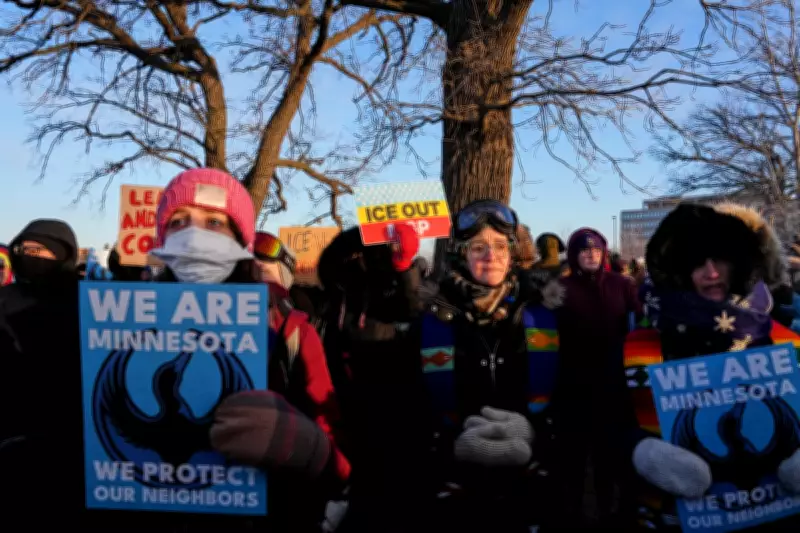
Minnesota's Grassroots Uprising Against Trump's ICE Deportation Crackdown
In the heart of Minneapolis, a powerful movement has emerged as residents band together to confront the severe mass deportation tactics enacted under Donald Trump's administration. Tens of thousands of Minnesotans have stepped up, patrolling streets, documenting agents, and providing essential support to immigrant communities facing fear and detention.
A City Under Siege: Reactivating Networks of Solidarity
The resistance draws strength from a deep-rooted culture of civic engagement, bolstered by workers' unions and a sprawling infrastructure of community-led organisations. Neighbourhoods that united after the police killing of George Floyd in 2020 have reignited their networks, transforming grief into action. As federal agents surged into the city, these pre-existing bonds were tested and expanded, creating a formidable front against the onslaught.
For individuals like Cory, a south Minneapolis resident, the call to action was unavoidable. Despite personal risks, including the fatal shootings of observers Alex Pretti and Renee Nicole Good, Cory spends hours driving after Immigration and Customs Enforcement (ICE) agents, videotaping their movements. "I found myself asking... what is our obligation to stop things, like these horrible racist attacks on people and frankly what feels like an ethnic cleansing project?" he reflected, highlighting the moral imperative driving many to participate.

Building a Multi-Faceted Defence: From Documentation to Mutual Aid
The anti-ICE effort in Minnesota is remarkably broad, encompassing a range of strategies to safeguard immigrant neighbours. Volunteers patrol in cars, looking for suspicious vehicles with tinted windows or out-of-state plates, while others give rides to those afraid to drive alone. Schools see community members standing guard during drop-offs and dismissals, and mutual aid networks deliver groceries to families too fearful to leave their homes.
Organisations such as the Immigrant Defense Network and the Minnesota Immigrant Rights Action Committee have been pivotal, offering trainings on how to document ICE and know one's rights. Hotlines gather intelligence from residents, spreading alerts when agents are spotted, with tactics like whistles and car horns used to quickly warn communities. This coordinated response has kept the resistance largely nonviolent, even as tensions escalate.
Economic and Social Impact: Unions and Businesses Join the Fight
Local unions, including the Minnesota AFL-CIO, and multi-faith coalitions like Isaiah have amplified the movement through economic blackouts and large rallies. On 23 January, a subzero-temperature protest attracted nationwide support, with a survey indicating 23% of likely voters participated by not shopping, working, or closing businesses. A second day of action on 30 January saw further closures and donations, underscoring the widespread solidarity.
Business owners have adapted creatively; Dylan Alverson of Modern Times switched to a free or donation-based model, dubbed "Post Modern Times," to deprive the government of taxable income until the federal surge ends. Restaurants and churches have become makeshift storage sites for food donations, with mutual aid networks working overtime to address hidden hunger exacerbated by fear.
Personal Sacrifices and Community Resilience
Behind the scenes, hundreds work tirelessly to support those most vulnerable. Kirstie Kimball, a food writer and fundraiser, helped move 3,000 pounds of food in days before a breast cancer diagnosis forced her to step back, while Natalie Ehret of Haven Watch waits in a minivan outside the Whipple federal building, offering coats and comfort to those released from detention. These efforts reflect a social contract unique to Minnesota, often described as "neighborism"—a commitment to helping others, much like shovelling a neighbour out of a snowbank.

As the surge of 3,000 agents spreads across the Twin Cities region, even rural areas like Nicollet county are speaking out. Nicole Helget, a resident there, directly confronted agents, questioning their warrants and highlighting the integral role Somali and Latino communities play in the local workforce. "The bravest people are in the communities of color," she noted, emphasising their leadership despite heightened vulnerability.
Political Stakes and National Implications
The situation has drawn attention from figures like US Senator Tina Smith, who warned, "All of that anti-democratic activity has been focused on Minnesota as their proving ground for what they can actually accomplish." With fears that Trump could invoke the Insurrection Act to escalate the campaign, the stakes are incredibly high. Minneapolis Police Chief Brian O'Hara acknowledged the city's resilience, crediting both residents and law enforcement for preventing chaos after Pretti's killing.
Cory and others remain determined, hoping the engagement doesn't wane. "I don't think we can take our foot off the gas until we know our neighbors are safe," he asserted, pointing to the need for lasting change. This grassroots uprising not only fights for the soul of Minnesota but serves as a beacon of resistance for the entire country, showcasing how ordinary people can unite in extraordinary times to defend their communities against oppressive policies.





