

NSW Government Weighs Tighter Protest Controls in Sydney CBD
New South Wales Premier Chris Minns is understood to be actively considering significant alterations to protest regulations, with potential changes targeting both the Form 1 application system and land use policies within Sydney's central business district. This move comes as recent polling indicates substantial public support for strengthening police powers to manage demonstrations more effectively.
Public Opinion Backs Enhanced Police Authority
A comprehensive survey of 1,022 Australians, conducted over several days last week, revealed that 62% of respondents nationally, with an identical proportion in NSW, favour bolstering police capabilities to curb protests. Only 17% expressed opposition to such measures, while 38% indicated they "strongly support" the initiative. The data shows that nearly two-thirds of Labor voters and three-quarters of Coalition voters nationally endorse these stronger powers, with Greens voters displaying less enthusiasm at 38% support.
Context of Recent Demonstrations
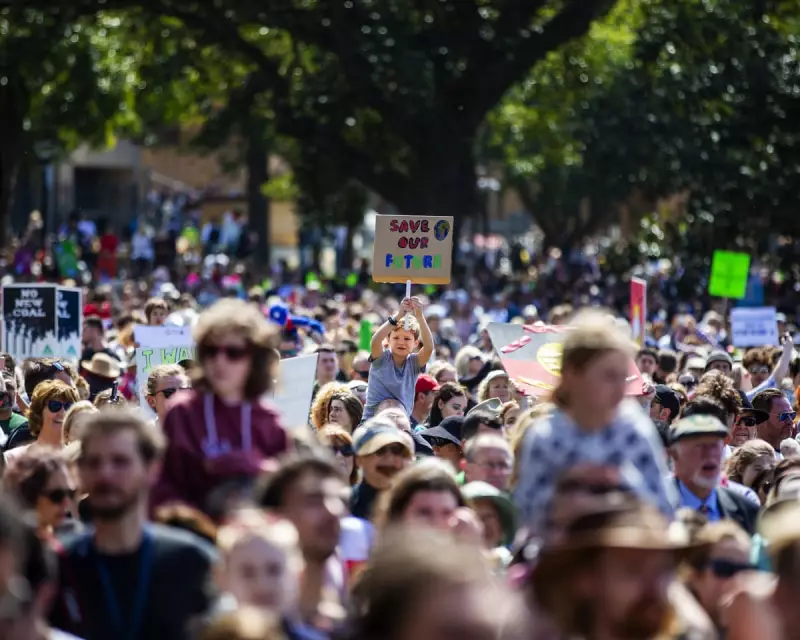
This polling follows two years of regular, predominantly peaceful protests in Sydney's CBD, organised primarily by the Palestine Action Group in response to Israel's military actions in Gaza. These events have drawn sharp criticism from Premier Minns and various Jewish community organisations. More recently, anti-immigration groups have also staged demonstrations in the city centre, while a neo-nazi rally authorised by police occurred outside NSW Parliament in November.

Premier Minns has emphasised the necessity of halting such protests to preserve social cohesion, particularly in the wake of the Bondi massacre on 14 December. In response to that terrorist attack, NSW Parliament enacted stringent new firearm legislation and granted the police commissioner authority to restrict protests for rolling two-week periods for up to three months following a declared terrorist event.
Proposed Legislative Changes
"We're looking to change aspects of the law that we think are just putting an unnecessary burden on safety and security," Premier Minns stated on Wednesday. He acknowledged the importance of public demonstrations in a major city like Sydney but stressed that "the highest and most important obligation of a government is to protect its citizens."
The premier highlighted the considerable resource allocation required for policing protests, noting that "thousands of NSW police need to be deployed to marshal or protect public assemblies at the expense of investigating domestic violence offences or keeping the rest of the community safe."
Specific Measures Under Consideration
Government sources indicate several options are being explored to achieve these goals without unduly infringing upon the constitutional implied right to political free speech. One prominent proposal involves granting NSW police discretion to refuse Form 1 applications after a certain threshold of submissions. A Form 1 is not a protest permit but encourages organisers to share details about expected attendance, march routes, and security concerns with authorities. In exchange for lodging the form, protesters gain protection from prosecution under the Summary Offences Act for offences like impeding traffic or blocking pedestrians.
Critics warn that more restrictive rules could discourage organisers from submitting Form 1 applications, potentially complicating police operations. Implementing numerical limits on applications presents administrative challenges, as protest groups are often unincorporated and may have similar objectives without legal connections.
Land Use and Designated Protest Areas
Another option under review involves utilising planning laws and land use criteria to designate specific areas as suitable for protests while prohibiting them elsewhere. An idea that has been floated is officially designating the Domain as a protest site under these regulations. The Opera House Trust Act already includes bylaws restricting demonstrations, sign displays, and public address systems on its premises, though these have not entirely prevented protests at the forecourt.

Inquiry into Protest Slogans and Chants
A NSW parliamentary committee investigating whether certain slogans and chants should be banned is expected to deliver its report by Friday. Proposed changes already flagged include a potential prohibition on the phrase "globalise the intifada," along with other expressions reportedly used at pro-Palestine demonstrations. The phrase, derived from the Arabic word for uprising, is employed by pro-Palestine supporters referencing historical uprisings against Israel. Some members of the Jewish community interpret it as a call to violence against them.
Before receiving all submissions, committee chair and Labor MP Edmond Atalla indicated he would recommend proscribing the phrase in his draft report, which is currently under review by the Labor-majority committee. Both the NSW Jewish Board of Deputies and the Executive Council of Australian Jewry have advocated for creating a new offence targeting what they term "hateful slogans," including "globalise the intifada" and "from the river to the sea."
Legal and Constitutional Considerations
The office of special envoy to combat antisemitism, Jillian Segal, has proposed remodelling existing hate speech laws along the lines of Western Australian legislation, which incorporates lesser penalties where intent cannot be proven. It also recommends establishing a new offence prohibiting conduct "that promotes, advocates or glorifies violence, destruction or death," including phrases "which can be reasonably interpreted as promoting violence."
Constitutional law experts, including Professor Anne Twomey from the University of Sydney, have raised concerns that banning specific political chants could present constitutional issues. Meanwhile, groups such as Palestine Action, the Jewish Council of Australia, and the Australian National Imams Council argue that phrases like "globalise the intifada" are not inherently hateful or antisemitic and contend that a ban would curtail constitutional freedoms.





