

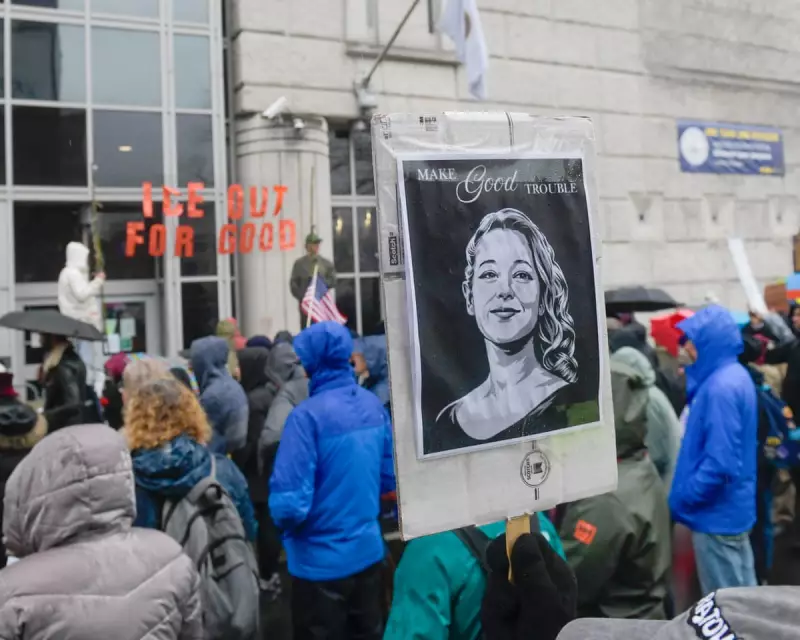
Protests erupted across the United States over the weekend, with demonstrators condemning the fatal shooting of a woman by Immigration and Customs Enforcement (ICE) agents and demanding an end to the Trump administration's policies towards Venezuela.
Philadelphia Marches in the Rain
In Philadelphia, Pennsylvania, two separate marches converged on Saturday, each drawing hundreds of people through rainy streets from City Hall to a federal detention centre. The morning protest, organised by groups behind the 'No Kings' movement, was predominantly attended by older white adults. The afternoon march, coordinated by the local chapter of the Democratic Socialists of America (DSA), featured a more racially diverse crowd, many wearing keffiyehs and face masks.
Despite differing demographics, both groups united behind core demands: the removal of ICE from American communities and a halt to President Donald Trump's aggressive stance towards Venezuela. "From Venezuela to Minneapolis, all we're seeing is a regime that is scrambling, willing to kill its own citizens, willing to kill foreign citizens, to maintain its power," said Deborah Rose Hinchey, co-chair of Philadelphia's DSA chapter.

A National Wave of Anger
The Philadelphia events were part of a nationwide 'ICE Out for Good' weekend of action, called by organisations including Indivisible and the American Civil Liberties Union. This followed the killing of Renee Nicole Good in Minneapolis by ICE agents on Wednesday, one of three ICE-related shootings in a single week. The DSA had also planned a national day of action against what they term Trump's "illegal war" in Venezuela.
Protests were planned in all 50 states, with large crowds turning out in cities like Boston, San Francisco, and Portland, Oregon. In Minneapolis, thousands braved snow, chanting "Fuck ICE, ICE out!" and honouring Good's name. Earlier that day, US Representatives Ilhan Omar, Kelly Morrison, and Angie Craig were denied entry to a local ICE facility, an act they later called unlawful.
Pennsylvania State Representative Rick Krajewski, addressing the Philadelphia crowd, stated, "They're murdering legal observers. They're being blatant about the reality that they're invading countries for oil. This is not a fringe radical thing. This is murder and illegal war crimes."
Tensions and Arrests Escalate
Tensions between authorities and protesters have risen sharply since Good's death. In Hartford, Connecticut, on Thursday night, vehicles believed to be operated by ICE agents drove into a crowd, leading to three arrests. That same night, six protesters were arrested in Portland.
In Minnesota, officials announced 30 arrests related to property damage during Friday night's protests. An Associated Press photographer in Minneapolis observed ICE agents armed with long guns issuing a warning to a protester. While Minneapolis Mayor Jacob Frey and Governor Tim Walz, both Democrats, expressed support for law enforcement, the local police union issued a statement backing ICE—a stark contrast to Frey's earlier tell to the agency to "fuck off".
In Philadelphia, however, police did not intervene or make arrests during Saturday's marches.
Voices from the Protest Lines
Many protesters linked domestic immigration enforcement to broader economic and foreign policy critiques. Anna, a history teacher, attended after her students, most of whom are Black, discussed Good's killing in class. "They see this and realize there's just another force out there," she said.
Ellen, a protester for 15 years, remarked, "It's been years and years since they have been committing outrageous acts against our friends and neighbors. Now they're murdering Americans along with harassing and detaining innocent immigrants."
Francesca, a member of the DSA's national political committee, connected multiple crises: "Things are piling up. The genocide in Gaza and then the aggression against Venezuela, the illegal kidnapping of [President Nicolás] Maduro. And now this violence and, really, state executions carried out by ICE – I mean, there's only so much people can take of this."
Protesters like Cara highlighted national spending priorities: "Personally, I think that until we have every child fed and housed, there's no reason to put any money into immigration enforcement."

Organisers believe such frustrations will continue to fuel public dissent. Hinchey predicted, "I think that the more the American public sees exactly what this totalitarian dictatorship and regime is doing, the more we're going to see days like today or yesterday, with thousands and thousands of people in the street."





