

No Kings Protests Draw Millions in Global Anti-Authoritarian Rallies
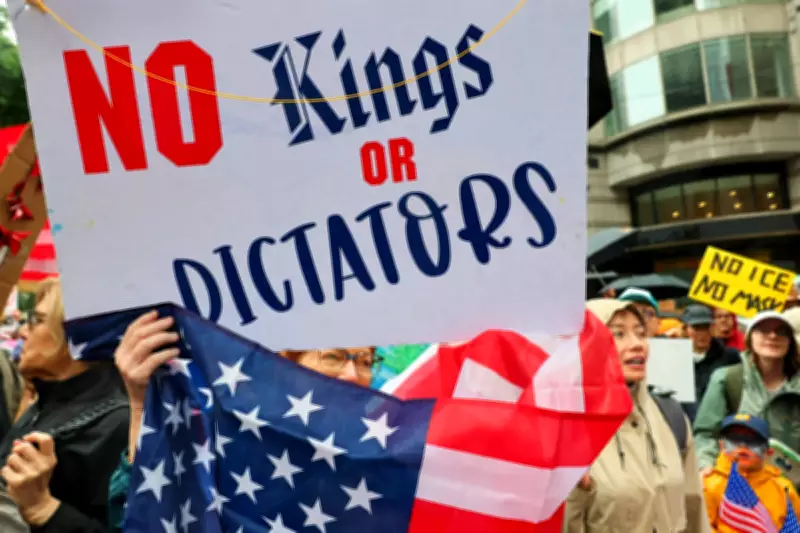
On 14 June 2025, thousands of demonstrators marched along Fifth Avenue in New York City as part of the No Kings protest movement, a rapidly growing anti-authoritarian initiative. Photographs by Michael M Santiago captured the scene, with participants rallying against policies of the Trump administration. The third wave of No Kings protests is anticipated to attract millions of participants across the United States and at least 15 other countries, potentially making it the largest protest in American history. However, the movement's leaderless structure and broad objectives have raised questions among social movements experts about its effectiveness and long-term goals.
Broad Cause and Intentional Design
No Kings was formally launched in June to oppose Trump administration policies, with its second mass protest in October drawing an estimated 7 million participants. Organizers describe the movement as a "container" designed to unite diverse grievances under a single banner against authoritarianism. Hunter Dunn, an organizer with the 50501 movement, explained, "The name No Kings is, in and of itself, a demand. It is a direct repudiation of this administration's unconstitutional, illegal, immoral, and profane actions." The movement aims to return power to the people, embracing an amorphous nature that adapts to current issues, such as immigration raids, environmental rollbacks, and election security threats.
Leaderless Framework and Strategic Concerns
The No Kings movement intentionally operates without a central leadership hierarchy, involving a coalition of progressive organizations like Indivisible, 50501, and MoveOn, along with hundreds of labor unions, religious groups, and civil rights organizations. Leah Greenberg, a co-founder of Indivisible, stated that the decentralized approach is meant to build power from the ground up. However, experts like Hahrie Han, a political scientist at Johns Hopkins University, caution that while scale can indicate momentum, it does not guarantee influence. Han pointed to historical movements like the Montgomery bus boycott, which combined grassroots action with negotiable leadership to achieve change, contrasting with Occupy Wall Street's dissolution due to a lack of credible representation.

Lack of Policy Platform and Future Outlook
Critics have highlighted No Kings' absence of a specific policy platform as a potential flaw, arguing it lacks concrete demands. Marcus Board Jr, a political scientist at Howard University, challenges this view, suggesting that traditional measures of success, such as legislative changes, may be outdated. Instead, Greenberg emphasizes the importance of post-protest engagement, focusing on how many participants join follow-up meetings or organizing efforts. Dunn likened the resistance to a relay race, where mass mobilizations hand off to local actions like voter registration and mutual aid. As the protests continue, the movement's ability to sustain engagement and channel collective outrage into tangible outcomes remains a key point of debate among observers and organizers alike.






