

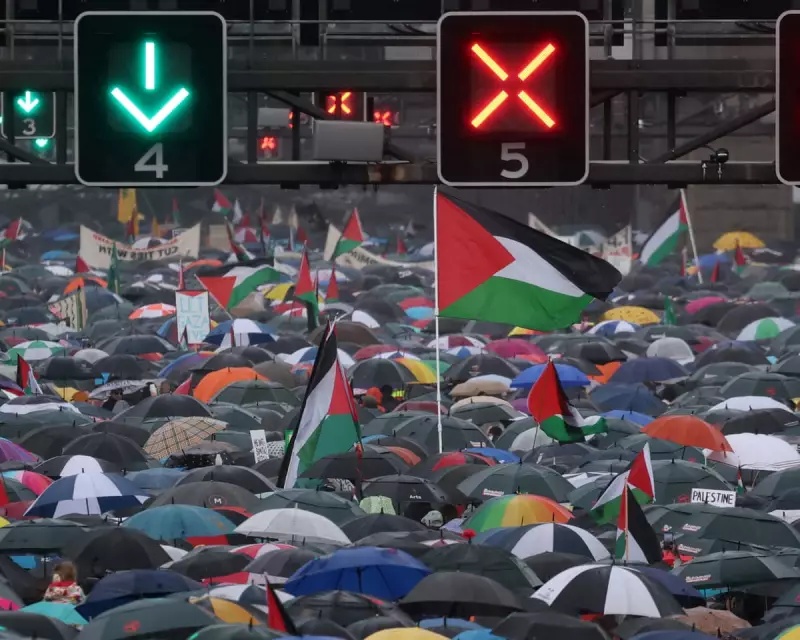
The Premier of New South Wales, Chris Minns, has announced plans to seek "extraordinary powers" to effectively ban public protests for up to three months, controversially linking large-scale pro-Palestinian demonstrations to the recent Bondi terror attack.
Unprecedented Powers and a Controversial Link
Premier Minns stated that under proposed new laws, police would be able to declare specific areas where public assemblies are restricted following a terrorism designation. This power, requiring agreement from the relevant minister, could apply to any part or all of the state and would strip the judiciary of any oversight for the duration of the order.
"These are obviously extraordinary powers – not seen before in any jurisdiction in the country," Minns told reporters on Friday. He directly connected the need for these measures to the mass protest on the Sydney Harbour Bridge in early August, which saw an estimated 225,000 to 300,000 people march against the killing in Gaza.

"When you see people marching and showing violent bloody images, images of death and destruction, it’s unleashing something in our community that the organisers of the protest can’t contain," Minns argued. "The truth of the matter is, we can’t risk another mass demonstration on that scale in NSW. The implications can be seen, in my view, on Sunday."
Backlash from Civil Liberties and Jewish Groups
The proposal has been met with fierce criticism from civil liberties advocates and some Jewish organisations. Tim Roberts, President of the NSW Council for Civil Liberties, labelled the changes "extraordinary" and said granting such broad powers to the police commissioner was a step too far.
"The banning of protests will not stop antisemitism and the premier is wrong to disgracefully link years of peaceful protest to such a horrific and unrelated event," Roberts stated.
Significantly, the backlash also came from within the Jewish community. Jesse McNicoll of Jewish Voices of Inner Sydney called it "outrageous" that community pain was being used to shut down a movement "opposing genocide". He emphasised that the "protests had nothing to do with the attacks".
Max Kaiser, Executive Officer of the Jewish Council of Australia, questioned the singular focus on the pro-Palestine movement, noting that "there exists very real sources of antisemitism on the far right, including neo-Nazis".
The Bondi Attack and Political Divisions
The premier's comments follow the terror attack at Bondi Beach on Sunday evening, which killed 15 people at a Hanukah festival event. Police have alleged the attackers, 24-year-old Naveed Akram and his 50-year-old father Sajid, were "inspired by Isis".
Prime Minister Anthony Albanese confirmed that security agencies had some prior knowledge of Naveed Akram from an investigation in late 2019, but the assessment at the time was that "there was no indication of any ongoing threat".
The proposed laws, expected to be part of a terrorism and other legislation amendment bill, would introduce a "public assembly restriction demonstration" or "PARD" power. This could be invoked if an assembly was deemed to risk community safety or cause fear of harassment.
The political divisions within the Labor Party itself were highlighted, as Minns was asked about members of his own cabinet attending the August Harbour Bridge march. Among them were his deputy, Penny Sharpe, and federal MP Ed Husic. Minns responded that while he understood people's "genuine concerns", his primary focus was the safety of Sydney.
As the debate intensifies, the core tension between community safety, the right to peaceful protest, and the framing of geopolitical conflicts in Australian streets remains unresolved.






