

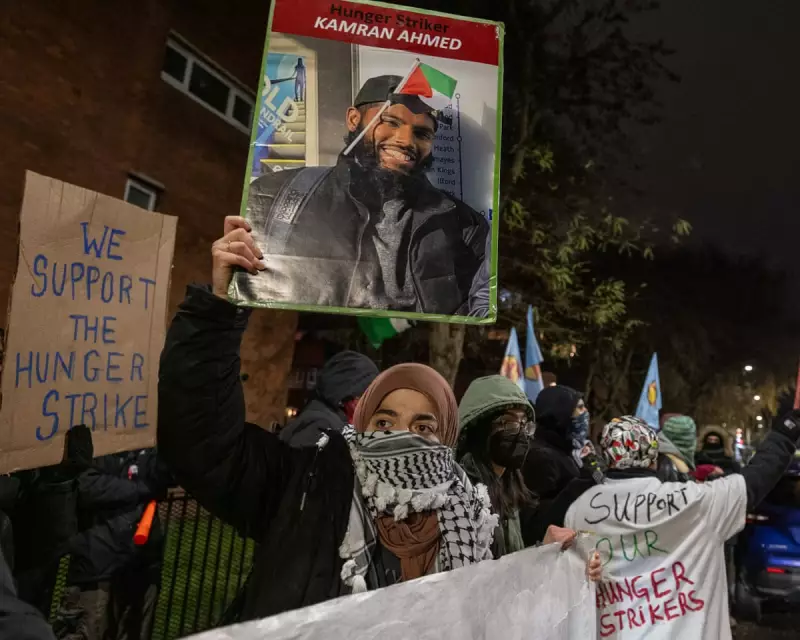
Three activists affiliated with the pro-Palestinian group Palestine Action have ended a prolonged hunger strike after up to 73 days without food. The protest, which took place inside and outside Pentonville Prison in London, concluded this week amid claims of a significant victory linked to a major government defence contract.
End of a Protracted Protest
The group Prisoners for Palestine announced late on Wednesday that Heba Muraisi, Kamran Ahmed, and Lewie Chiaramello were halting their action. Muraisi had refused food for 73 days, matching the duration of Irish republican hunger striker Kieran Doherty, who died in the 1981 Maze Prison protest.
Shahmina Alam, the sister of Kamran Ahmed, expressed profound relief, stating she woke up "not afraid" for the first time in weeks. She highlighted ongoing concerns about the dangerous re-feeding process but welcomed the end of the strike. Ahmed had reached day 65 without food.

Demands Met and Unmet
The protesters had five key demands. The most notable outcome was the government's decision not to award a £2 billion Ministry of Defence contract to Elbit Systems UK, a subsidiary of Israel's largest arms manufacturer. Campaigners claim the hunger strike and associated activism directly influenced this decision.
Francesca Nadin of Prisoners for Palestine said the campaign had thrust the issue into public discourse. "We'll never know for sure but it's quite clear to me that all of the campaigning... had an impact," she stated.
However, other core demands were not met:
- Immediate bail was not granted for the defendants, none of whom have been convicted and who have spent over a year in pre-trial detention.
- The government has not de-proscribed Palestine Action, which was outlawed as a terrorist group last year, though a judicial review on this is pending.
The campaign did secure some concessions, including the transfer of Heba Muraisi back to HMP Bronzefield near her family and an easing of mail censorship for the prisoners.
Legacy and Wider Impact
While the hunger strike did not achieve all its aims, organisers point to a significant mobilisation effect. Prisoners for Palestine reported 500 new sign-ups for direct action in recent weeks, surpassing the total recruited by Palestine Action in its five-year campaign before proscription.
The action drew international attention, with interventions from US Congresswoman Rashida Tlaib and UN experts, spotlighting both the protesters' cause and broader issues within the UK prison system.
Nadin framed the strike as a "rallying cry to the people," suggesting that raising awareness was a primary success. Alam noted that public awareness of Elbit Systems had grown substantially due to the protest.
The end of the strike averts a potential tragedy that could have overshadowed the campaign's achievements. The activists' sacrifice has undoubtedly amplified their message, echoing, if on a different scale, the historic impact of past hunger strikes in British prisons.






