

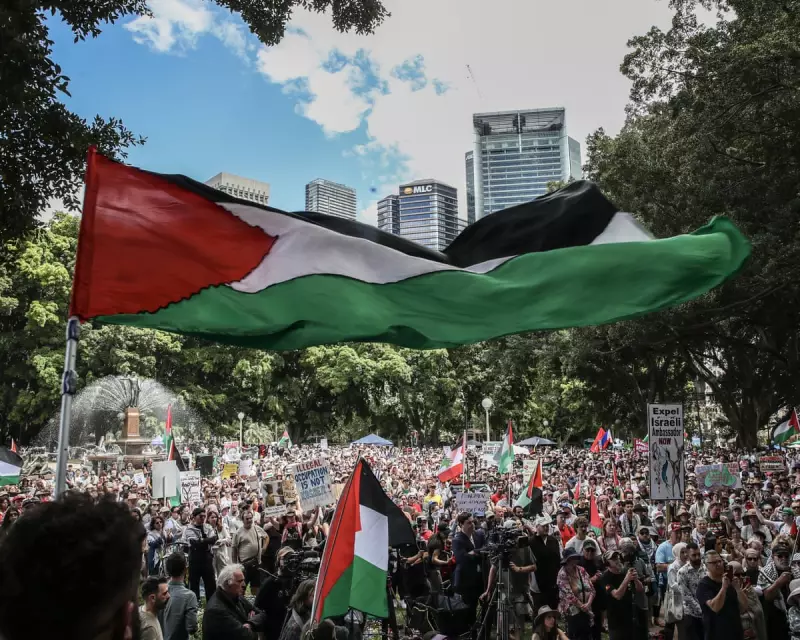
Plans by the New South Wales government to restrict public protests in the wake of the Bondi Junction mass shooting have been met with fierce condemnation from pro-Palestine activists, Jewish groups, and civil liberties campaigners.
Backlash Over 'Eroding Democratic Freedoms'
Premier Chris Minns announced on Wednesday that the Labor government would move to effectively ban protests during periods of a "terrorism designation." The change would prevent organisers from lodging the required Form 1 to hold an authorised demonstration, meaning participants could face charges under the Summary Offences Act for actions like blocking traffic.
Minns argued that protests, particularly about international events, would "rip apart our community" at this sensitive time and stretch police resources. He stated the government was seeking a "summer of calm and togetherness, not division."

However, the proposal has sparked immediate criticism. Timothy Roberts, President of the NSW Council for Civil Liberties, stated: "We cannot have a ‘summer of calm’ and ‘togetherness’ with a government eroding our democratic freedoms."
Jewish Groups Warn Against Conflating Issues
Significantly, the plan has also been criticised by Jewish groups who are supporters of the Palestine movement. Max Kaiser, Executive Officer of the Jewish Council of Australia, expressed concern that "culture wars could divide communities" and distract from a unified response to antisemitism.
He emphasised that the pro-Palestine movement had been appalled by the antisemitic attack in Bondi, and warned against maligning it when "very real sources of antisemitism" exist on the far-right.
Jesse McNicoll of Jewish Voices of Inner Sydney called it "outrageous" that the community's pain could be used to shut down a movement opposing genocide, stressing that "The protests had nothing to do with the attacks."
Political Reactions and the Context of the Attack
The political debate unfolds after police alleged the Bondi attackers, 24-year-old Naveed Akram and his 50-year-old father Sajid Akram, were "inspired by ISIS." Prime Minister Anthony Albanese confirmed that Naveed Akram had been investigated for six months from October 2019 but was assessed as posing no ongoing threat.
When asked about Minns's proposal, PM Albanese reflected on the corrosive nature of public discourse, referencing the 9 October 2023 demonstration at the Sydney Opera House. "Hatred starts with language... The day of the Opera House demonstration. I thought it was completely reprehensible," he said.
Conversely, other Jewish community leaders drew a direct line between protest rhetoric and violence. David Ossip of the NSW Jewish Board of Deputies stated that calls to globalise the intifada represented a demonisation of Jews that had seen a "logical progression" to acts of violence.
Organisers from the Palestine Action Group stressed they have no protests planned and rejected attempts to link their movement, which opposes both genocide and antisemitism, to the Bondi attack. Spokesperson Josh Lees reported receiving death threats since Sunday.
The premier acknowledged the government was still "looking at the timescales" for how long a terror designation would last to ensure consistency with constitutional freedoms, indicating the policy details remain under development amid the growing controversy.






