

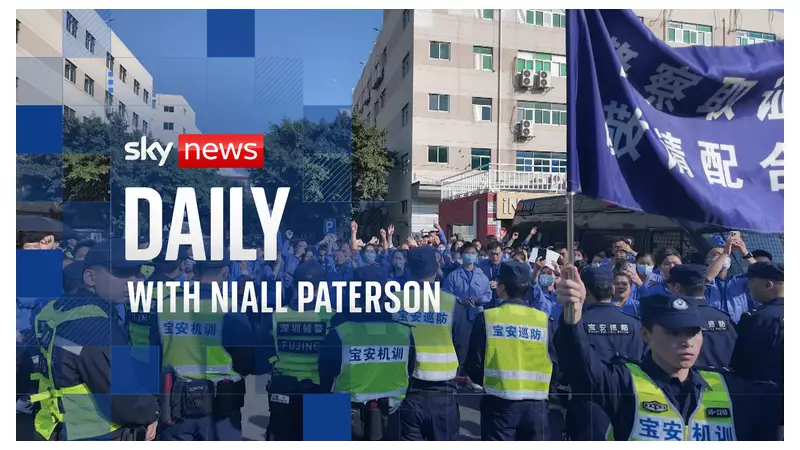
Public dissent in China remains a perilous and challenging phenomenon to record, yet reports indicate a notable surge in protest activity across the nation. Security forces are known to move quickly to suppress such demonstrations, a reality a Sky News team experienced directly.
On-the-Ground Reality of Dissent
Whilst attempting to document a factory strike in the major industrial city of Shenzhen, the journalists were forcibly placed into vehicles and driven away by authorities. This incident underscores the significant risks and difficulties faced by those reporting on civil unrest within the country. The swift action by police and other security units is a standard response designed to quell any public gatherings deemed unsanctioned.
Analysing the Significance and Wider Context
The rising frequency of these incidents raises critical questions about their underlying causes and potential implications for the Beijing government. On the Sky News Daily podcast, presenter Niall is joined by the network's Asia correspondent, Helen-Ann Smith, to delve into this complex issue. Their discussion, produced by Natalie Ktena and edited by Mike Bovill, probes the significance of the protest movement within China.

A key line of inquiry explores whether events in other nations, such as the widespread protests witnessed in Iran, could be influencing the political calculus in Beijing. The analysis considers if the visible examples of civil mobilisation abroad contribute to a sense of nervousness within the Chinese administration, potentially shaping its domestic security responses.
Broader Implications for Reporting and Stability
The detention of the Sky crew in Shenzhen highlights the ongoing tensions between the state's control over information and the realities of modern newsgathering. Despite the dangers, the persistence of protest actions suggests underlying social or economic pressures that continue to surface. The podcast episode, released on Monday 12 January 2026, provides a timely examination of these tensions and their possible trajectories, offering listeners deeper insight into a situation that is often obscured from international view.






