Queensland Enacts Historic Ban on Political Slogans
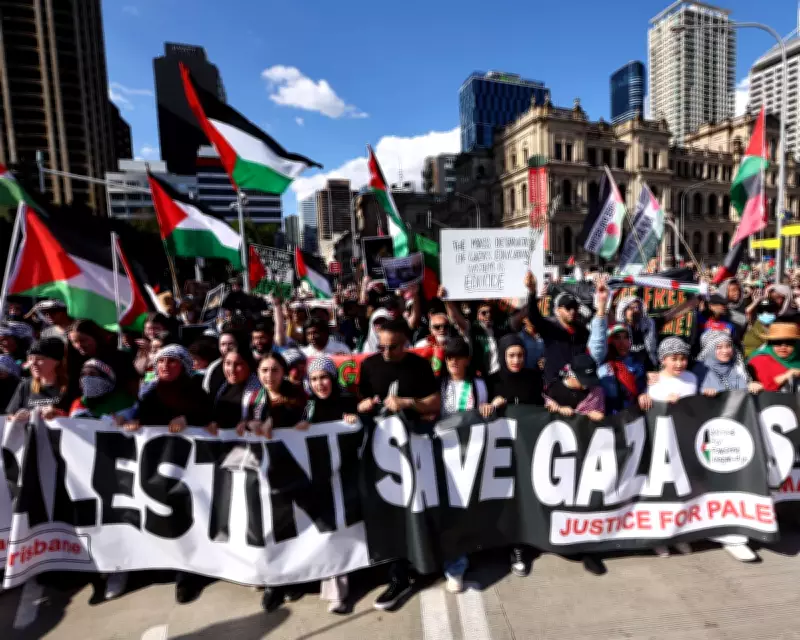
The Queensland government has made history by becoming the first parliament in Australia to enact a legislative ban on two specific political slogans: "from the river to the sea" and "globalise the intifada." This unprecedented move follows protests where demonstrators waved flags and held signs bearing these phrases during pro-Palestinian marches in Brisbane last August. However, the law's passage has been anything but smooth, with last-minute amendments potentially exposing it to significant constitutional challenges.
Constitutional Vulnerabilities Exposed
Constitutional law experts argue that the Queensland government, despite having complete parliamentary control, has left its new law wide open to attack by stripping away crucial safeguards. Originally, the bill was designed with sophisticated constitutional armor, attempting to repel challenges by maintaining content neutrality—a key principle in Australian constitutional law regarding political communication.
The High Court of Australia has long recognized an implied freedom of political communication in the Constitution, which restricts state and federal parliaments from enacting laws that unduly limit political discourse. Laws that target specific ideas or political content, rather than regulating the manner, place, or timing of communication, face a higher level of judicial scrutiny. They require a "compelling justification" to be upheld, particularly if they burden one side of a political debate over another.

From Content-Neutral to Content-Specific
The original bill attempted to navigate these constitutional waters by allowing the minister to ban slogans through regulation if they were widely known to represent an ideology of extreme prejudice against a group. This approach was content-neutral, similar to laws upheld in cases like that of Candace Owens Farmer, where visa exclusions were justified as protecting the community from harm without targeting specific political messages.
However, in a dramatic reversal, the Queensland government discarded this structure on the very day the law was passed. Instead of a content-neutral framework, the enacted legislation imposes an outright statutory ban on the two slogans. The Queensland Criminal Code now makes it an offence to publicly recite, distribute, publish, or display these expressions in a way that might reasonably cause a member of the public to feel menaced, harassed, or offended, unless there is a reasonable excuse. Penalties include up to two years' imprisonment.
Reasonable Excuses and Public Concerns
The law does provide for reasonable excuses, including use for genuine artistic, religious, educational, historical, legal, or law enforcement purposes, as well as for opposing the ideology represented by the expressions or in fair and accurate reporting of public interest matters. Notably, the law does not consider the intent of the person using the slogans or whether any member of the public actually heard or saw them.
The shift to a content-specific ban appears to have been driven by public pressure. Queenslanders expressed concerns that the original broad regulatory power could be misused to impose future restrictions on freedom of speech. While this change addresses those fears, it simultaneously increases the law's vulnerability to constitutional challenge.
Political Strategy or Constitutional Misstep?
From a political perspective, this outcome may be strategic. If the High Court strikes down the law, the government can claim it did everything possible and shift blame to the judiciary, potentially strengthening protections for political communication in the long run. However, constitutional experts warn that by explicitly targeting political content, the government has undermined the law's defensibility.
The removal of requirements tying the prohibition to specific harms—such as inciting discrimination, hostility, or violence—further weakens its legal standing. Without these links, the ban may be seen as an unjustified restriction on political debate, rather than a measured response to community harm.

As Queensland navigates this uncharted legal territory, the fate of its slogan ban will likely hinge on the High Court's interpretation of the implied freedom of political communication. The case could set a significant precedent for how Australian governments balance security concerns with democratic freedoms.