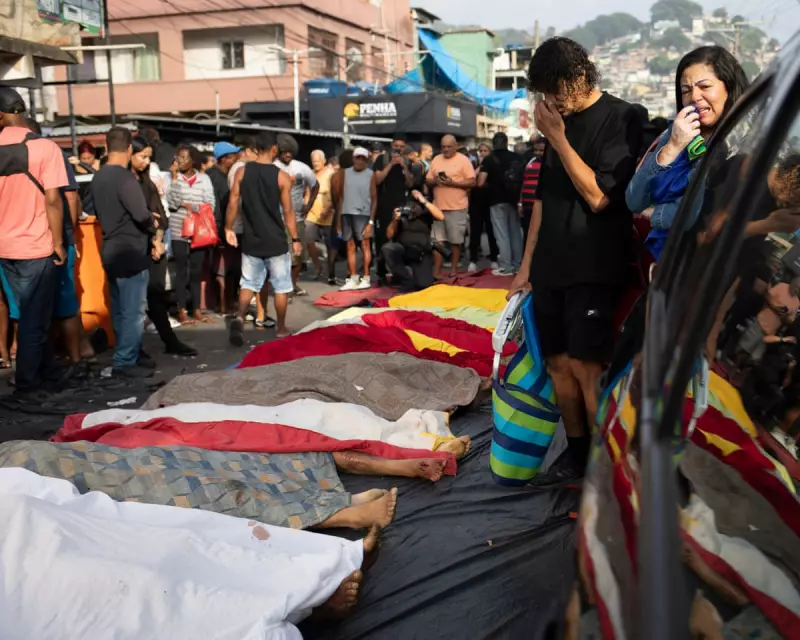
The narrow alleyways of Jacarezinho, one of Rio de Janeiro's most densely populated favelas, echo with a profound silence that speaks louder than the gunfire that recently shattered this community. What began as a routine police operation has escalated into Brazil's most lethal raid in history, leaving families devastated and a neighbourhood in mourning.
A Day of Unprecedented Violence
Residents describe scenes of pure terror as hundreds of heavily armed police officers stormed the favela in the early hours. The operation, officially targeting drug trafficking networks, resulted in casualties far exceeding any previous police action in Brazilian history.
"We thought it was the end of the world," one shaken resident recounted, preferring to remain anonymous. "The shooting didn't stop for hours. We were trapped in our homes, praying bullets wouldn't come through the walls."

Community Left Reeling
The aftermath reveals a community struggling to comprehend the scale of loss. Makeshift memorials dot the favela, with candles flickering beside photographs of loved ones. Local community centres have transformed into support hubs, offering psychological aid to traumatised residents, including many children who witnessed the violence.
Human rights organisations have condemned the operation's brutality, pointing to what they describe as excessive force and questionable tactics. "The number of fatalities raises serious concerns about proportionality and the value placed on favela residents' lives," noted a representative from a local monitoring group.
Official Response and Growing Controversy
Police authorities defend the operation as necessary to combat powerful criminal organisations that have entrenched themselves in the community. They claim intelligence indicated the presence of high-ranking drug lords planning to expand their operations.
However, critics argue that such operations primarily affect the poorest communities and question their long-term effectiveness. "This militarised approach creates more problems than it solves," argued a public security expert. "It deepens the divide between communities and law enforcement while failing to address root causes of violence."
Broader Implications for Public Security
The Jacarezinho raid has ignited a fierce national debate about Brazil's public security policies. Human rights groups are calling for independent investigations and renewed focus on community-based policing approaches.
As Rio de Janeiro prepares to host major international events in the coming years, the incident raises difficult questions about security protocols and the treatment of marginalised urban communities. The world watches as Brazil grapples with balancing crime reduction and human rights protection.
For the residents of Jacarezinho, the trauma will linger long after the headlines fade. The challenge now lies not only in healing a shattered community but in preventing history from repeating itself in favelas across Brazil.