

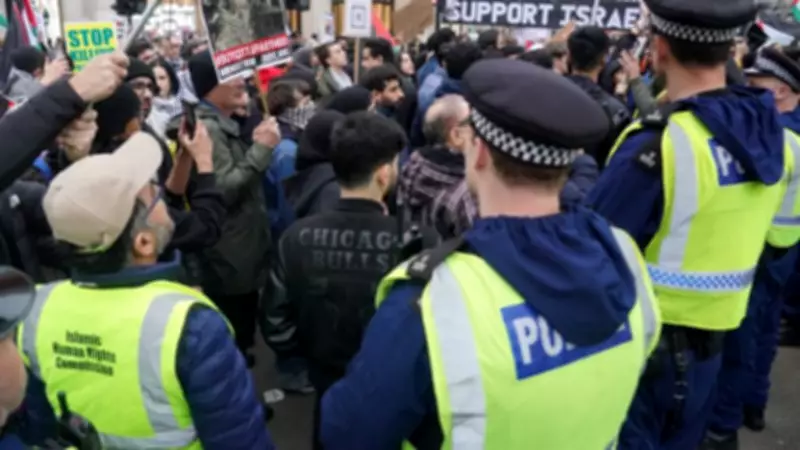
Police to Use Thames as Buffer at Al Quds Protest After March Ban
Police will employ the River Thames as a physical barrier to separate protesters and counter-protesters at the Al Quds Day rally in central London this Sunday. This unprecedented tactic comes after Home Secretary Shabana Mahmood approved a Metropolitan Police request to ban the originally planned march, citing the need to prevent serious public disorder. The ban marks the first time in 14 years that the Met has prohibited a protest march, with authorities citing the organizers' alleged support for the Iranian regime as a key factor.
Static Protest to Proceed Despite March Prohibition
The Islamic Human Rights Commission (IHRC), the organizers of the event, have announced that a static protest will still take place, despite the march being blocked. They have criticized the ban as a politically charged decision, asserting that the static gathering is a peaceful, pro-Palestinian demonstration. Assistant Commissioner Ade Adelekan, in a briefing on Thursday, described the use of the Thames as a new bespoke tactic designed to address the unique challenges posed by the Al Quds rally.
Expected Attendance and Policing Measures

The Metropolitan Police are anticipating at least 6,000 participants at the Al Quds protest and an additional 6,000 counter-protesters, but have warned that numbers could be significantly higher due to the volatile situation in the Middle East. To manage the event, more than 1,000 officers will be deployed, including personnel from community policing units and other forces. Lambeth and Vauxhall Bridges will be closed to all traffic except emergency service vehicles, with protesters confined to the Albert Embankment south of the Thames and counter-protesters contained within Millbank.
Zero Tolerance Approach to Hate Crime
Assistant Commissioner Adelekan emphasized that officers will be briefed to act decisively against any signs of disorder, including monitoring placards, flags, and chanting. A zero tolerance approach will be enforced for hate crimes, with arrests made for expressions of support for proscribed organizations. Despite these measures, Adelekan acknowledged that the ban and policing strategy do not completely eliminate the risk of disorder but will make the protest immeasurably easier to police.
Increased Security Around Vulnerable Areas
In addition to the focus on the protest site, policing will be heightened around other vulnerable locations in London, including areas with large Jewish communities. The Met's decision to request the march ban was based on multiple factors, such as the history of the Al Quds rally, community tensions, and intelligence gaps. Al Quds Day, which originated after the 1979 Iranian Revolution and is held on the last Friday of Ramadan, is described by the IHRC as a global expression of support for Palestine.






