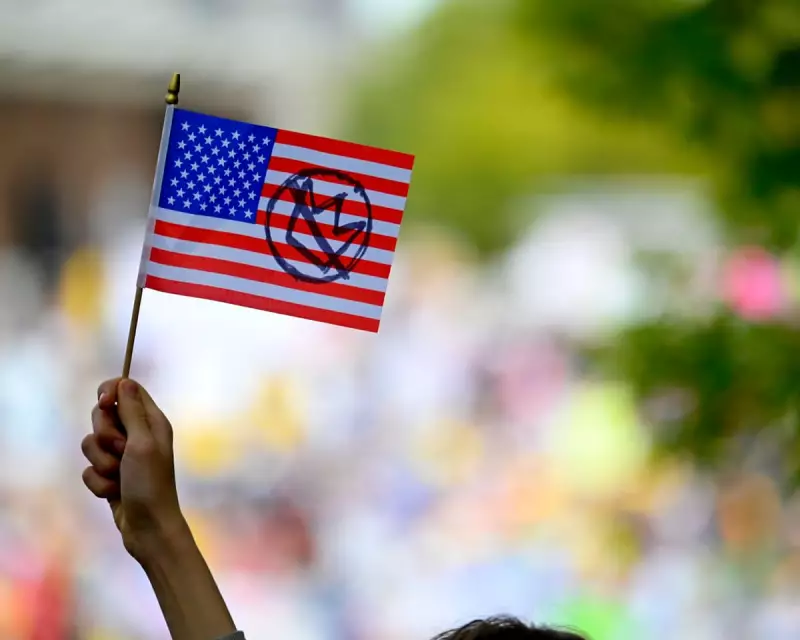
Across the United States, a groundswell of opposition to Donald Trump is gathering momentum as the former president seeks another term in the White House. What began as scattered voices of dissent is evolving into an organised movement that spans political affiliations and demographic groups.
A Coalition of Concern
Unlike previous anti-Trump efforts, this emerging resistance appears more diverse and strategically coordinated. Veterans, former Republican officials, and activists who previously supported Trump are now joining forces with longtime critics to voice their concerns about his potential return to power.
"This isn't about left versus right anymore," explained Marcus Johnson, a former military officer now involved with organising efforts. "It's about defending democratic institutions and the rule of law. We're seeing people from across the political spectrum who believe Trump represents a threat to both."

From Digital Outrage to Street-Level Action
The movement has moved beyond social media outrage to tangible action. Organisers report increasing attendance at rallies, growing volunteer networks, and more sophisticated coordination between different opposition groups. Recent protests have drawn thousands of participants in cities across the country, with many attendees describing their involvement as a moral imperative rather than mere political preference.
Changing Tactics and Growing Influence
What distinguishes this wave of opposition is its strategic evolution. Rather than focusing solely on mass demonstrations, organisers are deploying multiple approaches:
- Targeted voter registration and education campaigns in swing states
- Coordination with moderate Republican groups seeking party reform
- Grassroots fundraising for opposition candidates and causes
- Legal challenges to policies and positions seen as undermining democratic norms
The Personal Becomes Political
For many involved, the opposition has become deeply personal. Sarah Chen, a small business owner who previously avoided political activism, now dedicates weekends to organising local resistance efforts. "I never saw myself as particularly political," she admitted. "But when fundamental rights and democratic principles are at stake, standing aside feels like complicity."
This sentiment appears to be spreading, with polling data suggesting that while Trump maintains a solid base of support, his unfavourable ratings among independent voters remain significantly high. The growing opposition movement aims to capitalise on this dynamic by framing the election as a choice between Trump and democratic stability.
An Uphill Battle
Despite their growing numbers and organisation, opposition leaders acknowledge the challenges they face. Trump's base remains fiercely loyal, and his campaign machinery is well-funded and experienced. The fragmented nature of American politics also complicates efforts to present a unified alternative vision.
Nevertheless, those within the movement express determination. "We're in this for the long haul," said one organiser who requested anonymity. "Whether Trump wins or loses this election, the work of defending democratic values continues. This is just one battle in a much longer struggle."
As the election approaches, this burgeoning opposition movement represents a significant force in American politics—one that could potentially reshape the political landscape regardless of November's outcome.